




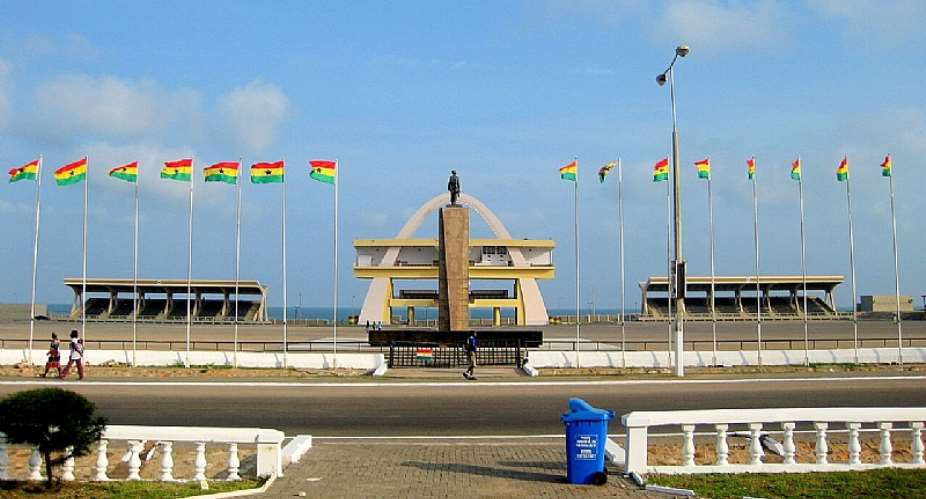
One of the things I remember about Accra is how familiar the streets felt. The traffic, the roadside sellers and the constant movement reminded me of Lagos. Even negotiating a fare brought back the kind of exchanges I was used to having in Nigeria. I had travelled to another country, but some parts of the experience felt surprisingly close to home.
Long before visiting Accra, I knew the script. Like most Nigerians, I grew up with the jollof debates, the music rivalries and the way an ordinary conversation could turn into a competition. There was always a sharp word, a witty comeback or a reason to claim that Nigeria had the upper hand.
Even football kept the rivalry alive. When Ghana qualified for the 2026 World Cup and Nigeria missed out after losing to DR Congo on penalties, the jokes started almost immediately. Ghana was going. Nigeria was staying home. Neither side was going to let the other forget it. I found the rivalry entertaining, but my experience in Accra gave me a different perspective on the country.
The familiarity went beyond the streets. I enjoyed the banter between locals. Sometimes someone would make a sarcastic remark or crack a joke, and I understood the humour immediately. I did not need anyone to explain the context. The everyday complaints and conversations sounded much like the ones I had heard countless times in Nigeria.
Food gave me another reason to pay attention. I had waakye and jollof, and naturally, the Nigerian in me wanted to compare the experience with what I knew at home. Ghanaian and Nigerian jollof have been at the centre of enough arguments to make a simple meal feel like a national debate. I tried to make up my mind, but I honestly could not settle on a winner. Perhaps I was better off enjoying the food without getting involved in another argument.
I also heard Nigerian music playing in Accra. It was a small thing, but it added to the feeling that the two countries were not as far apart as the rivalry sometimes suggests. Nigerian music had an audience there, just as Ghanaian music has found listeners across the border. The same cultural exchange happens in film, entertainment and everyday conversations.
I met Nigerians living in Accra too. Their presence was another reminder of how much movement takes place between the two countries. People travel for work, business, education, family and new opportunities. Some settle down and build lives there. Others move back and forth. For many, the connection between Ghana and Nigeria is not something they discuss during football arguments. It is part of their everyday lives.
Of course, the relationship has a difficult history. In 1969, Ghana introduced the Aliens Compliance Order, which required undocumented immigrants to obtain permits or leave the country. Nigerians were among those affected, and many had to abandon homes, businesses and years of work. In 1983, Nigeria issued its own expulsion order, forcing large numbers of Ghanaians and other immigrants to leave. The bags many carried during their return became associated with the name "Ghana Must Go", which remains familiar across West Africa.
These events left painful memories for families on both sides. Governments made those decisions, while ordinary people lost homes, businesses and livelihoods. The history is worth remembering, especially when conversations about the relationship between the two countries become reduced to jokes and competition.
But the movement between Ghana and Nigeria never stopped. People continued to travel, trade, study, work and raise families across the border. I saw some of that connection during my visit. Accra was its own city, with its own character, but I never felt completely disconnected from the things I knew.
It is easy to focus on the differences when two countries have spent so much time comparing themselves. There are arguments about food, music, football and even the way people speak. Both countries have plenty to be proud of, and neither seems particularly interested in surrendering its bragging rights.
Beyond the banter, Ghana and Nigeria have opportunities to work more closely in trade, education, music, film and other creative industries. We already share so much through our history and culture, and closer ties could create more opportunities for Ghanaians and Nigerians. We do not have to agree on everything to recognise what we have in common.
I still think about the ordinary things from that trip: the busy streets, the conversations, the food, the music and the people I met. Perhaps that is what stayed with me most. I went to Accra expecting to experience another country, and I did. But somewhere between the familiar jokes and the arguments over jollof, I found myself feeling more at home than I had expected.
I still cannot tell you which country's jollof I preferred. Maybe that is one argument I can afford to leave unsettled.
Author Bio:
Adebayo Afolabi is a Nigerian writer focused on democracy, governance, and public policy in Africa.

 I was the brain behind La General Hospital reconstruction – Dr Okoe Boye
 2027 budget: Gov't must account for jobs created under 24-hour economy – Prof Bo...
 I monitor TikTok, other social media platforms to address public concerns – Maha...
 I was joking about expecting Mahama to appoint me as Minister – Prophet Nigel Ga...
 'Go prove criminality in court, not on TV' — Shamima Muslim tells Minority on So...
 Ghanaian father narrates how his 15-year-old son was always bullied by two schoo...
 9% public sector salary increase for 2027 an insult to workers — Minority
 Kumasi residents to experience scheduled power cuts between October and November...
 TUTAG suspends nationwide strike, academic work resumes November 2
 Why charge GH¢5,000 just for people to declare interest in parliamentary primar...


