




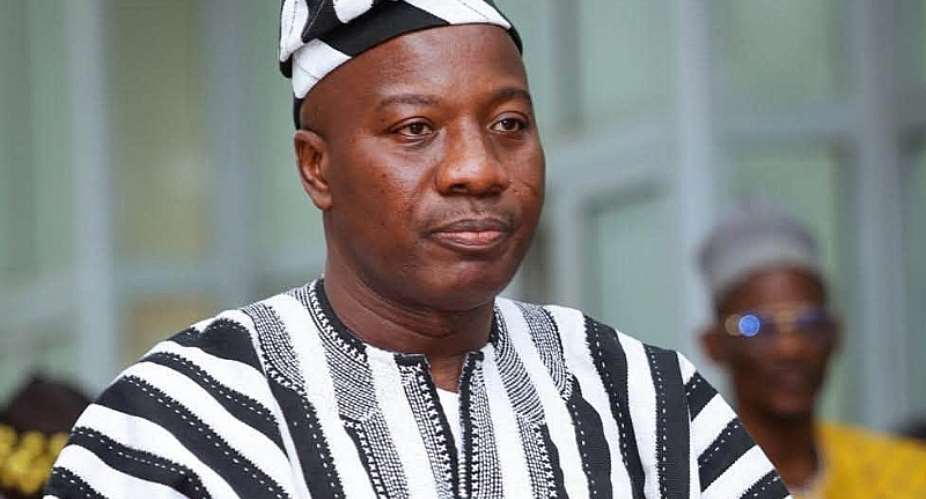
Mr Mahama Ayariga, Minister for Local Government, Chieftaincy and Religious Affairs, has proposed the establishment of a National Eminent Chiefs Committee to work with the National Peace Council to address underlying disputes over land boundaries, traditional authority and lines of succession before they escalate into violence.
He said traditional authorities had a crucial role to play in resolving chieftaincy disputes, emphasising that court judgments alone could not always guarantee customary legitimacy and lasting acceptance among affected communities.
Mr Ayariga made the proposal at a two-day Northern Ghana Peace Conference, which ended in Tamale on Tuesday, October 27.
He called for stronger collaboration between traditional authorities and state institutions, noting that while security agencies could contain violence, lasting peace required dialogue, legitimate traditional leadership and attention to the root causes of disputes.
Mr Ayariga also proposed the establishment of district-level peace structures chaired by neutral eminent chiefs and comprising representatives of security agencies, religious leaders, women, youth and other relevant stakeholders.
He said the structures would gather early warning information, facilitate dialogue and refer disputes to regional and national peacebuilding bodies when necessary.
The Minister further proposed the documentation and gazetting of lines of succession for paramountcies across the five northern regions, alongside the mapping of traditional lands to clarify boundaries and ownership.
He noted that economic deprivation could intensify land and chieftaincy disputes, especially in communities where young people depended on land for their livelihoods but had limited employment opportunities.
Mr Ayariga called for increased investment in local economic development to create jobs and reduce conditions that could make young people vulnerable to exploitation and involvement in conflicts.
The conference, organised by the United Nations Development Programme (UNDP) in partnership with the Northern Caucus of Parliament, the National Peace Council and the Northern Development Authority, sought to strengthen peacebuilding and social cohesion through inclusive dialogue, conflict prevention and cooperation among state and non-state actors.
It provided a platform for stakeholders to examine local disputes involving land and chieftaincy, unemployment and the potential spillover of insecurity from the Sahel.
Participants included members of the Northern Caucus of Parliament, Regional Ministers, traditional and religious leaders, civil society organisations, development partners, security institutions, academia, and women and youth groups from the five northern regions.
Mr Niloy Banerjee, Resident Representative of UNDP Ghana, said sustainable peace required addressing not only security threats but also the underlying economic, social and governance challenges that increased communities' vulnerability to conflict.
He urged stakeholders to translate discussions into clearly defined priorities, responsibilities, financing arrangements and accountability measures to ensure that early warning information led to timely interventions.
Dr Audrey Smock Amoah, Director-General of the National Development Planning Commission (NDPC), called on stakeholders to ensure that early warning information triggered prompt responses and that development resources were distributed fairly and transparently.
She encouraged participants to submit prioritised, evidence-based recommendations to the NDPC to inform the preparation of a consolidated long-term national development plan.
Major General William Azure Ayamdo, Deputy National Security Coordinator, stressed the importance of collaboration among security institutions, traditional leaders and communities in preventing and managing conflicts.
Mr Ali Adolf John, Northern Regional Minister, said inclusive governance, land justice and social cohesion were essential to sustaining peace in northern Ghana.
He emphasised the need for transparent systems for resolving land disputes through both traditional mediation and formal legal processes, supported by improved land records and public education on land laws.
GNA

 2027 Budget: ‘Another round of slogans with no jobs’ – Afenyo-Markin
 Women's Development Bank to begin operations in early 2027 – Ato Forson
 Govt to settle US$590m Eurobond and domestic bond obligations by December 31 – A...
 Govt allocates GH¢1bn to complete 35 Agenda 111 hospitals in 2027
 Ato Forson outlines eight pillars of government's US$10bn economic transformatio...
 Govt allocates GH¢600 million for construction of 10 regional stadia
 Government rules out new taxes in 2027, targets GH¢323.4bn revenue
 2027 Budget: Gov't to improve revenue collection without introducing new taxes –...
 New Economy to help Ghana process more of its resources locally – Ato Forson
 [Full text] Ato Forson presents 2027 budget in Parliament


