




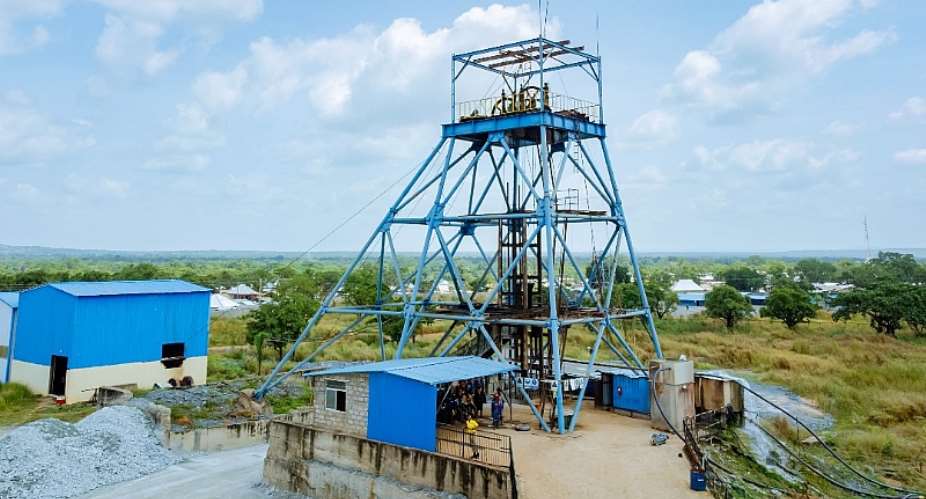
In his recent article on the dispute between Nalaamtaaba Mining Company and Earl International, Nyeya Yen asked the question that matters most: who owns Ghana's gold in practice, and who should benefit from it? He also mourned a missed opportunity. The state, he argued, could have organised Talensi's small-scale miners into community-owned, safe and technically capable enterprises instead of leaving them to compete with far larger players.
ISODEC agrees with the diagnosis. We disagree with one word: could. The opportunity has not passed. Much of the gold of Talensi and the wider Upper East is still in the ground. The choice of model is still open, and the cooperative model is the way forward.
The investment nobody counted
Public debate about Talensi keeps leaving out the people who found the gold. In February 2024, ISODEC mapped the gold supply chain in Talensi, Kenyasi and Obuasi. We interviewed more than twenty-two stakeholders, from small-scale miners and gold buyers to contractors, chiefs and host communities. In Talensi, the miners told a consistent story.
For years they prospected by trial and error before earning anything. Many paid for this with loans from banks, relatives and friends. They carried the risk, and their work proved that there was gold at Gbane.
When the gold turned out to be too deep for their simple tools, they needed technology and capital. Government did not engage honestly with the groups on how to go deeper together. Instead, some miners were sent to China to learn small-scale mining. One licensed local company then brought in a Chinese state mining-service company to supply the technology, under an agreement that gave the local partner a 7% share of the gold. By the local partners' account, the arrangement worked until the gold began to flow. Then the service partner turned itself into a private large-scale miner and sought to absorb the small concessions around it. Our study found that nearly 40 small-scale miners with valid licences faced displacement, and that the move had the backing of politicians and traditional authorities.
Many operators objected. Some felt the compensation offered was far too small for what they had invested. Others rejected the principle of being consolidated out of the ground they had opened. Miners told us that police and military personnel were used to pressure some of them into accepting, and that those who took the compensation did so reluctantly and still feel aggrieved.
Two companies refused an offer of a 2% stake and a few board seats. They had seen what happened to an earlier partner whose nominees, appointed to monitor the quantity and quality of gold produced, were reportedly shut out within days.
One concession holder, now in court, told us: "I thought that everyone from around here would help me to protect local ownership of mines … but to my surprise everyone from chiefs from this mining area to politicians in Bolga and Accra are urging me to sell my concession to the Chinese. … This is why I am in court fighting to protect local/Ghanaian ownership."
These are the miners' accounts, and an independent inquiry should test them. But they explain why Talensi today has local companies in court and many small-scale miners who feel cheated by the consolidation.
The lesson is plain. The pioneers' sweat equity, meaning their years of risk, debt and discovery, was never valued. Compensation priced the land and the licence, not the discovery. Any just settlement, and any future model, must count it.
The problem is the model, not the miners
Talensi follows a pattern seen across Ghana's mining areas. Local people take the risk and find the gold. Better-financed operators arrive with equipment and capital. Small holdings are then absorbed or squeezed out, and disputes follow over boundaries, safety and who was promised what.
The allegations now before the public include encroachment, dangerous blasting and inducements to give up concessions. They must be independently investigated, and every party deserves a fair hearing. But even if every allegation proved false, the pattern would still be a problem. A system in which a 25-acre local concession sits beside a concession of thousands of acres, with no structure to protect the smaller holder, will keep producing conflict.
The answer is not to ban large-scale mining or to turn away foreign investors. It is to change who owns and controls mining at the community level.
Our study found a telling contrast. In mining areas, even cocoa farmers readily give up their farms to small-scale mining, because they become equity holders and share in the daily output. Under the usual company–government deal, by contrast, their land is taken for 20 to 30 years for under-estimated compensation, while royalties go to central government, Assemblies and chiefs. Communities already know which model serves them.
What the cooperative model looks like
ISODEC proposes seven building blocks for Talensi, which could later extend to the other mineral-endowed districts of the Upper East Region.
Recognise the pioneers' stake. The miners who invested years in prospecting, borrowing, and making discoveries have earned a legitimate equity stake. Any consolidation or partnership must independently value this contribution, not just the land and licence.
Consolidate through miner-owned cooperatives. Small-scale concession holders and workers should unite in registered community mining cooperatives. Consolidation remains important, but miners retain ownership and control, with no one forced or pressured to surrender their land.
Promote shared ownership. Each mining enterprise should be jointly owned by cooperative members, workers, and the host community, with the state holding a minority stake on behalf of all Ghanaians. Profits should circulate locally through wages, dividends, and community investments rather than leaving the district.
Use technology as a service, not a pathway to control. Cooperatives need access to equipment, technical expertise, and finance. Domestic and foreign partners can provide these through service contracts or transparent production-sharing agreements. However, such arrangements must not create a route for acquiring concessions. Investors should earn fair returns while communities retain ownership of the resource.
Ensure meaningful oversight. Ownership must come with the right to verify production. Cooperatives should have access to independent assaying, joint weighing and sampling, transparent production records, and enforceable audit rights. A shareholding without visibility over production is not genuine ownership.
Embed safety and environmental responsibility. Every cooperative should operate with mercury-free processing, licensed and supervised blasting, mandatory safety training, and a reclamation bond in place before mining begins. Shared geological data and modern exploration tools can reduce costly trial-and-error mining, protecting both livelihoods and the environment.
Maintain transparency and invest in communities. A fixed share of mining revenue should be paid into a community development fund with publicly available accounts. The fund would support social services and roads in host communities. All gold should be sold through official channels to ensure proper valuation, transparency, and tax compliance.
The state as referee and partner
Nyeya Yen is right that the state must act as an independent and capable referee. This begins with four priorities: publishing a verified map of all mining concessions in Talensi, investigating allegations linked to the ongoing dispute, providing technical and financial support to small-scale miners, and reviewing compensation arrangements for miners who believe they were unfairly treated. Lasting peace and trust in Talensi will depend on transparency, accountability, and fair resolution of grievances.
Beyond Talensi and beyond gold
The challenges facing Talensi are mirrored across other mineral-rich districts in the Upper East Region. To address them, ISODEC is working with partners, especially the UERCC on a regional natural resource framework that brings together government agencies, mining companies, communities, and civil society to resolve disputes and plan collaboratively before conflicts emerge.
The framework also recognizes that mining is a finite resource. Revenues generated today should be invested in long-term economic opportunities such as irrigation, agriculture, livestock development, skills training, and agro-processing. The goal is to ensure that mining communities emerge from the boom years stronger and more prosperous, rather than facing decline once the minerals are exhausted.
A call to act
ISODEC urges the Ministry of Lands and Natural Resources, the Minerals Commission, the Upper East Regional Coordinating Council, the Talensi District Assembly, and traditional authorities to take four immediate steps: establish an independent inquiry into the Talensi dispute, review compensation arrangements for affected miners, publish verified concession boundaries, and pilot a community-owned mining cooperative model in Talensi. These measures would strengthen transparency, safeguard local interests, and lay the foundation for a more equitable and sustainable mining sector.
Talensi presents an opportunity to demonstrate that community participation, accountable governance, and shared prosperity can be at the centre of Ghana's mineral development strategy. The time for decisive action is now.
Samson Danse, (Executive Director), the Integrated Social Development Centre (ISODEC)
Contact details: +233261235700/ 0302254918; [email protected]

 Netanyahu piles pressure on Arab parties with claims of foreign funding to 'stea...
 [VIDEO] How Ghanaian allegedly defrauded Dutchmen of €200,000 in romance scam
 NPP to stage 'Y3gye y3 sika' protest on November 3 over South Africa evacuation ...
 'Ama Sey is no pushover' – Hawa Koomson justifies choice as deputy
 Sucking breasts, deodorants do not cause breast cancer – Dr. Tackie
 Kufuor backs proposal for five-year presidential term
 22-year-old arrested over murder of mother in Tarkwa
 NPP parliamentary aspirants to pay GH¢5,000 for declaration of intent
 Six NIA staff arrested, seven others sacked over alleged extortion at Galaka Gha...
 NPP has no plan to remove Osahen Afenyo-Markin as Minority Leader – Justin Kodua...


