




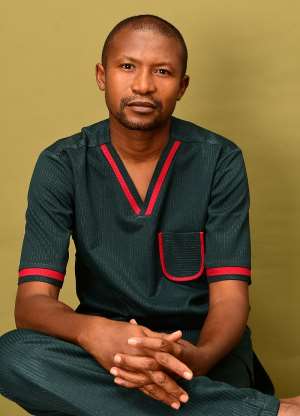
On 29 and 30 October 2026, Brussels hosts Connecting Media Communities (CMC), a gathering organized by the European External Action Service (EEAS) under the theme "Who Shapes What We Believe?" I was invited to attend.
I am the only representative from the West Africa sub-region invited to help strengthen the fight against Foreign Information Manipulation and Interference (FIMI). I will not be in the room.
The Embassy of Switzerland in Accra, which handles Belgium's visa applications in Ghana, refused my application. The notification cited doubts about the reliability of my supporting documents and doubts about my intention to leave the Schengen area before the visa expired.
I respect the right of any state to decide who enters its territory. But the decision deserves reflection, because of what it says about whose voices reach international tables.
My invitation came from the EEAS itself, which sponsored travel, accommodation and allowances. I am a working journalist and security analyst, a columnist with ModernGhana.com and the Daily Graphic, with credentials from the Al Jazeera Media Institute and the United States Institute of Peace. My family, my business and my professional life are in Ghana. These facts were before the embassy.
The stakes of my absence are real. The Africa Center for Strategic Studies reports a fourfold increase in FIMI campaigns targeting Africa since 2022, and calls West Africa the continent's disinformation epicentre.
The region accounts for about 40% of those campaigns, roughly half of them linked to Russia.The same EU-linked research shows approval of Russian leadership across West Africa rose by 22% between 2020 and 2023, with Mali and Burkina Faso the clearest cases.
Analysts describe how these campaigns use paid African influencers, digital avatars, and fake or out-of-context videos and photographs.
Globally, the EEAS's 4th FIMI threat report counted 10,500 channels and websites mobilized in 2025, with Russia and China behind 35% of documented incidents.
The session I was to join, "Building trust locally: Strengthening Community Resilience to FIMI," rests on one idea: communities are the first line of defence. That is also the EU's own approach.
The EEAS lists support for civil society, media literacy and capacity building in vulnerable regions among its resilience tools.
Yet the CMC series has built its network of journalists, fact-checkers and educators through meetings in Sarajevo, Warsaw, Kyiv, Chișinău and Pristina. West Africa, the most targeted region, needs a seat in that network.
When a region's practitioners cannot physically attend the forums designed to counter these threats, the conversation risks being shaped by those furthest from the problem. Europe's partners in this fight need African voices at the table, not just in the footnotes.
I will not let a refusal silence the message. I will take part remotely from Kumasi and present "Building trust locally: Strengthening Community Resilience to FIMI," speaking on West Africa.
My case is unchanged: protect trusted local voices, invest in local-language media, and treat community trust as security infrastructure.
I also urge the EU and its member states to look at how visa systems affect the partnerships they promote. If the goal is to build resilience with Africa, the people doing that work must be able to travel to the meetings that shape it.
Missing Brussels is a setback. Missing the fight against FIMI would be a far greater loss, and I do not intend to.
Mustapha Bature Sallama
Medical/Science communicator, Private Investigator, Criminal Investigation and Intelligence Analysis,United States Institute of Peace (USIP), [email protected] +233555275880
References
ThisDay, "US-Funded Centre Accuses Russia of Seeking to Undermine Democracy in Nigeria, 27 Other Nations," 27 Dec 2024, citing the Africa Center for Strategic Studies. https://thisdaylive.com/index.php/2024/12/27/us-funded-centre-accuses-russia-of-seeking-to-undermine-democracy-in-nigeria-27-other-nations
Terren, Van Aelst and Van Damme, "FIMI in West Africa: Measuring Russian engagement to support counter-FIMI strategies," EUISS Brief 4/2025. https://www.iss.europa.eu/sites/default/files/2025-02/Brief_2025-4_FIMI%20in%20West%20Africa.pdf
VOA via AllAfrica, "West Africa: Kremlin Disinformation Campaigns Aim to Discredit French Military in Sahel, Analysts Say," 25 Feb 2025. https://allafrica.com/stories/202502260014.html
EUvsDisinfo, summary of the 4th EEAS Report on FIMI Threats (2026). https://www.stopfake.org/?p=180825
EEAS, 2024 Report on EEAS Activities to Counter FIMI. https://www.eeas.europa.eu/sites/default/files/2025/documents/2024%20Report%20on%20EEAS%20Activities%20to%20Counter%20FIMI.pdf
EEAS, "Global Media Communities Gather in Pristina, Kosovo to Fight Disinformation," 17 Oct 2024. https://www.eeas.europa.eu/node/446192_fr


 NPP runs to Supreme Court to clarify presidential two-term limit
 Mahama must account for $4bn 24-hour economy before promising $10bn new economy ...
 SA evacuation: Minority must prove wrongdoing before demanding Ablakwa’s resigna...
 Obuasi SHTS sex scandal: Police discover foetus buried near school
 “If I knew then what I know now, I wouldn’t have had a child” – Nana Aba Anamoah
 NDC must maintain policy consistency to perform better – Asiedu Nketia
 South Africa evacuation: Ablakwa failing to meet standards he set in opposition ...
 Mahama eyes Russian investment in Ghana’s energy sector ahead of meeting with Pu...
 ECOWAS deploys pre-election mission to Nigeria ahead of 2027 polls
 South Africa evacuation: Ablakwa has committed no crime; he's going nowhere – Fr...


