




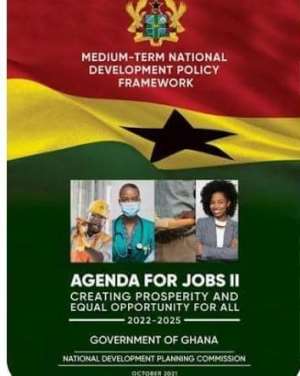
Ghana’s economic challenges have renewed calls from some citizens for a fundamental change in the way the country formulates and implements national policies.
The proponents believe the introduction of a legally binding National Policy Agenda, backed by enforceable laws, could provide the long-term direction needed to achieve sustainable economic stability and development.
They argue that Ghana’s development has often been disrupted by changes in political leadership, with successive governments introducing new priorities while abandoning or altering projects and policies initiated by their predecessors.
For years, debates over Ghana’s economic performance have centred on factors ranging from global market conditions to domestic policy choices. However, some citizens believe the absence of a consistent national development framework, coupled with weak enforcement of laws, remains a major obstacle to sustained progress.
Need for policy continuity
Kofi Addomako, a historian based in Kumasi, believes Ghana can draw lessons from countries that have achieved sustained economic development by maintaining national policies across changes in government.
He said the success of advanced economies was partly linked to systems that ensure key national policies continue regardless of who occupies the presidency.
According to him, Ghana needs a framework capable of compelling successive administrations to adhere to agreed national development priorities, whether political power changes through democratic elections or other forms of transition.
"In Ghana, citizens need a framework that can force every administration to follow a defined path of progress, ensuring that changes in government do not result in the abandonment of vital national projects," he said.
Stronger laws to fight corruption
A teacher, Rosemary Oppong, also described the proposed National Policy Agenda as an important tool for maintaining economic growth and strengthening accountability.
She argued that a clearly defined national development framework, supported by effective enforcement of the law, could help address corruption and indiscipline.
Oppong said lawmakers would also have a responsibility to educate citizens about their rights and obligations under the framework.
"When there is a clear national direction and the laws are enforced strictly, corruption will be curbed because systems of accountability will become transparent and unavoidable," she said.
Beyond four-year manifestos
The call also comes amid concerns that Ghana’s development priorities are too closely tied to the four-year electoral cycle.
Kofi Abeiku, a resident of Ayigya Zongo in Kumasi, urged Parliament to place the national interest above partisan considerations and begin discussions on how a long-term national policy framework could be established.
He said successive governments should not be allowed to determine the country’s development direction solely through party manifestos.
"We need a plan that belongs to the people, not just manifestos designed for political parties," he said.
He further argued that without a broader national development strategy, political transitions could continue to undermine efforts to address the economic difficulties confronting citizens.
Push for a long-term national blueprint
The proponents of the idea believe Ghana’s quest for lasting economic prosperity requires more than short-term interventions and election-focused policies.
They are calling for a National Policy Agenda that can provide continuity in governance while being supported by laws capable of holding individuals and institutions accountable for violations.
As calls for a shift in Ghana’s governance approach grow, attention is expected to focus on Parliament and other state institutions to determine whether a long-term national development framework can be developed and given the legal backing necessary to survive changes in government.

 Netanyahu piles pressure on Arab parties with claims of foreign funding to 'stea...
 [VIDEO] How Ghanaian allegedly defrauded Dutchmen of €200,000 in romance scam
 NPP to stage 'Y3gye y3 sika' protest on November 3 over South Africa evacuation ...
 'Ama Sey is no pushover' – Hawa Koomson justifies choice as deputy
 Sucking breasts, deodorants do not cause breast cancer – Dr. Tackie
 Kufuor backs proposal for five-year presidential term
 22-year-old arrested over murder of mother in Tarkwa
 NPP parliamentary aspirants to pay GH¢5,000 for declaration of intent
 Six NIA staff arrested, seven others sacked over alleged extortion at Galaka Gha...
 NPP has no plan to remove Osahen Afenyo-Markin as Minority Leader – Justin Kodua...


