




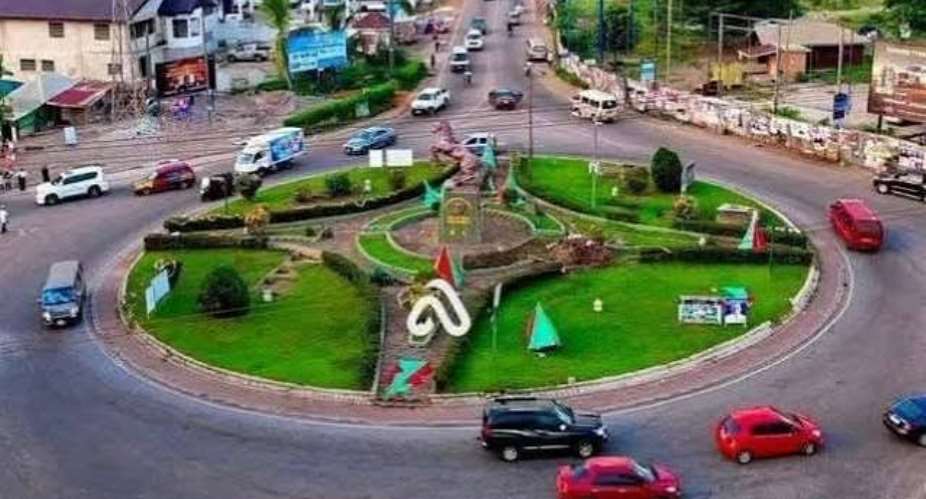
Kumasi, the capital of Ghana's Ashanti Region, stands as one of West Africa's most historically significant cities, celebrated for its royal heritage, vibrant commercial activities, traditional craftsmanship and enduring cultural identity. Affectionately known as the Garden City, Kumasi represents a remarkable blend of history and modern development, serving as the spiritual and cultural centre of the Asante Kingdom and an important pillar of Ghana's economy.
The city's origins are closely associated with the emergence of the Asante Kingdom in the late seventeenth century under the leadership of Osei Tutu I and his renowned spiritual adviser, Okomfo Anokye. Through political alliances, military organisation and a shared sense of identity, Osei Tutu helped unite several Akan states into a powerful kingdom that eventually became one of the most influential political and commercial powers in precolonial West Africa.
Central to this unification was the legendary Golden Stool, known in Asante tradition as Sika Dwa Kofi. According to oral history, Okomfo Anokye caused the sacred stool to descend from the heavens, symbolising the collective soul, unity and spiritual authority of the Asante people. Unlike an ordinary royal throne, the Golden Stool represents the sovereignty of the Asante nation and remains one of its most revered cultural symbols.
Kumasi subsequently developed into the political and administrative capital of the Asante Kingdom, becoming a major centre of trade, diplomacy and military organisation. Its strategic location facilitated commercial connections with neighbouring territories and supported trade in gold, kola nuts, agricultural commodities and other goods.
The city's history also reflects the resilience of the Asante people during encounters with European colonial expansion. Throughout the nineteenth century, the Asante Kingdom fought a series of conflicts with British colonial forces in defence of its political independence and economic interests. The British occupation and destruction of parts of Kumasi in 1874 marked a significant turning point, while the War of the Golden Stool in 1900, associated with the courageous leadership of Yaa Asantewaa, remains an enduring symbol of resistance to colonial domination.
Today, the institution of the Asantehene continues to occupy a central position in Kumasi's cultural and traditional life. The Manhyia Palace, the seat of the Asantehene, serves as an important symbol of royal authority, customary governance and cultural continuity. The nearby Manhyia Palace Museum preserves historical artefacts, royal regalia, photographs and accounts of the Asante monarchy, providing visitors with valuable insights into the kingdom's political and cultural development.
Under the leadership of Otumfuo Osei Tutu II, the sixteenth Asantehene, the traditional institution has continued to combine the preservation of cultural heritage with initiatives in education, peacebuilding, social development and investment promotion. His reign, which began in 1999, has reinforced the relevance of traditional leadership in contemporary Ghanaian society.
One of Kumasi's most celebrated cultural traditions is the Akwasidae festival, observed according to the Asante traditional calendar at intervals of approximately six weeks. The occasion brings together chiefs, queen mothers, traditional authorities, citizens and visitors to honour ancestors, reaffirm allegiance to the Golden Stool and celebrate the continuity of Asante customs.
The festival is distinguished by colourful displays of kente cloth, elaborate gold ornaments, traditional drumming, dancing and royal processions. Beyond its ceremonial significance, Akwasidae provides an opportunity for cultural education, social interaction and the strengthening of relationships between traditional institutions and their communities.
Kumasi's cultural importance extends beyond its royal institutions to the surrounding communities renowned for preserving indigenous artistic traditions. Bonwire, located near Kumasi, is internationally recognised for its association with the production of kente, Ghana's celebrated handwoven textile. Its intricate patterns and colours communicate symbolic meanings associated with leadership, wisdom, spirituality, social values and historical experience.
At Ahwiaa, skilled artisans maintain a longstanding tradition of woodcarving, producing ceremonial stools, sculptures, traditional figures and decorative objects. These crafts represent both artistic expression and an important source of employment and income for local communities.
Ntonso is similarly celebrated for Adinkra cloth production, an artistic tradition that uses symbolic designs to communicate philosophical ideas, proverbs and cultural beliefs. Symbols such as Gye Nyame, Sankofa and Dwennimmen continue to feature prominently in Ghanaian textiles, architecture, visual arts and contemporary design.
Together, these craft communities demonstrate the economic potential of cultural heritage. Their products attract tourists, support small businesses and provide opportunities for traditional skills to be transferred from experienced artisans to younger generations.
Commerce remains another defining feature of Kumasi. The city has historically served as a major trading centre connecting Ghana's northern and southern regions. Its extensive transport networks, wholesale markets and distribution activities make it a vital destination for agricultural produce, manufactured goods, textiles, machinery and household products.
At the centre of this commercial activity is the Kejetia Market complex and the surrounding Central Market trading district, widely recognised among the largest market centres in West Africa. Thousands of traders, transport operators, wholesalers and retailers depend on the area for their livelihoods, while customers arrive from across Ghana and neighbouring countries.
The market's significance extends beyond retail trade. It supports agricultural supply chains, food distribution, informal manufacturing, logistics and cross-border commercial relationships. However, congestion, sanitation challenges, fire risks and infrastructure pressures continue to highlight the need for sustained investment in modern market facilities and urban management.
Kumasi is also an important centre of education, research and technological development. The Kwame Nkrumah University of Science and Technology, one of Africa's prominent institutions for science and engineering education, has contributed significantly to Ghana's human resource development, scientific research, industrial innovation and professional training.
The presence of KNUST and other educational institutions has helped position Kumasi as a centre for entrepreneurship, healthcare, architecture, engineering and applied research. These institutions provide opportunities to connect traditional industries with modern technology, particularly in manufacturing, agro-processing, digital innovation and sustainable urban development.
The city's industrial landscape includes the Suame Magazine industrial enclave, one of Ghana's best-known centres for vehicle repairs, metal fabrication, engineering services and informal-sector manufacturing. The enclave demonstrates the technical capabilities and entrepreneurial resilience of local artisans, although greater investment in modern equipment, skills development, occupational safety and industrial infrastructure could significantly improve productivity and competitiveness.
Despite these achievements, Kumasi faces growing challenges associated with rapid urbanisation. Population growth, expanding residential developments, traffic congestion, inadequate drainage, waste management difficulties and the reduction of green spaces have placed increasing pressure on the city's infrastructure and environmental quality.
These developments are particularly significant because of Kumasi's historical identity as the Garden City of West Africa. The nickname reflects the city's former reputation for abundant vegetation, attractive gardens and tree-lined surroundings. Although urban expansion has altered much of this landscape, important green spaces and natural attractions remain, including the Kumasi Zoological Gardens and the nearby Owabi Wildlife Sanctuary.
Restoring the Garden City identity requires more than ceremonial tree planting. It demands comprehensive urban planning, protection of waterways and wetlands, improved sanitation, sustainable transport systems and deliberate investment in public parks and urban forestry.
Cultural tourism offers another important opportunity for Kumasi's future development. The city's royal history, traditional festivals, craft villages, museums, cuisine and historical landmarks provide a strong foundation for attracting domestic and international visitors.
The UNESCO-listed Asante Traditional Buildings, located in communities around Kumasi, offer further evidence of the architectural and cultural achievements of the Asante civilisation. These surviving traditional structures, associated with Asante religious and cultural practices, are important heritage assets that deserve sustained conservation and international promotion.
With effective investment in tourism infrastructure, hospitality services, heritage preservation and destination marketing, Kumasi could strengthen its position as one of Africa's leading centres for cultural and historical tourism.
The city's economic and cultural importance also makes it a strategic destination for Ghana's diaspora engagement initiatives. For people of African descent seeking deeper connections with African history, Kumasi offers opportunities to explore indigenous political institutions, artistic traditions, historical resistance to colonial rule and the continuing vitality of African cultural identity.
Yet preserving this heritage requires deliberate action. Traditional crafts must be supported through skills training, access to finance and improved market opportunities. Historical buildings and cultural sites require maintenance and professional conservation. Indigenous languages, oral traditions and customary knowledge must be documented and transmitted to younger generations.
Equally important is the need to ensure that tourism development benefits local communities rather than reducing cultural traditions to commercial attractions.
Kumasi's future therefore lies in its ability to balance modernisation with cultural preservation. The expansion of infrastructure, industrial development, education and digital technology should complement rather than undermine the traditions that give the city its distinctive identity.
From the sacred legacy of the Golden Stool to the royal ceremonies at Manhyia, from the colourful looms of Bonwire to the bustling markets of Kejetia, Kumasi embodies the historical depth, entrepreneurial energy and cultural creativity of Ghana.
Its story is one of political leadership, resistance, resilience, commerce, craftsmanship and adaptation across generations.
Kumasi is not merely the capital of the Ashanti Region. It is a living symbol of Ghana's historical identity, a centre of indigenous knowledge and enterprise, and a powerful reminder that cultural heritage can serve as a foundation for sustainable economic development.
As Ghana pursues industrial transformation, tourism expansion and inclusive national development, the preservation and modernisation of Kumasi should remain an important priority. Protecting its historical landmarks, revitalising its green spaces, strengthening its industries and promoting its cultural assets will help ensure that future generations inherit a city worthy of its remarkable past.
The Garden City may continue to evolve, but its greatest strength remains unchanged: Kumasi is where the history, traditions and aspirations of the Asante people meet the opportunities of modern Ghana.


 NPP runs to Supreme Court to clarify presidential two-term limit
 Mahama must account for $4bn 24-hour economy before promising $10bn new economy ...
 SA evacuation: Minority must prove wrongdoing before demanding Ablakwa’s resigna...
 Obuasi SHTS sex scandal: Police discover foetus buried near school
 “If I knew then what I know now, I wouldn’t have had a child” – Nana Aba Anamoah
 NDC must maintain policy consistency to perform better – Asiedu Nketia
 South Africa evacuation: Ablakwa failing to meet standards he set in opposition ...
 Mahama eyes Russian investment in Ghana’s energy sector ahead of meeting with Pu...
 ECOWAS deploys pre-election mission to Nigeria ahead of 2027 polls
 South Africa evacuation: Ablakwa has committed no crime; he's going nowhere – Fr...


