




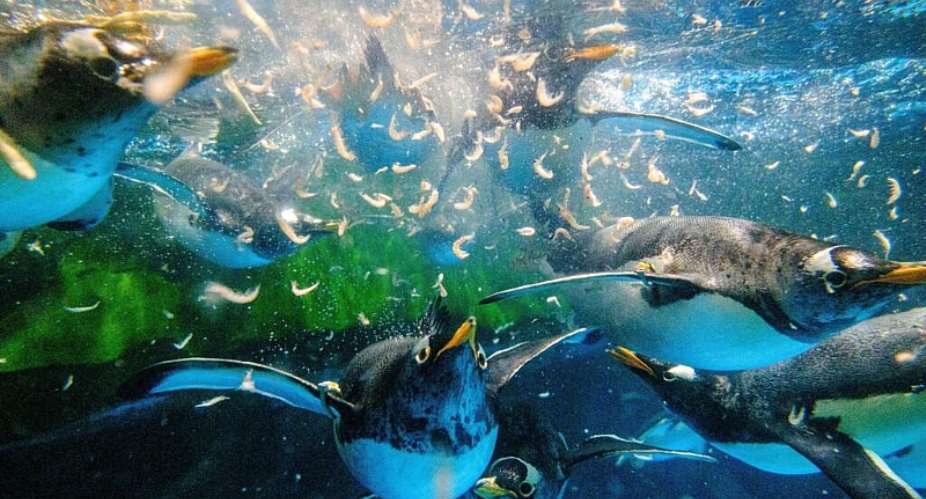
Krill is the cornerstone of the entire Antarctic ecosystem – a heavy responsibility for such a small animal.
How much of it humans should be allowed to take is now being debated in Hobart, Tasmania, which is playing host to two weeks of talks held by the Commission for the Conservation of Antarctic Marine Living Resources (CCAMLR), which manages fishing and works to protect marine life in these remote, icy waters.
Krill is a type of zooplankton – tiny animals that drift with ocean currents – and provides food for creatures at both ends of the food chain. While it lives in every ocean, it is most plentiful in the Southern Ocean around Antarctica.
“It's at the base of the entire ocean food chain, feeding the smallest fish,” François Chartier, an oceans campaigner at Greenpeace France, told RFI.
“But it is also a basic food source for some of the largest marine animals, particularly whales, as well as huge numbers of seabirds, including penguin colonies in Antarctica.”
Pacific nations await climate billions, as fossil fuel divide looms over Cop31
Pink salmon and shiny pets
Sea creatures are not the only ones with an appetite for krill. Humans catch it to feed to farmed fish, including salmon.
Salmon farming can put additional pressure on marine ecosystems because feed has traditionally relied on fishmeal and fish oil made from wild-caught fish. Krill is another marine ingredient used in salmon feed.
“To produce salmon, you need small fish from the open sea,” Chartier said. “Salmon basically eat fish, and the more you reduce the share of animal protein in their feed – by adding soya or plant proteins, for example – the less pink and fatty the fish will be.
“So that is made up for by adding fish oils, particularly krill oil, to give the salmon texture, colour, fat and omega-3.”
Krill also ends up in dietary supplements for humans, as well as cosmetics, and even in luxury cat and dog food – apparently because it gives pets a shiny coat.
Meeting that demand has become an industrial operation
Up to 620,000 tonnes of krill can be caught each year, the maximum allowed by CCAMLR. However, krill fishing is on such a massive scale that the quota was reached as early as August this year.
“We really are at the absolute limit of this model,” Chartier said.
“This is truly the final frontier, because we are going to the most remote and hostile waters to take whatever sits at the very bottom of the food chain. It really is the ultimate pillaging of the food chain in marine ecosystems.”
Locked in Arctic ice, the floating lab studying climate and wildlife
Food chain under threat
The consequences of krill fishing are being felt by some of Antarctica's biggest animals.
“It's really catastrophic, not only for the great whales that come during the southern summer to gorge themselves on krill before heading back to tropical areas to give birth and nurse their young,” Chartier said.
“It also puts penguins at risk, and they are already in a very worrying situation because of global warming. And then the effects can ripple through the entire food chain.”
Fishing vessels bring other risks too, including underwater noise and collisions with marine animals.
While consumers can reduce demand for krill by avoiding farmed salmon, Chartier argues that protecting it ultimately requires action by governments.
One option is marine protected areas – parts of the ocean where activities such as fishing are restricted or banned. They can also be created in international waters, which are beyond the control of any single country.
“We need international governance that relies on countries working together,” Chartier said.
“And then we need to set up a network of marine protected areas on the high seas, where fishing is banned completely. That means having at least 30 percent of the oceans truly protected.”
This article was adapted from the original version in French by Florent Guignard.


 President Mahama urges African countries to fund own peace operations, warns aga...
 Govt to borrow GHS15.38 billion from domestic market, plans DDEP bond buyback
 Finance Ministry says all 2026 ABFA allocations reserved for Accra-Kumasi expres...
 'Surprised and disappointed' — GTA CEO Efua Houadjeto responds to Abeiku Santana...
 Police arrest NDC delegates for allegedly photographing ballots at Bimbilla cons...
 Gambia’s Chief Justice pays courtesy call on Asantehene at Manhyia Palace
 NDC Constituency polls: Delegates invoke 'Antoa' deity over alleged album manipu...
 NDC Oforikrom constituency election stalls over ballot paper delays
 Former NDA CEO Sumaila Abdul-Rahman, three others fined GH¢84,000 each over proc...
 Wa: Abandoned newborn baby boy rescued at Sombo


