




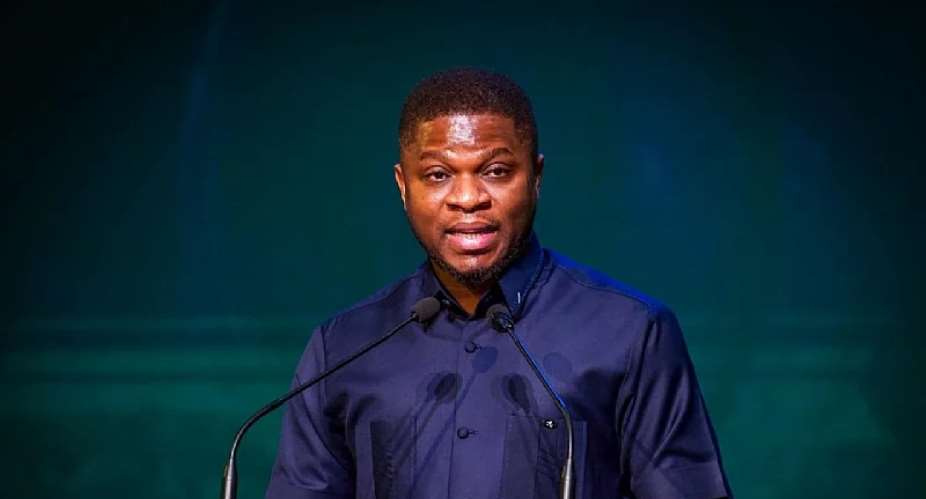
The Chief Executive Officer of the Ghana Gold Board (GoldBod), Sammy Gyamfi, says the artisanal and small-scale mining (ASM) sector generated $10.8 billion in foreign exchange (FX) for Ghana in 2025, following reforms aimed at bringing gold previously lost to smuggling and illegal trade into the formal economy.
He said gold exports from the ASM sector also increased significantly in volume, rising from 63 tonnes in 2024 to nearly 104 tonnes in 2025.
“More importantly, the ASM gold sector in 2025 generated $10.8 billion in foreign exchange for the country,” Mr Gyamfi said in a keynote address at the 2026 African Minerals Policy Forum in Accra last Monday.
The forum, dubbed “Mining in Motion”, was held on the theme: “From Gold Production to National Prosperity: Ghana's GoldBod Model for Mineral Sovereignty and Value Addition.”
Mr Gyamfi said the foreign exchange generated from ASM gold supported reserve accumulation and currency stability, contributing to the cedi's 41 per cent appreciation against the US dollar in 2025.
The conference was organised by the Ashanti Green Initiative, with the Ministry of Lands and Natural Resources serving as the principal convening partner and support from the World Bank, the World Gold Council and the African Union.
The event brought together Liberia's Vice President Jeremiah Kpan Koung, former UK Deputy Prime Minister Dominic Raab, Lands and Natural Resources Minister Emmanuel Armah-Kofi Buah, Environment Minister Dr Zanetor Agyeman Rawlings, OECD Secretary-General Mathias Cormann, African Union officials and ministers from Guinea, Tanzania, Nigeria, Sierra Leone, Malawi and Liberia.
GoldBod outlines reforms
Mr Gyamfi said GoldBod had introduced a four-tier licensing system, transparent pricing, digital stock-booking, official receipts and increased state-funded liquidity for local gold purchases as part of efforts to formalise gold trading and curb smuggling and under-declaration.
The Board had also deployed a task force and inspectorate across the country to monitor compliance and gather intelligence on illegal gold trading and smuggling.
According to him, the measures were designed to address long-standing leakages in the ASM sector, where significant quantities of gold had been lost to the formal economy through smuggling, under-declaration and informal cross-border trade.
Push for local refining
Mr Gyamfi said GoldBod was also focused on retaining more value from Ghana's gold by expanding local refining.
He said 18.7 tonnes of gold had been refined locally since August 1, 2026, with 5.4 tonnes out of the 5.7 tonnes of ASM gold purchased in October refined locally.
He said GoldBod had entered into refining agreements with two privately owned refineries, Gold Coast Refinery and Royal Ghana Gold Refinery.
“These two refineries have progressively and cumulatively refined 25 tonnes of ASM gold purchased and exported by the GoldBod this year. This represents about 30 per cent of total ASM gold exports (85.4 tonnes) from year to date,” he stated.
Mr Gyamfi said GoldBod was pursuing a policy shift from the export of raw minerals towards achieving zero raw mineral exports by 2030.
GoldBod targets more jobs and support for miners
The GoldBod CEO said the Board's institutional, licensing and value-addition reforms had created 4,866 direct jobs, comprising 361 public-sector and 4,505 private-sector positions.
He said additional employment opportunities were expected to emerge across the gold value chain as the reforms progressed.
Mr Gyamfi announced that GoldBod would introduce an ASM Formalisation and Financing Support Programme next year in partnership with the Ministry of Lands and Natural Resources and the University of Mines and Technology (UMAT).
The programme will receive technical support from Rand Refinery of South Africa and is expected to increase production, revenue and employment while reducing operating costs and environmental degradation.
He also disclosed that GoldBod was procuring a blockchain-based traceability system to track gold from legitimate sources throughout the supply chain and strengthen responsible sourcing.
Mr Gyamfi called for greater cooperation among African countries on mineral governance, arguing that national-level reforms alone could not effectively tackle cross-border smuggling and other challenges affecting mineral markets.
He said Ghana's experience could help inform a broader continental approach aimed at enabling African countries to retain more value from their natural resources.

 Ghana's $10bn trade surplus masks risks of gold dependence – ISSER
 NACOC boss reveals how drug cartels in Ghana acquiring scanners, exploiting insi...
 Artisanal and small-scale mining sector generated $10.8bn in foreign exchange in...
 Obuasi SHTS sexual scandal: 'Veep’s silence does not mean inaction' – Hamza Su...
 October 21: Cedi sells at GHS12.25 on forex market, GHS11.61 on BoG interbank
 GES often favour school managers in sexual abuse investigations – Kofi Asare
 Veep’s silence on Obuasi SHTS scandal worrying – Miracles Aboagye
 ECOWAS deepens EU cooperation to improve disaster response in West Africa
 Nigeria confirms Ebola case as Bundibugyo virus reaches fifth country
 DVLA cautions public against fake SMS payment links and online fine scams


