




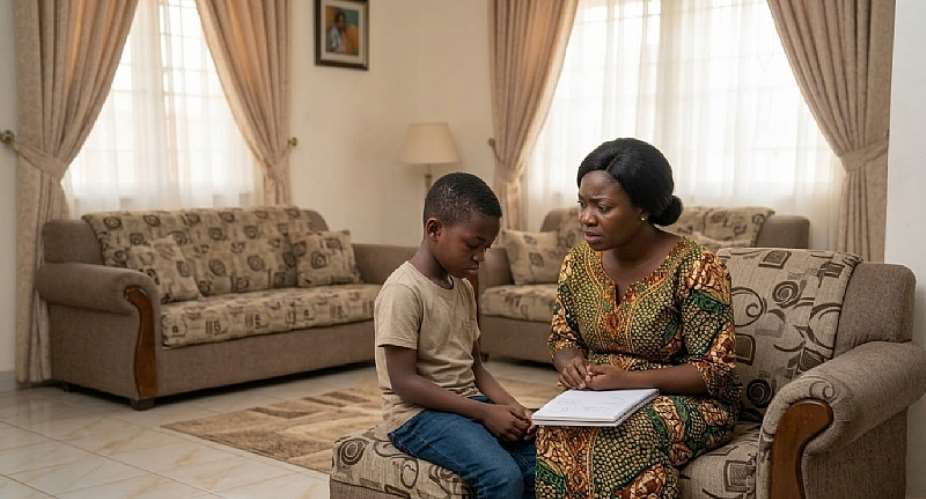
In many homes, the comparison of children is often presented as a harmless way of encouraging improvement. A parent may point to a sibling who reads fluently, a classmate who performs exceptionally well in mathematics or a neighbour’s child who speaks confidently in public. The intention may be to motivate, but the effect can be quite different from what the parent expects.
The underlying assumption is that children who grow up in similar environments should develop similar abilities at roughly the same pace. This assumption overlooks the complexity of child development and the many factors that influence learning, including individual differences, learning opportunities, emotional well-being, family circumstances and the quality of educational support available to each child.
Children should be encouraged to improve, but another child’s progress should not become the standard by which their own worth is measured.
Understanding Differences in Child Development
Children do not acquire every skill at the same time. One child may develop reading skills early but struggle with numerical reasoning. Another may demonstrate strong problem-solving abilities but require additional support with written expression. Some children are comfortable speaking before an audience, while others communicate their ideas more effectively through writing or one-on-one conversations.
Such differences require parents and educators to look beyond a single measure of ability. Academic performance, for instance, is important, but it does not capture every aspect of a child’s development. Social skills, creativity, persistence, emotional regulation and practical problem-solving also contribute to learning and personal growth.
This does not mean that every developmental difference should be dismissed as normal or that children should be left without appropriate support. Where a child experiences persistent difficulty with reading, communication, attention or other essential skills, parents and teachers should investigate the underlying causes and seek professional guidance where necessary. The point is to respond to the child’s actual needs rather than assume that the child is failing simply because another child is progressing faster.
The Hidden Cost of Constant Comparison
Repeated comparison can influence how children perceive themselves. When a child is frequently told that a sibling or classmate is smarter, more disciplined or more successful, the message may gradually shift from a specific concern about performance to a broader judgement about personal worth.
Instead of thinking, “I need to improve my reading,” the child may begin to think, “I am not as good as other children.” That distinction matters because the first thought identifies a skill that can be developed, while the second can become a damaging belief about identity and ability.
Comparison can also affect relationships between siblings. When children repeatedly compete for parental approval, they may begin to view one another as rivals rather than people who can learn from and support each other. Some may withdraw when they feel they cannot meet expectations, while others may become overly concerned with winning approval through achievement.
These outcomes are not inevitable, and comparison does not affect every child in the same way. Nevertheless, parents and educators should recognise that repeated negative comparisons can create unnecessary emotional pressure and undermine a child’s confidence.
Encouragement Must Be Accompanied by Accountability
Rejecting harmful comparison does not mean abandoning discipline, setting low expectations or praising children regardless of their effort. Children need clear standards, constructive feedback and opportunities to take responsibility for their learning.
The difference lies in how expectations are communicated and how progress is assessed. Rather than asking why a child cannot perform like a sibling, a parent can identify the specific difficulty, discuss what improvement should look like and agree on practical steps to achieve it.
For example, if a child struggles with reading, the response should involve identifying the particular challenge, providing regular reading practice and monitoring progress. If a child performs poorly in mathematics, the parent and teacher should examine the concepts the child has not understood and determine what additional instruction may be necessary.
This approach replaces judgement with assessment and frustration with purposeful intervention. It also teaches children that ability can be developed through effort, effective strategies, appropriate instruction and support.
What Parents and Schools Should Do Differently
Parents must make a conscious effort to recognise individual progress. A child who has improved from struggling to read a short passage to reading it independently deserves acknowledgement, even if another child is already reading more advanced material. Recognising such progress does not require exaggerating achievement; it requires understanding the child’s starting point and the work involved in improvement.
Schools have a similar responsibility. Teachers should use assessment to identify learners’ strengths, gaps and learning needs rather than rely exclusively on rankings or public comparisons. Although examinations and performance records can help establish standards, they should also inform decisions about remediation, enrichment and differentiated instruction.
Parents and teachers must also communicate with one another. If a child is struggling consistently, the priority should be to understand the problem and agree on appropriate support. Labelling the child as lazy, weak or less intelligent without investigating the circumstances can delay the intervention that the child needs.
Most importantly, adults must be mindful of the language they use. Statements such as “You have improved in this area, but you still need to work on this skill” give children a clearer direction than “Look at how well your classmate is doing.” The former focuses on learning and improvement; the latter makes another child the reference point for success.
A Better Measure of Progress
Every child has strengths that deserve recognition and weaknesses that require attention. The responsibility of parents and educators is to understand both, establish realistic expectations and provide the support necessary for development.
The objective is not to ensure that every child performs at the same level or follows an identical developmental timeline. It is to help each child acquire essential skills, develop confidence, overcome difficulties and make meaningful progress.
Comparison may sometimes draw attention to a gap, but it cannot explain why that gap exists or determine the most effective way to address it. That requires careful observation, sound educational judgement and a willingness to understand the individual child.
Ultimately, the question should not be whether your child is ahead of another child, but whether your child is receiving the support needed to grow and fulfil their potential.
A child’s journey deserves guidance, not constant comparison. When parents and schools focus on individual needs, purposeful improvement and appropriate support, they give children a stronger foundation for learning and development.
About the author
Alpha Osei Amoako is an educational leader, school business manager and educational consultant with interest in school leadership. He has a decade experience in school leadership and is the head of Alpha Pathway Educational Consult. You can contact him on 0539157258


 Macron promises tough punishments for rioters during nationwide day of action
 Trump endorses embattled Israeli PM Netanyahu ahead of October 27 election
 We are going to provide emergency airstrip in regions without airports — Mahama
 Nana Konadu maiden memorial mass set for October 23
 'Double standards are not helpful, wrong yesterday is wrong today' – Ablakwa on ...
 NPP has resolve internal wrangling — Bawumia
 Ghana, US Virgin Islands agree on recruitment of Ghanaian teachers, nurses
 “Soldiers Will Stay There”—Mahama Declares Permanent Military Presence in Forest...
 ‘No Borrowing Involved’ — Mahama Rolls Out US$10bn New Economy Policy
 “Ask Jean Mensa to resign first”—Tanko-Computer fires back


