




The Select Committee appointed by the President of the Republic of Ghana, H.E. John D. Mahama, to oversee the transition to the newly established University of Engineering and Agricultural Sciences (UEAS) has made its first official visit to the Ohawu Campus, marking a significant step toward the start of full-scale public university operations in the southeastern part of the country.
Established under the University of Engineering and Agricultural Sciences Act, 2026 (Act 1169), the new public university comprises three campuses, namely Acherensua, Bonsu and Ohawu, under a single institutional framework. UEAS is headquartered at Bonsu. Accordingly, the Government of Ghana constituted a Select Committee to advise and recommend practical arrangements and measures to ensure the university becomes fully operational as soon as possible.
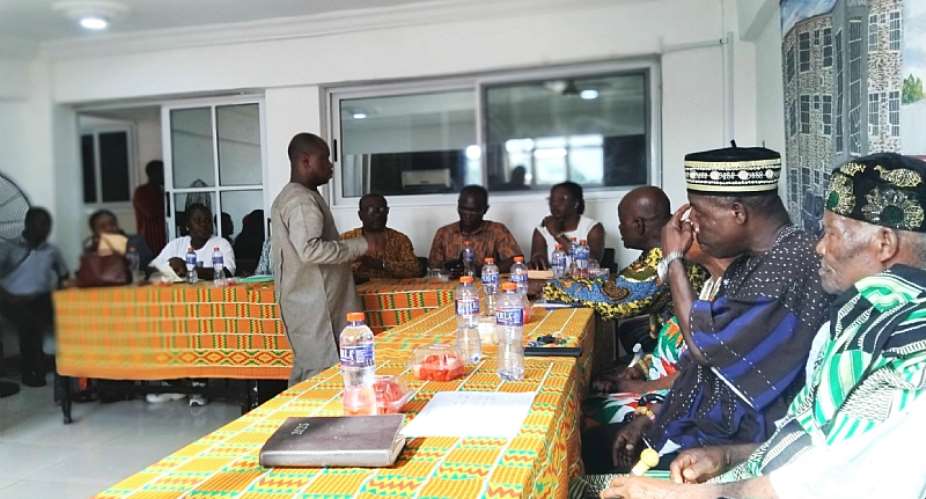
Although the UEAS Select Committee has been undertaking preparatory work behind the scenes, Tuesday, October 13, 2026, marked its first official visit to the Ohawu Campus. Led by Dr Emmanuel Newman, Director of Tertiary Education, the delegation was received by Mr Ernest M. K. Abiew, Principal of Ohawu Agricultural College (OAC). The visit featured two separate stakeholder meetings in Akatsi and Ohawu, bringing together authorised traditional leaders, college management, local government representatives, community members, and private sector professionals.
Stakeholder Engagement to Accelerate the Transition
The meetings provided an important community platform for the Committee to discover and familiarise itself with the existing infrastructure, assess the campus's development potential, and engage key stakeholders on the practical supports available for establishing the new public university campus. Discussions focused on the state of existing facilities, land tenure, traditional authority support, community participation, and opportunities for collaboration to facilitate a smooth and timely transition.
The open engagements also underscored the importance of building strong partnerships among government institutions, college management, traditional authorities, local government, and the wider community. Such collaboration will be essential to creating a solid foundation for the university's successful take-off and long-term sustainability.
Land Ownership and Community Cooperation
Land availability and tenure arrangements featured prominently in the discussions. According to the Principal, Mr Abiew, the land currently associated with the College had previously been acquired by the government and used by Ohawu Agricultural College, the Crop Research Institute, the Soil Research Institute, and a state farm, which subsequently ceased operations.
Contributing to the roundtable discussion, Zikpuitor Jacob Agbemazor of Ohawu indicated that the land had been offered to the government in 1957. He emphasised that, since then, the chiefs and individuals in the area had not initiated any land litigation concerning the property. He further described the area as peaceful and expressed strong confidence in the community's continued cooperation with the College.
These assurances highlighted the importance of sustained collaboration between the government and traditional authorities in securing the land arrangements necessary for the new university's development.
Protecting Indigenous Rights and Cultural Heritage
It is important to say that the UEAS Select Committee was on top of the national assignment. In a significant intervention, Dr Newman asked the traditional authorities whether there were any shrines or sacred groves on the lands earmarked for the university's development. The chiefs emphatically responded that there were none.
Dr Newman explained step-by-step that the government was committed to ensuring that the transition respected the indigenous rights, cultural values, and traditions of local communities. He therefore tasked the college management, municipal, and traditional authorities to verify, consult, and appropriately address all concerns about any sacred or culturally significant sites that might exist within the proposed development areas before major physical construction activities begin.
The friendly discussion demonstrated the importance of integrating cultural sensitivity, community consultation, and responsible land management into the planning and development of the new university campus.
Traditional Leaders Express Strong Support
One of the most encouraging outcomes of the visit was the strong goodwill, collective enthusiasm and groundswell of positive sense of belongingness demonstrated by traditional authorities towards the establishment of UEAS at Ohawu. Dr Newman politely expressed his appreciation for the positive reception and the genuine commitment of traditional leaders to the university's development.
In a notable demonstration of local support, Togbui Avafiamega of Afife Traditional Area pledged to make additional hectares of land available to strengthen the university's operations. According to the respected traditional ruler, his main aspiration was for UEAS to generate meaningful development opportunities for his people and contribute to Ghana's overall development.
The pledge represents a promising indication of the potential for traditional leadership to support the expansion of tertiary education, strengthen institutional capacity, and create new opportunities for local communities. Such commitments, if formalised through the appropriate procedures, could help position the Ohawu Campus for future expansion and strengthen its contribution to inclusive agricultural education and sustainable development.
A Strategic Opportunity for Scientific Agricultural Education
The establishment of UEAS presents an important opportunity to build on the institutional legacy and existing infrastructure of Ohawu Agricultural College while expanding its contribution to sustainable university education, agricultural innovation, and national development. Although the campus's existing infrastructure remains modest, its established institutional presence, land resources, community support, and agricultural heritage provide a valuable foundation for future development.
With strategic investment, effective planning, and partnerships involving government, the private sector, development organisations, and traditional authorities, the Ohawu Campus could become an important centre for higher agricultural education, practical training, scientific research, and technological innovation. Its development could also contribute to improved agricultural productivity, accelerated employment creation, rural transformation, food security, and the advancement of Ghana's sustainable development priorities.
The transition therefore offers an opportunity not merely to establish a new university campus, but also to build on the achievements of Ohawu Agricultural College and extend its contribution to generations of students, farmers, researchers, and communities.
Key Stakeholders Reaffirm Commitment
The participants in the meetings included Mr Samuel Sarpong, a former Principal of OAC; Hon. Martin P. K. Amenaki, Municipal Chief Executive of Ketu North; Mr Mawuli Sevor, Assistant Principal of the OAC; Hon. Samuel Gamor, Assembly Member for Ohawu; Bob Fugah, Agbotadua of Ohawu; and Dr Evans Asigri and Mr Francis Obeng, both members of the UEAS Select Committee, among others. Their participation reflected the broad institutional, traditional, and community interest in ensuring that the transition progresses successfully.
In closing, the OAC Principal, Mr Abiew, expressed profound gratitude to the traditional authorities, members of the Select Committee, and all stakeholders who participated in the fruitful engagements. He acknowledged their support and contributions towards advancing the new university campus.
The visit marked an encouraging milestone in the transition to UEAS. With sustained stakeholder cooperation, effective resource mobilisation, and careful attention to infrastructure, land administration, and community interests, the Ohawu Campus can become a significant contributor to Ghana's higher agricultural engineering education and broader development agendas.
The message from Ohawu is very clear; thus, strong community partnerships, traditional leadership support, and strategic investment can help transform the legacy of OAC for sustainable university education.

 We are going to provide emergency airstrip in regions without airports — Mahama
 Nana Konadu maiden memorial mass set for October 23
 'Double standards are not helpful, wrong yesterday is wrong today' – Ablakwa on ...
 'I am disappointed in govt for suspending ban on bus preaching' — Apostle Asempa...
 NPP has resolve internal wrangling — Bawumia
 Ghana, US Virgin Islands agree on recruitment of Ghanaian teachers, nurses
 Never Again: Mahama Pushes for Local Vaccine Manufacturing After COVID‑19
 “Soldiers Will Stay There”—Mahama Declares Permanent Military Presence in Forest...
 ‘No Borrowing Involved’ — Mahama Rolls Out US$10bn New Economy Policy
 “Ask Jean Mensa to resign first”—Tanko-Computer fires back


