




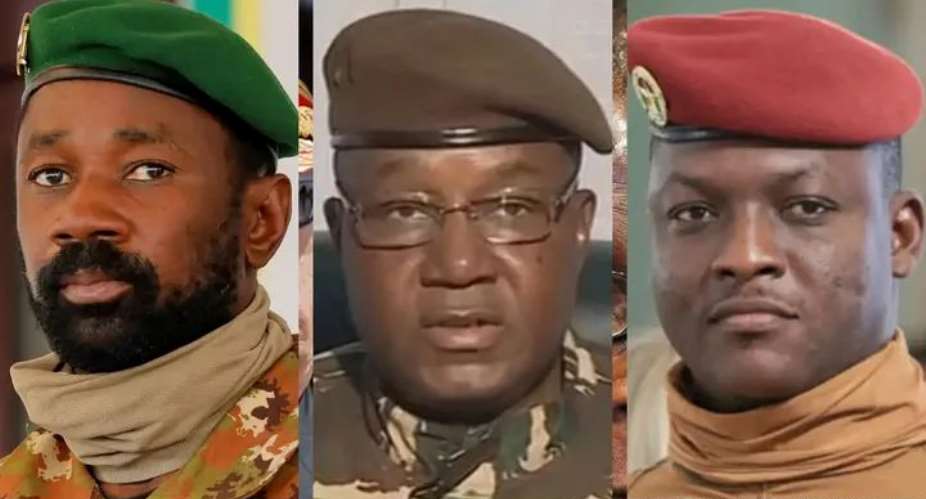
For almost two years, the relationship between ECOWAS and the three Sahel states that left it was mostly a story of speeches and suspicion. On Saturday, October 17, 2026, it changed. Delegations met in Dakar for talks that both sides described as a new beginning.
What happened in Dakar
Burkina Faso, Mali and Niger are the members of the Alliance of Sahel States (AES). They formally left ECOWAS in January 2025, after forming their own bloc. Contacts between the two sides had continued since then, but Saturday's session was their first official ministerial meeting.
The AES delegation was led by Burkina Faso's foreign minister, Karamoko Jean-Marie Traoré, and the ECOWAS delegation by Senegal's foreign minister, Cheikh Niang.
In a joint statement, the two sides welcomed the spirit of fraternity and mutual respect, and stressed good neighbourliness with respect for sovereignty. They agreed to set up joint thematic working groups to work toward a framework cooperation agreement. Expert-level technical talks were due to continue on Sunday, October 18.
What each side wants
The two delegations did not arrive with the same goals. A day earlier, the AES foreign ministers met in Ouagadougou and named three priorities: state sovereignty, consolidation of their confederation, and the defence of their populations' interests. RFI reported that the AES sees the talks as a way to formalized new relations, not to discuss rejoining ECOWAS.
ECOWAS's chief negotiator, for his part, reportedly said nobody can tell the AES to come back today. That sentence suggests ECOWAS accepts the exit as a fact, at least for now.
The agenda before them is practical. The AES leader, Captain Ibrahim Traoré, said in July that any new arrangement should protect regional gains such as the free movement of people and goods. Analysts have warned that a split carries real costs: a cooperation vacuum along shared borders that benefits armed groups and complicates formal trade.
Why neither side can afford a clean break
The case for a deal rests on three facts.
Trade and movement. ECOWAS has so far kept the door open. According to a senior ECOWAS-linked commentary, the bloc maintains visa-free travel and duty-free trade across its borders with Mali, Niger and Burkina Faso, even though the AES imposes tariffs on ECOWAS goods. That was partly a gesture of goodwill, since the three are landlocked and depend on coastal ECOWAS corridors.
A formal framework would turn that temporary tolerance into predictable rules.
Security. The threat that pushed the Sahel states toward the military route does not stop at their borders. As one analysis observed, outside ECOWAS the AES countries have limited capacity to anticipate, track and respond to attacks with the same level of coordination.
Coastal states such as Ghana, Togo and Benin know that violence in the north can spread south. Without an institutional agreement, security cooperation currently depends on ad hoc bilateral arrangements between neighbouring states. Ghana, for example, appointed a former military officer with counter-terrorism expertise as Special Envoy to the AES.
Politics and geopolitics. The AES governments are led by juntas that took power between 2020 and 2023. They have turned their backs on France and, by extension, on coastal neighbours such as Côte d'Ivoire and Benin, which they see as too close to Paris, while moving closer to Moscow. Russia has offered to help.
Russia's foreign minister said, in a meeting with his Ghanaian counterpart, that Moscow is ready to support the normalisation of relations between ECOWAS members and the AES, and security in the AES is expected to feature at the Russia–Africa summit planned for late October. Africans should note who is offering to broker their own regional relationships. Where the talks could fail
Four obstacles stand out in my assessment.
First, ECOWAS and the AES define the problem differently. ECOWAS officials still speak of the AES as members who may come back, while the AES treats the exit as final. A framework that satisfies both sides will require careful wording.
Second, the AES wants recognition of its confederation as an equal partner, but ECOWAS is an organisation of fifteen states with its own rules. Deciding who negotiates with whom, and under what legal arrangement, is harder than it sounds.
Third, tariffs and free movement pull in opposite directions. The AES has built its own institutions and measures, while ECOWAS protocols guarantee duty-free trade. A deal will have to reconcile them without weakening either.
Fourth, trust is thin. The AES governments accuse some coastal neighbours of hostility, and ECOWAS members worry about mercenary and foreign military presence in the Sahel. A working group can draft text, but only visible good faith will build confidence.
What a good outcome looks like
A realistic agreement would not be a return to ECOWAS. It would be a formal partnership that does five things: preserve visa-free travel and duty-free trade, set rules for transit through coastal ports, create a standing channel for security and intelligence cooperation, give border communities a way to resolve disputes, and include a review clause so that the arrangement can be improved as relations settle.
Ghana has a particular interest. It borders Burkina Faso, trades heavily northward, and has Zongo communities with family and commercial ties across the Sahel. A stable agreement protects those traders and the northern border. The danger is drift: a long period in which neither bloc commits, border rules vary by the day, and armed groups use the gaps.
The bottom line
The Dakar meeting does not heal the split, and it was never meant to. What it achieved is more modest and more useful: the two organisations are again talking to each other, in structured working groups, with a stated goal.
Whether that becomes a real framework depends on whether both sides keep to the principle they both endorsed on Saturday, which is cooperation between neighbours who respect each other's sovereignty. For the 70 million people who live in the AES states and the many more who depend on trade and security across the region, the stakes could hardly be higher.
Mustapha Bature Sallama
Medical/Science communicator, Private Investigator, Criminal Investigation and Intelligence Analysis,United States Institute of Peace (USIP), [email protected] +233555275880.
References
Anadolu Agency. (n.d.). Timeline: West African bloc ECOWAS marks 50 years. https://www.aa.com.tr/en/africa/timeline-west-african-bloc-ecowas-marks-50-years/3581716
APA News. (2026, October 16). AES draws red lines in diplomacy with Ecowas. https://apanews.net/aes-draws-red-lines-in-diplomacy-with-ecowas/
CAPMAD. (2026, July 6). On AES's 2nd anniversary, Ibrahim Traoré calls for a "new framework" with ECOWAS. https://capmad.com/post/on-aess-2nd-anniversary-ibrahim-traore-calls-for-a-new-framework-with-ecowas
Federal Ministry of Information and National Orientation, Nigeria. (2026, October 16). Honourable Minister of State for Foreign Affairs of Nigeria in Dakar for critical ECOWAS-AES engagement. https://fmino.gov.ng/honourable-minister-of-state-for-foreign-affairs-of-nigeria-in-dakar-for-critical-ecowas-aes-engagement/
Foreign Policy. (n.d.). At 50, ECOWAS must reform. https://staging01.foreignpolicy.com/?p=1197384
Institute for Security Studies. (n.d.). Can realpolitik drive renewed regional cooperation in West Africa? https://issafrica.org/iss-today/can-realpolitik-drive-renewed-regional-cooperation-in-west-africa
Naija News. (2026, October 18). Mali, Niger, Burkina Faso resume talks with ECOWAS. https://www.naijanews.com/2026/10/18/mali-niger-burkina-faso-ecowas/
Pan African Visions. (2026, August). Can Alliance of Sahel States normalise relations with ECOWAS? https://panafricanvisions.com/2026/08/can-alliance-of-sahel-states-normalise-relations-with-ecowas/
Rio Times. (2026, October 18). ECOWAS AES talks open in Dakar with a framework goal. https://www.riotimesonline.com/ecowas-aes-talks-dakar-2026
Vanguard. (2026, October 17). Sahel states restart dialogue with ECOWAS. https://www.vanguardngr.com/2026/10/sahel-states-restart-dialogue-with-ecowas/


 We are going to provide emergency airstrip in regions without airports — Mahama
 Nana Konadu maiden memorial mass set for October 23
 'Double standards are not helpful, wrong yesterday is wrong today' – Ablakwa on ...
 'I am disappointed in govt for suspending ban on bus preaching' — Apostle Asempa...
 NPP has resolve internal wrangling — Bawumia
 Ghana, US Virgin Islands agree on recruitment of Ghanaian teachers, nurses
 Never Again: Mahama Pushes for Local Vaccine Manufacturing After COVID‑19
 “Soldiers Will Stay There”—Mahama Declares Permanent Military Presence in Forest...
 ‘No Borrowing Involved’ — Mahama Rolls Out US$10bn New Economy Policy
 “Ask Jean Mensa to resign first”—Tanko-Computer fires back


