




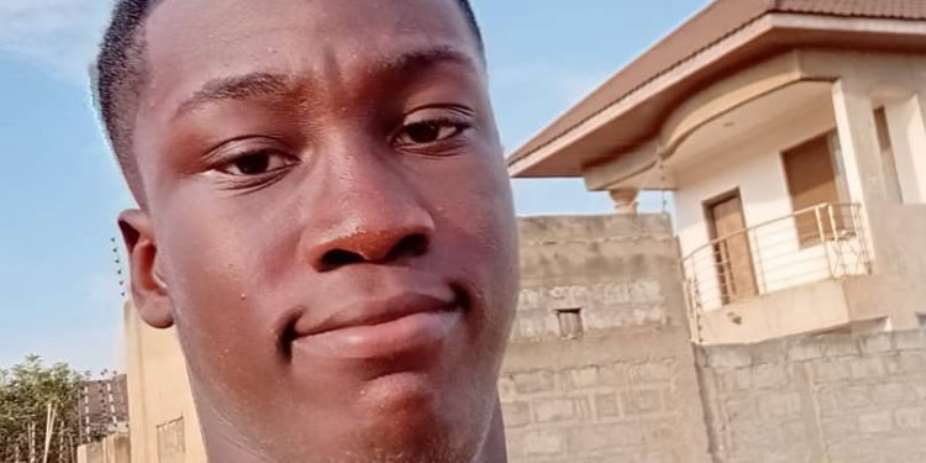
The death of a 14-year-old student barely two weeks after beginning senior high school has sparked public concern and renewed calls for stronger medical-emergency procedures in Ghana’s boarding schools.
Daniel Boateng Mintah reported to Abomosu STEM Senior High School in the Eastern Region on September 18, 2026, determined to pursue his ambition of becoming a computer engineer. Twelve days later, on September 30, he died under circumstances his family says remain unclear.
According to Daniel’s parents, the school contacted them on the day of his death and said he was unwell and required treatment for suspected malaria. The caller reportedly requested his National Health Insurance Scheme details and later asked the family to send GH¢50 for an injection.
The family says several attempts to obtain further information about Daniel’s condition were unsuccessful. At about 3:10 p.m., a caller who identified himself as the school’s headmaster asked the parents to come to the school urgently. While they were travelling, they were redirected to Kwabeng Hospital, where they were informed that their son had arrived dead.
Daniel’s father, David Mintah, said a doctor told the family that the teenager had complained of a severe headache and stomach pain before he was brought to the hospital. The doctor reportedly advised that a post-mortem examination would be required to establish the cause of death.
The family believes the accounts it received about Daniel’s final hours contain inconsistencies. It is particularly seeking clarification about a report that he left an orientation gathering to urinate but did not return, as well as the time he was found, the treatment he received and when the decision was made to transport him to the hospital.
Further concern arose when Daniel’s family visited his body at the mortuary. His father said he observed blood around his son’s nose, ears, mouth and head. Daniel’s elder sister, Vivian Mintah, a nurse, also reported seeing blood on his uniform and gauze around parts of his body. These observations have alarmed the family, although they do not by themselves establish the cause or manner of death. That determination must come from a properly conducted forensic examination.
The family has also raised questions about carbamazepine, olanzapine and multivitamins allegedly found among Daniel’s belongings after they were returned by the school. Vivian said her brother had no known history of psychiatric treatment and that the family did not provide the medicines.
Carbamazepine and olanzapine are prescription medicines used for particular neurological or mental-health conditions. However, the mere presence of the drugs among Daniel’s belongings does not prove that he took them or that they contributed to his death. Investigators will have to determine their origin, whether they were prescribed or administered, and whether toxicological testing finds any connection to the tragedy.
Daniel’s family has appealed to Inspector-General of Police Christian Tetteh Yohuno and Education Minister Haruna Iddrisu to ensure an independent and transparent investigation. It has also requested the transfer of his body to the Police Hospital in Accra for a comprehensive forensic autopsy. Reports published on October 8 said the IGP had ordered an investigation, but no publicly accessible detailed police findings or autopsy results had been released as of October 18.
The Parent-Teacher Association of Abomosu STEM SHS has expressed sympathy to Daniel’s parents, relatives, classmates and teachers. In a statement dated October 9, the association acknowledged the concern created by the death and appealed for calm, patience and sensitivity while the relevant authorities investigated the circumstances.
Attempts by journalists to obtain an on-record response from the school were initially unsuccessful. Consequently, many of the details currently available remain allegations and recollections supplied by the family rather than findings independently established by investigators.
Family seeks probe into 14-year-old's ...
The investigation must now reconstruct Daniel’s final hours: when he first became ill, who examined him, what diagnosis was made, what medicine or injection was administered, whether qualified medical personnel supervised his treatment, when his condition worsened and why he was reportedly dead before reaching the hospital. Medical records, sickbay registers, telephone logs, witness statements, toxicology tests and the autopsy findings will be essential.
Daniel’s death should not become an occasion for premature accusations or speculation. Neither should appeals for calm be used to avoid legitimate scrutiny. His family deserves a clear, evidence-based explanation, while the school’s staff must be allowed to respond fairly to the allegations.
Beyond this individual tragedy lies a broader responsibility. Boarding schools entrusted with minors must have trained medical personnel, properly equipped sickbays, documented medication procedures, reliable communication systems and clear referral arrangements with nearby hospitals. Parents must be contacted promptly when a student’s condition becomes serious, and emergency treatment should never be delayed by requests for money or insurance information.
Daniel reportedly entered Abomosu STEM SHS with dreams of using computers to build a better future and make his family proud. That future was cut painfully short after only 12 days. The most fitting response is a credible investigation that establishes the truth, holds anyone responsible to account where the evidence demands it, and ensures that lessons from his death protect other children entrusted to Ghana’s schools.


 We are going to provide emergency airstrip in regions without airports — Mahama
 Nana Konadu maiden memorial mass set for October 23
 'Double standards are not helpful, wrong yesterday is wrong today' – Ablakwa on ...
 'I am disappointed in govt for suspending ban on bus preaching' — Apostle Asempa...
 NPP has resolve internal wrangling — Bawumia
 Ghana, US Virgin Islands agree on recruitment of Ghanaian teachers, nurses
 Never Again: Mahama Pushes for Local Vaccine Manufacturing After COVID‑19
 “Soldiers Will Stay There”—Mahama Declares Permanent Military Presence in Forest...
 ‘No Borrowing Involved’ — Mahama Rolls Out US$10bn New Economy Policy
 “Ask Jean Mensa to resign first”—Tanko-Computer fires back


