




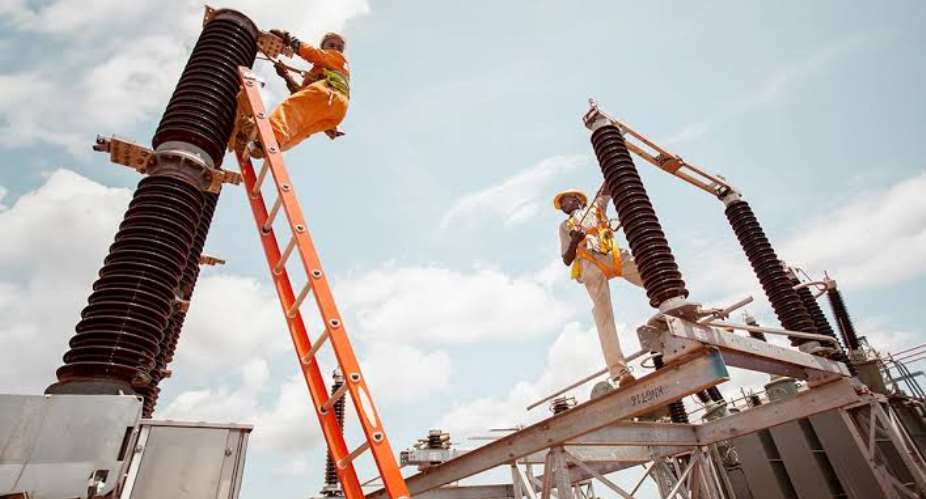
Electricity is the backbone of every modern economy. Reliable and affordable power supports industrial production, healthcare, education, digital services and job creation. Ghana’s economic ambitions therefore depend heavily on its ability to build and sustain an efficient electricity system.
For many years, electricity industries around the world operated as vertically integrated public monopolies. A single state-owned institution often controlled generation, transmission and distribution because electricity infrastructure required enormous investment and benefited from economies of scale.
Beginning in the 1980s, however, governments started restructuring their power sectors. Generation, transmission and distribution were separated—or “unbundled”—while independent regulators were established to supervise utilities and protect consumers. Competition was introduced where practical, particularly in electricity generation.
Ghana has followed parts of this model. Electricity is generated by the Volta River Authority, the Bui Power Authority and independent power producers; transmitted through the national grid by GRIDCo; and distributed principally by the Electricity Company of Ghana in southern Ghana and the Northern Electricity Distribution Company in the north. The Public Utilities Regulatory Commission regulates tariffs, while the Energy Commission performs licensing, technical and planning functions.
Despite these reforms, the country has continued to experience serious financial and operational problems. Periodic power shortages, ageing infrastructure, weak revenue collection, electricity theft, metering deficiencies and high technical and commercial losses have placed enormous pressure on the industry.
Ghana’s electricity-access rate reached approximately 89 per cent in 2024, demonstrating substantial progress in connecting households and communities. But distribution losses reportedly rose to about 32 per cent that year, illustrating the growing difference between expanding access and running a financially sustainable system.
These challenges provided the background to the Ghana Power Compact, signed with the United States through the Millennium Challenge Corporation in 2014. The original programme envisaged an investment of almost $500 million, with part of the funding tied to private-sector participation in ECG.
Under the arrangement, a private operator was expected to manage ECG’s distribution assets through a long-term concession. The objective was not simply to transfer control, but to attract investment, strengthen management, reduce losses, improve revenue collection and deliver more reliable electricity to consumers.
Power Distribution Services Ghana Limited eventually assumed responsibility for ECG’s operations in March 2019. The concession was suspended only a few months later following concerns about the validity of a required demand guarantee. The Ghanaian government terminated the agreement in October 2019.
The termination had significant financial consequences. The MCC withdrew $190 million connected to the concession, although $308 million in first-tranche funding remained available for infrastructure, energy-efficiency initiatives and improvements to Ghana’s southern distribution network. The compact ultimately closed in June 2022 after approximately $311 million had been disbursed. Its completed projects included substations, network improvements and more than 14,000 energy-efficient streetlights.
The experience offers an important lesson: private-sector participation is not a substitute for sound governance.
Private investment can provide capital, technical knowledge, modern management systems and commercial discipline. But poorly designed procurement, weak due diligence and inadequate public accountability can undermine even a well-intentioned reform. Investors must be selected through transparent and competitive procedures, while contractual guarantees must be independently verified before control of strategic public assets changes hands.
It is also misleading to assume that privatization automatically reduces electricity prices. Generation can support competition because several producers may sell power into the same market. Transmission and distribution, however, remain natural monopolies in most countries: it would be inefficient for several companies to construct competing networks of poles, cables and substations along the same streets.
Consequently, whether ECG remains publicly managed or involves private operators, Ghana still needs strong and independent regulation. Tariffs must be sufficient to maintain the network and pay legitimate industry costs, but consumers should not be forced to absorb the cost of theft, inefficient procurement, avoidable losses or poor management.
The financial challenge remains considerable. In June 2024, the World Bank approved a $250 million credit and a $10 million grant for a four-year Energy Sector Recovery Programme. The programme focuses on prepaid metering, stronger commercial and financial-management systems, better revenue collection and improved electricity-distribution performance. The World Bank estimated that Ghana’s government was transferring approximately two per cent of gross domestic product each year to cover the energy sector’s financial shortfall.
This means the country’s immediate priority should be measurable operational reform. ECG needs accurate customer and meter databases, transparent energy accounting, effective collection from public and private consumers, faster replacement of defective meters, stronger action against illegal connections and targeted investment in overloaded networks.
Technology can support these efforts. Smart and prepaid meters can improve billing and reduce unaccounted-for electricity. Digital payment systems can make transactions more convenient and traceable. Geographic information systems can help utilities manage their assets, while automated monitoring can identify faults and losses more quickly.
Renewable energy and distributed generation must also become part of the strategy. Solar power, battery storage, mini-grids and energy-efficient appliances can reduce pressure on the national network and extend reliable service to communities where conventional grid expansion is too expensive. Nevertheless, new technology will only produce lasting improvements when it is supported by credible institutions and consistent regulation.
The debate should therefore move beyond a simple choice between public ownership and privatization. Ghana needs a carefully regulated partnership in which government protects the public interest, private investors provide capital and expertise, utilities meet enforceable performance targets, and consumers receive transparent information about tariffs and service quality.
Any future private-sector arrangement involving ECG should include competitive procurement, public disclosure of ownership, independently verified financial guarantees and clear targets for loss reduction, investment, reliability and customer service. It should also contain safeguards for employees and penalties for non-performance.
Ghana’s electricity sector is too important for reform to be driven by ideology or short-term political considerations. The collapse of the PDS concession does not prove that every form of private participation will fail. It demonstrates that the quality of institutions, contracts and oversight matters as much as the source of investment.
Private capital can contribute to Ghana’s energy future, but it cannot replace accountability. Sustainable progress will depend on transparent governance, competent regulation, disciplined financial management and long-term investment in a modern, resilient electricity network.


 We are going to provide emergency airstrip in regions without airports — Mahama
 Nana Konadu maiden memorial mass set for October 23
 'Double standards are not helpful, wrong yesterday is wrong today' – Ablakwa on ...
 'I am disappointed in govt for suspending ban on bus preaching' — Apostle Asempa...
 NPP has resolve internal wrangling — Bawumia
 Ghana, US Virgin Islands agree on recruitment of Ghanaian teachers, nurses
 Never Again: Mahama Pushes for Local Vaccine Manufacturing After COVID‑19
 “Soldiers Will Stay There”—Mahama Declares Permanent Military Presence in Forest...
 ‘No Borrowing Involved’ — Mahama Rolls Out US$10bn New Economy Policy
 “Ask Jean Mensa to resign first”—Tanko-Computer fires back


