




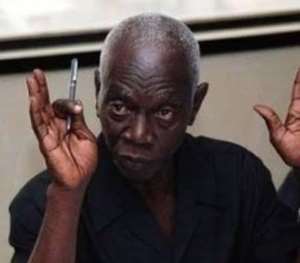
There is a statement attributed to Ghana's former Electoral Commission (EC) Chairman, Dr Kwadwo Afari Gyan, which has remained one of the most important observations about Ghanaian elections: “Elections are won or lost at the polling stations.” Dr Afari Gyan has explained the statement in a rather precise way. The authentic, properly completed polling-station results sheets --- popularly known as pink sheets --- are the critical documents for reconstructing election results. In his words, that is what it means to say elections are won or lost at the polling station. This principle deserves renewed attention today, especially following the controversy surrounding the appointment of two new Deputy Chairpersons of the Electoral Commission. The opposition New Patriotic Party (NPP) has raised concerns about the appointment of Emelia Afi Agbenyo, pointing to her previous involvement in the National Democratic Congress (NDC)'s political activities and manifesto work. The second appointee, Dr Joseph Kwaku Asamoah, has not attracted the same level of public criticism from the NPP. Both were sworn into office by President John Dramani Mahama on October 12, 2026. The concern about perceived political affiliation should not simply be dismissed. Public confidence matters enormously in election administration. International IDEA has noted that the absence of inclusiveness in the appointment process can affect confidence in an electoral management body, even where the legal framework gives the body formal independence. But there is another side to this debate. Perhaps Ghanaian political parties are placing too much emphasis on who occupies the EC's top offices and not enough emphasis on what happens at the approximately 41,000 polling stations across the country. The EC itself currently lists 40,976 polling stations for the 2024 general elections. And that is where Afari Gyan's observation becomes extraordinarily relevant.
Can We Really Find a Completely “Neutral” Ghanaian?
Ghana's political environment presents a peculiar challenge. We often talk about finding “neutral” people to serve in important national institutions. But what exactly does neutrality mean? Ghanaians have political preferences. Some are NDC. Some are NPP. A much smaller proportion support the CPP, PNC and other political parties. Others may not formally belong to any party but still vote consistently for one political tradition. Indeed, a person may never have possessed a party card but may have voted for the same party throughout his or her adult life.
If Ghana were to import an electoral commissioner from another country in the hope of finding someone completely untouched by Ghanaian partisan politics, that person would probably not understand the country's political culture nearly as well as a Ghanaian. More importantly, being politically aware or even having personal political preferences does not automatically make a person incapable of performing a professional public function impartially. The relevant question therefore should not be: “Has this person ever supported a political party?” It should be: “Can this person administer the law impartially, transparently and consistently, regardless of which party benefits?” That distinction is fundamental.
A judge may have personal political opinions. A journalist may have political preferences. A civil servant may have voted for a particular candidate. An academic may have participated in political discussions. Yet the test of professionalism is whether the individual allows those preferences to determine official conduct.
That is why the Constitution does not simply require people without political opinions. It creates an Electoral Commission and gives it institutional independence. Article 46 expressly provides that, in the performance of its functions, the Commission shall not be subject to the direction or control of any person or authority. The challenge, therefore, is to make that constitutional independence real.
The NPP Has a Legitimate Question, but the Question Must Go Further
The NPP is entitled to ask questions about the background of an EC appointee. Indeed, opposition parties everywhere have a legitimate responsibility to scrutinize institutions that administer elections. But there is a danger in allowing every appointment to become an argument that the election has already been compromised.
The two new Deputy Chairpersons were appointed through the constitutional mechanism. Article 43 provides for a seven-member Electoral Commission comprising a Chairperson, two Deputy Chairpersons and four other members. Article 70 provides the presidential appointment mechanism, acting on the advice of the Council of State. It is therefore important to distinguish a legitimate demand for an inclusive appointment process from the assumption that an appointee is incapable of impartiality simply because of his or her past political association.
The NPP may reasonably argue that opposition parties should have been consulted more extensively before the appointments were made. That is a debate worth having.
International IDEA has itself identified the inclusiveness of electoral-management-body appointments as an important issue in Ghana. But there is a much bigger question: If the EC leadership is perceived to favour the NDC, what exactly can the NPP do to protect its votes? The answer is not to surrender. The answer is vigilance.
The Referee Analogy
Imagine a football match between Ghana and another country. Suppose the referee is Ghanaian. One might reasonably suspect that the referee could emotionally favour Ghana. But the referee does not have the power to score Ghana's goals. The rules determine what constitutes a goal. The opposing team has players. The opposing team has coaches. The opposing team has officials. The opposing team has cameras, where permitted. The opposing team can protest decisions. And, most importantly, the game is played in front of witnesses. A biased referee can cause problems. A dishonest referee can cause even greater problems. But a well-organized opposing team is not helpless.
Elections are more complicated than football, but the analogy is useful. The EC Chairperson does not personally stand at every polling station. The Deputy Chairperson does not personally count every ballot. The EC headquarters does not physically watch every voter place a ballot in the box. At the polling station, there are presiding officers, polling assistants, party agents, observers and, increasingly, members of the public and media. After voting, the ballots are counted at the polling station. The results are recorded. Party agents receive copies. The results are subsequently collated. This architecture creates opportunities for verification.
The EC itself explains that the pink sheet is signed by party agents, a copy is posted at the polling station and copies are distributed to agents. Parties, observers and media organizations can therefore independently collate polling-station results. That is the practical meaning of Afari Gyan's famous dictum.
The EC Cannot Magically Manufacture 56,000 Votes
This is where Ghana's political parties should perhaps rethink their election strategy. Suppose an election official at EC headquarters favours Party A. How does that official manufacture thousands of votes for Party A without the figures appearing at the polling-station level? It becomes much more difficult if Party B has competent agents at every polling station. If Party B's agents are present when voting closes, they watch the ballots being counted. They watch the figures being entered. They receive copies of the results. They photograph those results. They transmit them to their party's collation center. The party can independently add its own results. If the figures later announced by the EC differ materially from the figures on the authentic polling-station results sheets, the discrepancy becomes detectable. This is not to say that Ghana's system is incapable of manipulation. It is to say that the strongest defense against manipulation is not merely finding a supposedly politically neutral EC Chairperson. It is creating a system in which manipulation becomes difficult to conceal.
Where Elections Can Actually Be Stolen
This is where Ghana needs a much more serious conversation. The real threats are not confined to the EC headquarters. They may occur at polling stations and constituency collation centers.
They may involve:
- Intimidation of voters;
- Destruction or disappearance of electoral materials;
- Ballot-box snatching;
- Ballot stuffing;
- Assault on polling officials or party agents;
- Disruption of counting;
- Intimidation of agents;
- Destruction or withholding of result sheets;
- Manipulation during collation;
- Deliberate delays;
- Obstruction of observers;
- Interference by political activists;
- Misuse of security personnel;
- And violence in politically volatile constituencies.
These are not hypothetical concerns. A WANEP electoral-security report documented incidents involving threats, intimidation, physical assault, vandalism, ballot-box interference and other electoral malpractices. It also recorded serious incidents of violence in the 2024 electoral period.
The African Union Election Observation Mission likewise reported isolated security incidents during the 2024 elections, although it found that polling, counting and the conduct of election officials were generally professional at the stations observed.
The Commonwealth Observer Group similarly concluded that Ghana's 2024 elections were transparent, credible and peaceful overall, while recommending improvements in transparency and accountability. These findings should give Ghana confidence, but not complacency.
We Should Map Electoral Flashpoints
This is where political parties can do something much more useful with their resources. Before every election, Ghana should identify electoral-risk flashpoints. If previous elections show that a particular polling station, constituency or collation center has repeatedly experienced violence, intimidation, ballot destruction or disputes, that location should receive additional attention.
Why not develop an electoral-risk map? Such a map could classify areas according to historical risks:
- Low risk: no significant history of electoral violence or material disputes.
- Medium risk: occasional disputes, intimidation or procedural problems.
- High risk: repeated violence, ballot destruction, attempted ballot-box snatching, intimidation or serious collation disputes.
- Critical risk: locations where previous elections resulted in deaths, serious injuries, destruction of electoral materials or prolonged disputes.
Election observers could then be deliberately deployed according to risk rather than simply distributed evenly across the country. This would be far more intelligent than sending observers everywhere in equal numbers.
Why Not Use Temporary CCTV at Electoral Flashpoints?
Ghana should also seriously examine the use of temporary CCTV or other independently monitored recording technology at identified electoral flashpoints. This should not mean turning every polling station into a surveillance center. The objective would be targeted prevention and evidence gathering at locations where there is a demonstrated history of electoral malpractice or violence. The technology could cover entrances, ballot-box storage areas and collation centers without compromising the secrecy of the ballot.
But technology must not be adopted merely because it sounds modern. The President himself, in swearing in the new Deputy Chairpersons, called for cautious and responsible adoption of electoral technology, including proper testing and fail-safe mechanisms. That is sound advice. Technology that fails on Election Day can create more suspicion than confidence.
Party Agents Are More Important Than Party Rallies
There is another uncomfortable truth Ghana's political parties must confront. Political parties spend enormous sums organizing internal elections. They spend money on delegates. They spend money on vehicles. They spend money on accommodation. They spend money on campaign materials. They spend money on rallies. They spend money trying to persuade a few thousand people to vote for particular candidates in party primaries. But when the real national election arrives, the most important person in a particular polling station may be the relatively unknown party agent sitting beside the ballot box. That agent could be worth more to a political party than an expensive political rally. A properly trained polling agent can protect hundreds of votes. A poorly trained agent can allow an entire polling station's results to become disputed.
Parties should therefore invest heavily in:
- Recruiting competent polling agents;
- Training them months before election day;
- Teaching them the electoral regulations;
- Training them to identify irregularities;
- Ensuring they understand the pink sheet;
- Providing secure communication channels;
- Requiring immediate transmission of results;
- Maintaining duplicate electronic records;
- Establishing constituency-level legal teams; and
- Creating rapid-response teams for electoral emergencies.
- Ensuring that polling agents are well motivated.
The African Union observation mission specifically commended the presence and vigilance of party agents and observers in the 2024 elections. That is an important lesson.
The Pink Sheet Is More Powerful Than Political Rhetoric
Ghana's pink sheet system is one of the country's most important electoral safeguards. The EC itself states that the results recorded at polling stations form the basis for subsequent aggregation and declaration. Dr Afari Gyan's explanation therefore deserves to be repeated: Authentic polling-station results are the foundation upon which the national result is built.
That means political parties should be obsessed with the integrity and safe custody of those documents. Every party should maintain its own parallel database of polling-station results. Every agent should photograph the completed result sheet where legally permissible. Every result should be transmitted immediately to a secure party database. Every constituency should have a parallel tabulation center. If the EC announces a figure that differs from the party's authenticated polling-station records, the party should know exactly where the discrepancy occurred. This is far more powerful than shouting on radio that the EC Chairperson is an NDC or NPP sympathizer.
But the EC Still Matters
None of this means that the Electoral Commission is unimportant. Far from it. The Commission controls critical parts of the electoral process: voter registration, electoral boundaries, election administration, education and supervision of elections. Article 45 of the Constitution gives it extensive responsibilities, while Article 46 protects its independence. An EC can therefore influence the quality and credibility of an election through its administrative decisions. The Commission's independence must consequently be protected. Its appointments must inspire confidence. Its decisions must be transparent. Its communication must be timely. Its procedures must be predictable. Its errors must be acknowledged and corrected. And where misconduct occurs, sanctions must follow.
The point is not that the EC Chair cannot matter. The point is that the EC Chair should not be capable of determining an election by personal preference. That is the institutional test.
Ghana Needs to Move from “You Did It under Nana” Politics
There is another issue that deserves attention. Ghana's two major parties have developed an unfortunate political habit. When the NDC is accused of something, the response is often: “But the NPP did the same thing under Nana Addo.” And when the NPP is criticized, its response has often been: “But the NDC did the same thing under Rawlings.” This is not accountability. It is political tit-for-tat. It is the mentality of: “You do me, I do you.” But that is precisely the mentality Ghana must escape.
The NPP's eight years in government under President Nana Akufo-Addo should certainly be examined critically where appropriate. If mistakes were made, they should be documented. If wrongdoing occurred, it should be investigated. If public resources were abused, those responsible should answer for it. But none of that gives a subsequent government permission to repeat the same mistakes.
Likewise, the NDC's “reset” agenda should mean precisely what the word suggests: a departure from bad practices, not their replication under a different political colour.
A mature political party should say: “We condemned this when you did it, and therefore we will not do it now.” That is political maturity. The NDC should not need the excuse that “Nana's government did it” or “Kufuor’s government did it”, whenever its own actions are questioned. And the NPP should not need to remind Ghanaians endlessly of the NDC's past whenever the current government is criticized. Ghana deserves better.
The 2028 Election Should Begin Now, but Not with Primaries
The major political parties should begin preparing for the next general election long before the campaign begins. But preparation should not primarily mean choosing candidates. It should mean strengthening the electoral machinery. The parties should ask: Do we have a trained agent for every polling station? Do we have a reserve agent for every high-risk station? Can we receive a photograph of every completed result sheet within minutes of counting? Can we independently calculate the national presidential result? Can we identify a discrepancy within an hour? Do we know which polling stations have historically experienced violence? Do we have lawyers ready to respond to serious procedural violations? Do we have observers deployed strategically rather than ceremonially? Can we protect our agents from intimidation? These are the questions that matter.
Election Observation Should Become More Intelligent
Ghana should also rethink election observation. International and domestic observers perform an important role. The 2024 observer missions demonstrated that Ghanaian elections can be conducted peacefully and professionally while still identifying areas requiring improvement. But observers should not merely produce reports after elections. Where possible, observation should be risk-based. If historical evidence shows that certain locations are prone to violence, intimidation or electoral material destruction, those areas should receive enhanced observation. The objective should be prevention as much as documentation. Observers should be positioned where problems are most likely to occur. The same principle should apply to security. The Ghana Police Service and other security agencies should have detailed electoral-risk assessments before polling day, with special attention to historically volatile areas.
Ghana Does Not Need a Perfect Referee
Perhaps this is the central lesson. Ghana may never find an Electoral Commission Chairperson whom both the NDC and NPP unanimously regard as neutral. The NDC may distrust an NPP-appointed commissioner. The NPP may distrust an NDC-appointed commissioner. Tomorrow, the political positions may be reversed. If that is the reality of partisan politics, then Ghana must build an electoral system that does not depend upon everybody trusting everybody.
We need institutions that make abuse difficult. We need procedures that make manipulation visible. We need party agents who know their jobs. We need observers who know where to look. We need security agencies that protect voters rather than parties. We need transparent collation. We need accessible results. We need credible documentation. And we need political parties willing to accept defeat when the evidence is clear. That is what makes democracy resilient.
My Thoughts: The Real Battle Is at the Polling Station
The NPP should not ignore concerns about EC appointments. Nor should the NDC dismiss concerns about public confidence in the Commission. Both sides have a responsibility to protect the credibility of the institution. But Ghana's opposition parties, in particular, should not behave as though an EC appointment automatically determines the outcome of an election. If the party believes an appointee is politically inclined, the answer is not helplessness. It is preparation. It is vigilance. It is evidence. It is competent agents. It is parallel tabulation. It is observation. It is legal preparedness. It is rapid reporting. It is public accountability. And above all, it is protecting the vote where the vote is actually cast and counted.
Dr Afari Gyan's famous observation remains instructive because it takes the mystique away from the EC headquarters. Elections are not won in the office of the EC Chairperson. They are won --- or lost --- through millions of individual votes, counted at thousands of polling stations and recorded on thousands of official results sheets. That is where Ghana's political parties should concentrate their money, their people and their vigilance. Instead of spending billions fighting over party primaries, perhaps they should spend a fraction of that money making sure that when the Ghanaian voter casts a ballot, that ballot is protected from the moment it enters the box until the final national result is declared. Because ultimately, the most dangerous threat to an election is not necessarily a supposedly partisan referee. It is an unguarded playing field. And the strongest defense of democracy is not the search for a mythical perfectly neutral Ghanaian. It is a system in which no referee --- however biased --- can secretly change the score.
FUSEINI ABDULAI BRAIMAH
+233208282575 / +233550558008
[email protected]


 NPP rejects Mahama's appointment of Emelia Agbenyo as EC deputy, demands withdra...
 Excessive consumption of processed meat can expose one to cancer – Health expert...
 Education Minister appeals to University Administrators to call off strike, resu...
 'You're doing yeoman’s job' — Mahama lauds Police over declined unresolved murde...
 Wilmar Africa, De Heus, other food processing companies face CID action over dat...
 NPP’s Baba Amando runs to police over alleged death threats
 Ghana repatriates 120 Nigerians arrested in cybercrime operations
 PIAC unable to verify GH¢21million petroleum-funded projects in Ayawaso West
 Wontumi pleads not guilty to five charges in GH¢30m Exim Bank fraud case
 Ghana among stronger-performing economies in sub-Saharan Africa — IMF


