




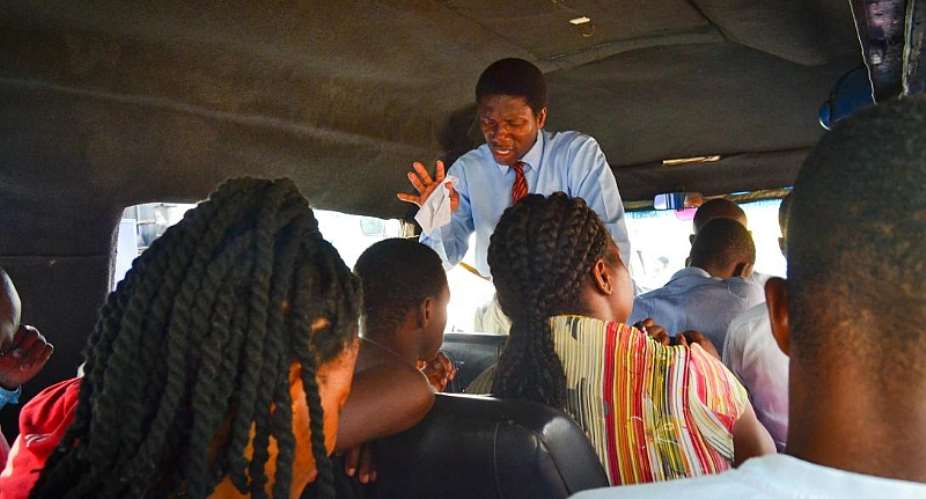
As a Ghanaian living in the United States, I believe I can offer a somewhat different perspective on this issue. The commercial bus, popularly known as the trotro, has long been the lifeblood of Ghana’s public transportation system. Every day, people from all walks of life depend on these buses to get to work, school, markets and other destinations. However, this essential public space has increasingly become a platform for uninvited and unregulated preaching. While freedom of religion is a fundamental right guaranteed by our democratic Constitution, the right to practise one’s faith must not infringe on the right of others to enjoy peace, comfort and safety. It is against this background that the move to ban preaching on commercial buses deserves serious consideration and support.
President John Dramani Mahama and his administration have emphasised the importance of national discipline, public order and respect for the rule of law. Supporting a ban on bus preaching is not an attack on Christianity or any other religious group. Rather, it is about establishing reasonable boundaries in our shared public spaces. A progressive society must recognise that personal religious expression, however sincere, should not come at the expense of the comfort and rights of others.
First, public transportation is a shared space in which passengers have little control over their immediate environment. When someone boards a trotro from Circle to Kasoa or from Kasoa to Winneba, the expectation is simple. They are paying for transportation, not an unsolicited sermon. Passengers include students preparing for examinations, workers returning home after long and exhausting shifts, people dealing with personal challenges and individuals from different religious backgrounds, including those who do not subscribe to any religion.
Subjecting these passengers to loud preaching, often through poor quality megaphones, is inconsiderate and unnecessary. Some people may welcome such sermons, but others simply want a quiet journey. Genuine evangelism should be about reaching willing listeners, not taking advantage of an audience that has little choice but to remain seated until the bus reaches its destination. Faith is best shared through persuasion and invitation, not imposed on people who have nowhere else to go.
Beyond the inconvenience, there are legitimate safety concerns. Driving on Ghana’s busy roads requires concentration, patience and the ability to respond quickly to unexpected situations. A preacher moving up and down the aisle of a moving bus, shouting and gesticulating, can create unnecessary distractions. The presence of such individuals may also obstruct the aisle and make it more difficult for passengers to move in an emergency. We should not wait for an accident to happen before taking these risks seriously. Keeping commercial buses free from unnecessary distractions is a sensible step towards improving passenger safety and supporting efforts to reduce road accidents.
We must also confront the growing commercialisation of religious activity in our public spaces. Some bus preachers go beyond sharing religious messages to selling herbal preparations, oils and other products whose claims may not be properly verified. Passengers can find themselves subjected to pressure to purchase these items, sometimes at moments when they are particularly vulnerable. Public transportation should not become an unregulated marketplace for products promoted through religious persuasion. Anyone selling medicines or making health claims should be subject to the appropriate rules and regulations, regardless of the platform used.
There is also a broader question of public conduct. Freedom of speech and religion is essential in any democratic society, but these freedoms do not give anyone unlimited authority to take over a shared space for personal activities. Churches, mosques, homes and designated public forums provide opportunities for people to express and practise their faith. Commercial buses, however, serve a different purpose. Their primary responsibility is to transport passengers safely and efficiently.
Having lived in the United States, I have come to appreciate the importance of establishing clear boundaries in shared public spaces. Ghana can learn from other countries where public transportation is managed with an emphasis on passenger comfort, safety and orderly conduct. We cannot aspire to build a modern and disciplined society while ignoring practices that inconvenience others simply because they are presented in the name of religion.
The successful implementation of this ban will require cooperation among the Ministry of Transport, local government authorities, transport unions and the leadership of the Ghana Private Road Transport Union. The rules must be communicated clearly and enforced fairly, without targeting any particular religious group. Religious leaders also have an important role to play by encouraging their followers to respect the rights and freedoms of fellow citizens.
Ultimately, this debate is not about choosing between religion and public order. It is about recognising that one person’s freedom must be exercised with due regard for the rights of others. Ghanaians should be free to worship, preach and share their beliefs, but they should also be free to travel without being subjected to unwanted sermons.
The trotro is a means of transportation, not a church on wheels. It is time we restored it to its primary purpose and ensured that every passenger, regardless of religious belief, can enjoy a safe, peaceful and comfortable journey.
Waterz Yidana
Playwright/Poet
Iowa City, USA


 NPP rejects Mahama's appointment of Emelia Agbenyo as EC deputy, demands withdra...
 Excessive consumption of processed meat can expose one to cancer – Health expert...
 Education Minister appeals to University Administrators to call off strike, resu...
 'You're doing yeoman’s job' — Mahama lauds Police over declined unresolved murde...
 Wilmar Africa, De Heus, other food processing companies face CID action over dat...
 NPP’s Baba Amando runs to police over alleged death threats
 Ghana repatriates 120 Nigerians arrested in cybercrime operations
 PIAC unable to verify GH¢21million petroleum-funded projects in Ayawaso West
 Wontumi pleads not guilty to five charges in GH¢30m Exim Bank fraud case
 Ghana among stronger-performing economies in sub-Saharan Africa — IMF


