




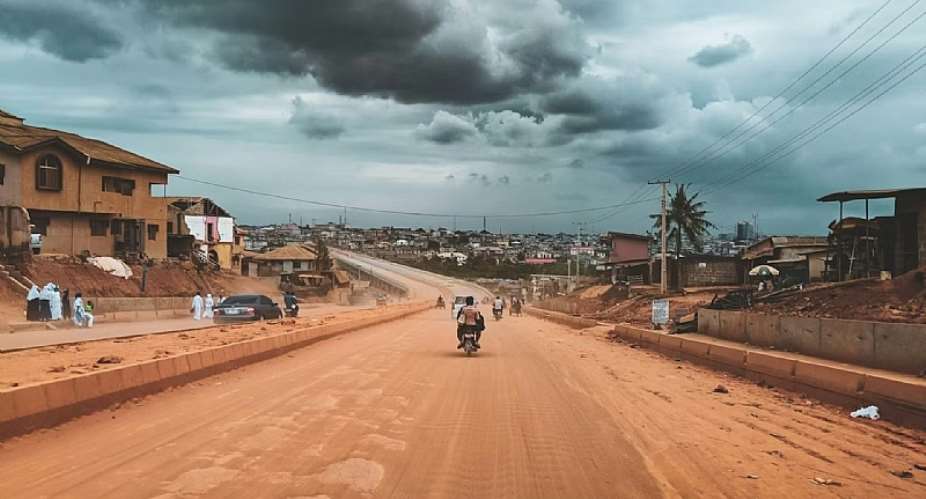
For years, the world has understood climate change as an environmental problem – melting glaciers, rising seas, extreme weather. But what happens in people's minds when their world becomes unstable? What do they do when the only life they've known – farming, herding, providing for their families – becomes impossible?
These questions drove our team of psychiatrists and public health researchers to conduct one of the largest studies of its kind in west Africa. We interviewed 20,000 adults across 40 communities in Kano, Kaduna and Katsina states, a region that sits in the semi-arid Sahel belt. Agriculture is a major source of employment and livelihood in an area that is among the most climate-vulnerable in Nigeria.
We applied a number of research measures. We used a multidimensional poverty index to measure deprivation, the Kessler psychological distress scale to assess anxiety and depression, and the alcohol, smoking and substance involvement screening test to identify harmful substance use. We also asked participants about their coping strategies: how they deal with stress.
What we found is alarming. A vast majority of the people we surveyed are multidimensionally poor. Nearly half reported high levels of psychological distress. And almost one in five were engaged in substance abuse.
Our findings underscore that substance use disorder in north-west Nigeria can't be understood in isolation. It's part of a system – climate stress, poverty, mental distress – and must be addressed as such. The solutions exist: integrated mental health care, livelihood support, community-based interventions.
The research
The numbers tell a troubling story. A multidimensional poverty index measures not only income, but also access to education, healthcare and basic living standards. Over 85% of the people we surveyed were living in profound deprivation. This is significantly higher than the national multidimensional poverty incidence of 62.9% and reflects how extremely precarious this region is economically.
Using the Kessler scale, we asked about symptoms of anxiety and depression over the past month. Of our respondents 45.2% scored in the high range. To put this in perspective, studies in general healthcare settings in Nigeria typically find that 20% to 30% of people experience common mental disorders. Our figure suggests that climate-stressed communities represent a particularly vulnerable group.
Substance use screening revealed that 18.5% of our sample were engaged in high-risk substance use. Cannabis was the most common substance, used by 12.4% of participants, followed by prescription opioids like the painkiller tramadol (9.1%) and alcohol (7.8%). The widespread use of prescription drugs obtained without prescriptions is especially worrying because of the risks of dependence and overdose. Climate change is increasing poverty in farming areas. Mike Blyth/Wikimedia Commons, CC BY
We also asked people how they coped with stress, using the coping strategies inventory. A staggering 67.5% of respondents relied primarily on unhealthy coping strategies; avoidance, emotional discharge, and behaviours that provide temporary relief but create longer-term problems. Substance use is a prime example of this pattern.
Behind the statistics are human stories of struggle and survival. In our interviews, participants spoke candidly about the pressures they faced and how they tried to manage them.
One farmer in his 40s told us:
When the farm fails, there is no money for food, let alone school fees. The worry does not leave my head. I take the local gin just to sleep at night.
A young man in his 20s described the temptation that surrounded him:
My friends use tramadol. They say it helps them forget that there is no work and no future. I have tried it too when the stress becomes too much. Everyone is doing something to escape.
A woman whose husband had left to find work in the city explained:
The men drink because they cannot provide. The women cry because there is nothing to give the children. This life is hard, and hard lives make people do hard things.
These voices remind us that substance use in these communities isn't about pleasure or recreation. It's about survival – a desperate attempt to numb pain that seems to have no other remedy.
What must be done
This isn't just a health problem. It's a development problem, an agricultural problem, a climate adaptation problem all rolled into one. The issues are interconnected and need to be tackled together.
There is a common misconception that substance use in poor communities is a moral failing or just a matter of personal choice. Our research suggests otherwise. It is often a direct response to overwhelming stress and hopelessness.
We identified three key responses needed:
Mental health and substance use prevention must be integrated into climate adaptation and food security programmes. If programmes are helping farmers to adapt to changing rainfall patterns, they should also be addressing the psychological distress they experience. If food aid is being provided, there should be screening for substance abuse at the same time, to help with early detection and possible intervention. Without this, we risk giving with one hand while the other hand loses the benefit.
Social protection schemes and livelihood diversification are essential. When people have other ways to earn income beyond rain-fed agriculture, they're less vulnerable to climate shocks. This reduces the stress that drives substance use.
Civic and government interventions need to train community health workers to identify and refer people with mental health and substance use issues. There are too few psychiatrists in Nigeria to meet the need.
We found strong connections between poverty, psychological distress and substance use. People who are poor are more likely to be distressed. People who are distressed are more likely to use substances. These patterns are clear and statistically robust.
Why this matters
Our study was a snapshot taken at one point in time. Think of it like taking a photograph of a crowd; you can see who's standing together, but you can't tell who arrived first or who led whom. In the same way, while we can see that poverty and substance use go hand in hand, we can't say which causes which, or whether both are caused by something else entirely.
Our evidence strongly suggests that climate stress leads to poverty, which leads to distress, which leads to substance use. But to prove that chain of events conclusively, we would need to follow the same people over several years, watching their circumstances change and their behaviour change in response.
This matters for aid providers because humanitarian and development programmes that ignore substance abuse are failing to address a key driver of poverty. When people use drugs or alcohol to cope, they become less able to work productively, less able to care for their families, and less able to recover from the next climate shock. Their health deteriorates, they face stigma, and they become trapped in a downward spiral.
Abdullahi Abdulwahab Yakubu does not work for, consult, own shares in or receive funding from any company or organisation that would benefit from this article, and has disclosed no relevant affiliations beyond their academic appointment.
By Abdullahi Abdulwahab Yakubu, Lecturer, Department of Psychiatry, Ahmadu Bello University
 Majority claims Asafo-Adjei lobbied Ablakwa for Nana B to retain service passpor...
 I have no regrets joining Assemblies of God – Mahama
 Police to receive 40 additional armoured vehicles, 250 new apartments — Mahama
 PAC directs UGMC to fix procurement infractions, declining service standards
 Minority claims baseless, GHS49.7m South Africa evacuation fully accounted for –...
 Mahama allocates over GH¢200m in 2027 budget to complete Police Hospital expansi...
 US Department of Justice shares latest details of Sasaabi cybercrime raid
 Majority Caucus defends GH¢49.72m spent on evacuating Ghanaians from South Afric...
 Bawku MCE assures residents of lasting peace after 150 days without gunshots
 Ghana is ready to take off after economic turnaround – Ato Forson


