




The level of hypocrisy in Ghanaian politics is deeply troubling and, at times, shameful. The New Patriotic Party (NPP), in particular, has faced criticism over what many perceive as inconsistencies in its political positions.
During the administration of President Jerry John Rawlings, the NPP criticised many of the government's policies and actions. However, when political power shifted to the NPP in 2001 under President John Agyekum Kufuor, some actions taken against former appointees of the National Democratic Congress (NDC) raised concerns about political tolerance and the treatment of perceived political opponents.
Fortunately, when power returned to the NDC under President Professor John Evans Atta Mills, his administration adopted a more conciliatory approach to governance. President Mills made efforts to reduce the political tension associated with changes in government and to promote a less antagonistic political environment. His approach offered a welcome contrast to some of the experiences surrounding the 2001 transition.
Many Ghanaians consequently hoped that future administrations would build on the example set by President Evans Atta Mills. Unfortunately, under President Nana Addo Dankwa Akufo-Addo, concerns about political intolerance and the perceived politicisation of state institutions resurfaced, raising questions about the country's progress towards a more mature democratic culture.
During the Akufo-Addo administration, there were instances in which communication managers of state-owned organisations reportedly lost their positions because they were perceived to be politically unaligned with the governing party. Such developments raised concerns about whether public appointments were being determined by professional considerations or partisan interests.
The appointment of individuals perceived to be loyal to the governing party to positions within state institutions also attracted public criticism. Yet, when the NPP was challenged over the alleged politicisation of these institutions, its defenders often maintained that the appointments were justified.
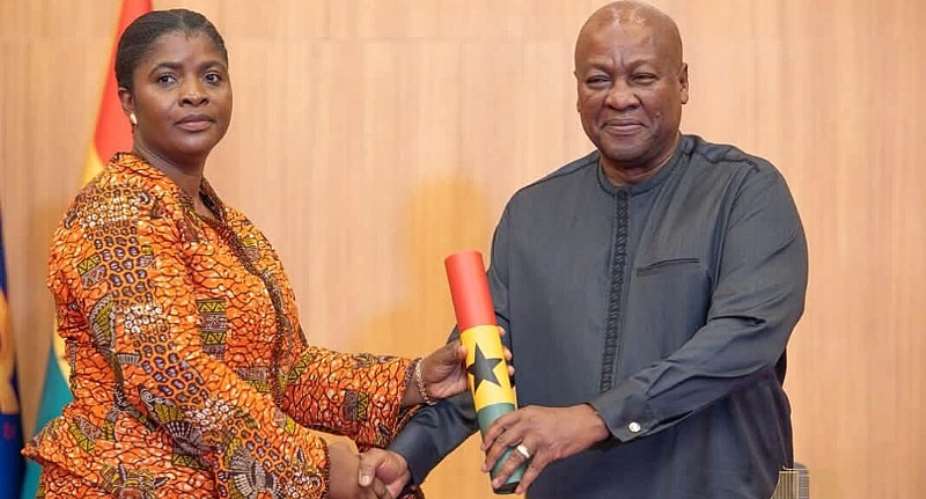
It is against this background that the search and appointment of Dr Joseph Kweku Asamoah and Madam Emelia Afi Agbenyo as Deputy Commissioners of the Electoral Commission was a masterstroke.
Madam Agbenyo's appointment, in particular, has brought the issue of political double standards into sharp focus. The NPP's objections invite comparisons with the positions it adopted and defended when it was in government.
A political party cannot reasonably defend a particular practice when it is in power and condemn that same practice when another party adopts it. Such inconsistency undermines public confidence in political leadership and weakens the credibility of democratic accountability.
If the NPP believes that political considerations should disqualify individuals from appointments to public institutions, it should explain how consistently that principle was applied during its tenure. Conversely, if professional competence, experience, and suitability are the principal considerations, then those standards should be upheld irrespective of an appointee's perceived political affiliations.
Ghana's democracy cannot mature if political parties continually adjust their principles to suit their immediate political interests. What is considered acceptable under one administration should not automatically become unacceptable under another simply because the political circumstances have changed.
The NPP, like every other political party, has a responsibility to uphold the principles of fairness, accountability, and consistency. These values should not be treated as instruments for criticising political opponents but as standards that must guide every government.
Ultimately, the credibility of a political party depends not merely on its ability to criticise others but also on its willingness to subject itself to the same scrutiny. Political maturity requires consistency between what a party says in opposition and what it practises in government.
Ghanaians deserve a political culture in which principles take precedence over partisan interests, national development is placed above political advantage, and democratic institutions are protected from unnecessary political interference.
The time has come for political leaders to move beyond the politics of double standards. A principle defended in opposition should also be respected in government. Only through such consistency can Ghana strengthen democratic accountability, restore public confidence, and build a political culture worthy of its people.
Mike Kalley
Sociopolitical Analyst.


 Macron promises tough punishments for rioters during nationwide day of action
 Trump endorses embattled Israeli PM Netanyahu ahead of October 27 election
 We are going to provide emergency airstrip in regions without airports — Mahama
 Nana Konadu maiden memorial mass set for October 23
 'Double standards are not helpful, wrong yesterday is wrong today' – Ablakwa on ...
 NPP has resolve internal wrangling — Bawumia
 Ghana, US Virgin Islands agree on recruitment of Ghanaian teachers, nurses
 “Soldiers Will Stay There”—Mahama Declares Permanent Military Presence in Forest...
 ‘No Borrowing Involved’ — Mahama Rolls Out US$10bn New Economy Policy
 “Ask Jean Mensa to resign first”—Tanko-Computer fires back


