




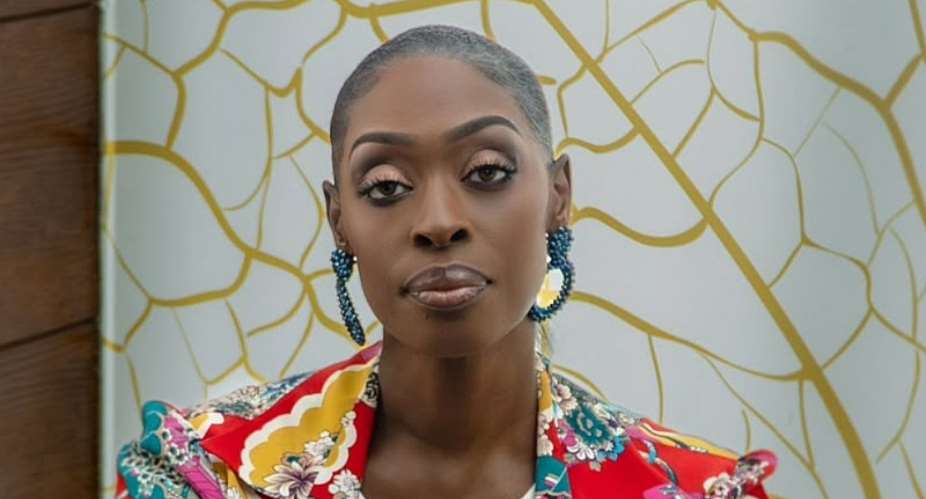
The culture that has kept African children silent over the years needs to be changed to create a new child on the continent with a voice, because these new Africans will not be seen as bad people, but as people who have evolved to be assertive, says Dilys Sillah, an author and a human development practitioner.
In many traditional African child-rearing practices, respect for elders is inextricably tied to absolute obedience and silence. Among most tribes across the continent, a well-behaved child is historically one who remains quiet around adults, performs tasks without questioning, and does not talk back.
Modern socio-psychological research notes that this rigid socialization can inadvertently suppress critical thinking, reduce self-confidence and foster a “culture of silence” that makes children vulnerable to abuse, as they are trained never to question authority figures.
Sillah, who was speaking about her forthcoming book, “They Taught Us To Be Quiet. Then They Gave Us AI: Culture, Communication and the Liberation of The African Voice,” said there is the need to look at the silence that has been created around African children, to find out what “we are afraid of, to keep the children silent, because whoever benefits from the silence is not the child.”
She said some of the messages in the book looked out how the African is brought up on instruction and how they carry out these instructions, stating that, “it has created a people who don't ask for clarification and they don't give an opinion.”
“I think the key message from my book is really to look at our culture, and bring out what it is that affects us from being bold and being assertive as individuals, as communities and as a continent,” Sillah said.
She used the book to talk about the deep silence that was systematically taught across Africa which has been ingrained, and historically mistaken for culture, identity or even sacred tradition. The book also explores what happens when a generation conditioned to be silent is suddenly handed artificial intelligence. It also investigates the liberation, expression, and the resurgence of authentic African voices and narratives in a digital as well as AI-driven era.
Sillah said it is important to trace back what has affected the African ability to engage and to communicate with effectiveness so that they can advocate for themselves in a way that has the continent’s best interest at heart.
For this reason, she examined from the individual to the community to the continental level, explaining that, to name some of the things to ponder over include, “a look at AI as African intelligence because we are intelligent, how intelligence was defined and how it was communicated globally over the last hundred years to make Africans look like they lack intelligence.”
For this reason, Africans should look at the pride they have and recognize the effects of colonialism and racism, how it has affected the perception of the African, and move with the things that Africans have achieved and not the things they are told.
For her, Africans should be able to question what they have been taught, so that with the introduction of AI that likes to be questioned with critical thinking, they will be able to take out things that work in direct contrast with the knowledge that they have acquired, to make them beneficial.
Sillah debunked the idea that the culture that allows European children to be heard is peculiar to them, stating that, “the problem is, making the assumption that a child who is confident and assertive, is European.”
She said Africans should be able to adapt their culture in a way that benefits all and should “not assume that any talk about change is to mirror, to emulate, or to imitate Europeans, adding that, “we have our own culture, and our adaptation of our culture to be progressive, should never be attributed to the West.”
Sillah wondered “why a child ‘having a voice’ automatically translates to disrespect, dishonour and disregard,”saying this has created a problem over the years, and this is one of the things that have been addressed inthe book. In her view, “the fact that you give a child a voice, the fact that you give a child assertiveness, does not automatically mean that child is disrespectful.”
She said there is this myth in Africa that all children in Europe are disrespectful and rude, and all children in Africa are respectful, describing it as “a lie.” Stating that she was born and raised in England, this has not however, made her disrespectful, but may be deemed so, by the mere fact that she asks questions.
Born in England and the fourth child of her parents, Sillah describes herself as someone who is very simple yet with a very complex character, explaining that, she is “someone who is always questioning. Somebody that likes to know, and loves knowledge, but never feels that she or anyone is at a point where we have acquired enough knowledge to feel that we are superior to anybody.”
She said, what has made her passionate about the issues she talks about, is the fact that she cannot stand people being used or disadvantaged as well as being treated badly. In her words, “I cannot stand people who are exploited because they don't know how to use their voice. And that's where my passion for the African comes in. Because what we don't realize is there is a by-product of silencing us as children, a silenced child does not become a vocal adult. A silenced child becomes a silenced adult. And when you put us on the global stage, we are still silent.”
Her new book is the tenth that she has authored, and she said her first work titled “Predator Prince” was about how to find the man of your dreams, not your nightmares. That book was written at the time she was running a health, fitness and lifestyle business and a group on social media, through which women contacted her to talk about issues they had faced like rape and domestic violence. Also, the book was to point out the red flags, and how women could interpret them to save themselves.
Sillah describes her new book as special and unique because she has been able to join the thread between culture, communication and artificial intelligence, adding that, “it is a very timely book. It's timely in the commercial space, it's timely in the cultural space, and it's timely in the tech space.”


 Majority claims Asafo-Adjei lobbied Ablakwa for Nana B to retain service passpor...
 I have no regrets joining Assemblies of God – Mahama
 Police to receive 40 additional armoured vehicles, 250 new apartments — Mahama
 PAC directs UGMC to fix procurement infractions, declining service standards
 Minority claims baseless, GHS49.7m South Africa evacuation fully accounted for –...
 Mahama allocates over GH¢200m in 2027 budget to complete Police Hospital expansi...
 US Department of Justice shares latest details of Sasaabi cybercrime raid
 Majority Caucus defends GH¢49.72m spent on evacuating Ghanaians from South Afric...
 Bawku MCE assures residents of lasting peace after 150 days without gunshots
 Ghana is ready to take off after economic turnaround – Ato Forson


