




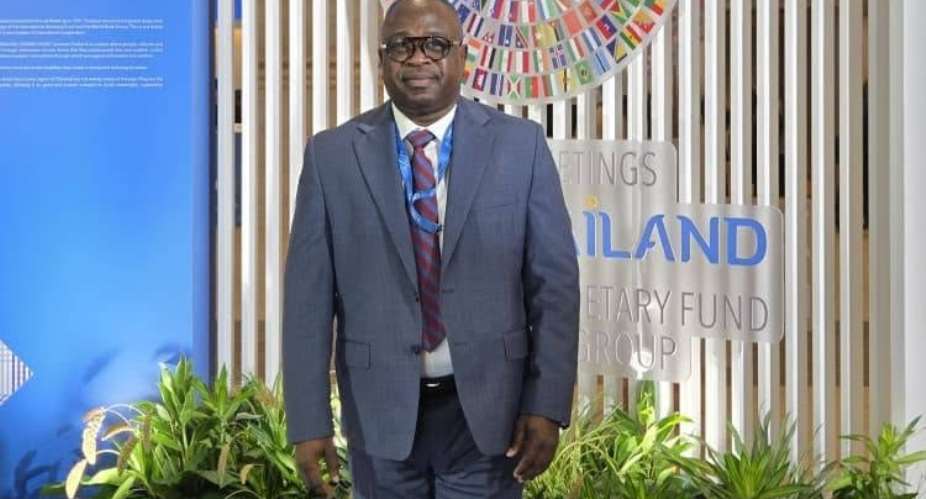
The Minister of State for Climate Change and Sustainability, Mr Seidu Issifu, has called on international development partners to ensure that climate-vulnerable countries undertaking economic reforms are not denied access to concessional financing, urging a fairer global financial system that supports resilience and sustainable development.
He said countries that had taken difficult steps to restructure their debts should be supported with affordable financing rather than face further barriers to accessing capital.
“Doing the difficult but necessary thing should open doors, not close them,” he stated.
Mr Issifu made the call when he delivered Ghana’s intervention at the 17th Vulnerable Twenty (V20) Ministerial Dialogue in Bangkok, Thailand, held on the margins of the 2026 Annual Meetings of the International Monetary Fund (IMF) and the World Bank Group.
He urged development partners to introduce transition financing windows with phased pricing, longer repayment periods and measures to help countries regain sustainable access to international capital markets.
The Minister called for fairer and more transparent sovereign credit ratings that reflected improvements in countries’ economic fundamentals following debt restructuring, noting the importance of ensuring that such reforms translated into tangible financing benefits.
Addressing the relationship between debt and climate vulnerability, Mr Issifu advocated innovative financing mechanisms that would enable countries to manage their debt obligations while investing in climate resilience.
These included debt-for-resilience conversions, climate-resilient debt clauses in new lending agreements and debt sustainability assessments that recognised resilience investments as drivers of long-term economic growth.
He said climate-vulnerable economies needed financial arrangements that acknowledged the economic value of investing in resilience and enabled them to respond effectively to climate shocks without worsening their debt burdens.
Mr Issifu encouraged V20 members to build consensus and mobilise support to establish the Fund, while calling on the Group of Seven (G7) and Group of Twenty (G20) economies to support the initiative.
He further called for greater direct access to climate finance, advocating a doubling of the number of V20 direct-access entities accredited to the Green Climate Fund by 2027.
According to him, strengthening direct-access mechanisms would help climate-vulnerable countries mobilise resources more efficiently and direct investments towards their specific development and resilience priorities.
Mr Issifu reaffirmed Ghana’s commitment to international partnerships capable of delivering practical development outcomes.
He stressed that vulnerable economies were seeking investment partners with a shared interest in their long-term success, rather than relationships based solely on charity, calling for global financial arrangements that enabled countries to build resilience, expand economic opportunities and secure sustainable growth.
The dialogue brought together V20 leadership, including Barbados’ Prime Minister and Chair of the Climate Vulnerable Forum and V20, Mia Amor Mottley, Ambassador Elizabeth Thompson, senior ministers from climate-vulnerable countries, and representatives of the IMF, World Bank Group and other development finance institutions.

 Majority claims Asafo-Adjei lobbied Ablakwa for Nana B to retain service passpor...
 I have no regrets joining Assemblies of God – Mahama
 Police to receive 40 additional armoured vehicles, 250 new apartments — Mahama
 PAC directs UGMC to fix procurement infractions, declining service standards
 Minority claims baseless, GHS49.7m South Africa evacuation fully accounted for –...
 Mahama allocates over GH¢200m in 2027 budget to complete Police Hospital expansi...
 US Department of Justice shares latest details of Sasaabi cybercrime raid
 Majority Caucus defends GH¢49.72m spent on evacuating Ghanaians from South Afric...
 Bawku MCE assures residents of lasting peace after 150 days without gunshots
 Ghana is ready to take off after economic turnaround – Ato Forson


