




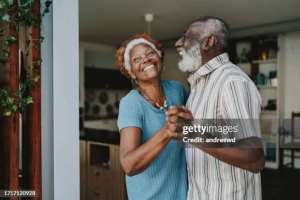
Why 60 should not be the Age at which we Stop Living
There is something strange about the way we treat age. At 40, you are still young. At 50, you are still reasonably young. At 59, you can still dream, work, learn, fall in love and make plans. But cross that invisible line into 60 and something happens. Suddenly, society begins to whisper: "You are old now." "At your age?" "Why do you want to learn that?" "You should dress like an old man." "You should eat like an old man." "Don't behave like a young man." "You have done enough. Sit down." And slowly, the person begins to believe it. He stops learning. He stops experimenting. He stops dreaming. He stops making plans. He sits down. And waits. But waits for what?
Methuselah was 969
The Bible gives us something extraordinary to think about. Genesis records people living extraordinarily long lives. Adam, according to the biblical account, lived 930 years. Noah lived 950. Methuselah lived 969 years. Science and archaeology cannot establish that human beings actually lived for nine centuries, and biblical scholars differ over how such ages should be understood. But there is nevertheless a powerful thought here. If Methuselah was 969, what exactly is 60? A beginning? A middle? Or an ending?
Psalm 90 gives us another familiar figure: "The length of our days is seventy years, or eighty, if we have the strength." Seventy. Eighty. But nowhere does that mean that at 60 a human being should mentally pack his bags and wait for death. Indeed, the Bible says something else that I find even more beautiful: "They will still bear fruit in old age, they will stay fresh and green." Still bear fruit. Not merely breathe. Not merely exist. Bear fruit. Still contribute. Still produce. Still matter.
Who Told Us That 60 is Old?
Sixty is an age. It is not a sentence. There is a difference between saying, "I am 60," and saying, "Because I am 60, I am finished." The first is a fact. The second is surrender. A 60-year-old is not 30. We should not pretend otherwise. The body changes. Recovery may take longer. Eyes may need help. Knees may complain. Strength may decline. But ageing does not mean that everything worthwhile has ended. In fact, some people seem to discover their real calling only after the age at which society expects them to retire. And their stories should make us question the way we think about ageing.
The Colonel was Just Getting Started
Consider Colonel Harland Sanders. Most people know him as the white-suited face of Kentucky Fried Chicken. But the story is more interesting than the picture on the bucket. Sanders began serving chicken at his roadside establishment in Kentucky when he was about 40. He perfected his recipe over the following years. Then came 1952. Sanders was 62 when the first Kentucky Fried Chicken franchise opened in Utah. KFC's own history records that he subsequently went on the road signing up new franchisees. By 1964, at the age of 73, he sold the company to investors. Think about that.
At 60, many people are being told: "Slow down." Sanders was building a business model that would eventually become one of the world's most recognizable restaurant brands. He did not begin everything at 62. But his greatest business expansion came in his 60s. That is the point. Your best chapter does not necessarily have to be behind you.
Grandma Moses Did Not Discover Her Great Gift until Her 70s
Then there is Anna Mary Robertson Moses, better known as Grandma Moses. She spent much of her life as a farm wife and mother. When arthritis made embroidery difficult, she turned increasingly to painting. She began painting seriously in her late 70s. At 78, a collector noticed her work. At 80, she had her first solo exhibition. She eventually became one of America's best-known folk artists and produced more than 1,500 paintings.
Imagine somebody telling her at 60: "Madam, you are too old to start painting." If she had listened, the world might never have known Grandma Moses. That is the danger of telling people that their age has disqualified them from discovering something new. Sometimes the gift is still inside the person. It is simply waiting for permission to come out.
Laura Ingalls Wilder was 65
Then there is Laura Ingalls Wilder. She did not publish her famous Little House in the Big Woods until she was 65 years old. The Library of Congress records that her first book appeared in 1932, when she was 65, and that she subsequently produced a series of books that became enduringly popular. Sixty-five. Think about that. At an age when some people are being told to sit quietly and wait for grandchildren to visit, Laura Ingalls Wilder was beginning a literary career that would leave a lasting cultural legacy. She had lived the experiences first. Then she wrote about them. Perhaps that is another advantage of growing older: you have more life to write about.
And Then There was Harry Bernstein --- At 96
Perhaps one of the most extraordinary examples is Harry Bernstein. He had wanted to become a writer for much of his life. But his breakthrough came extraordinarily late. His memoir was published when he was 96 years old. Ninety-six! If somebody had told him at 60: "Your time has passed," he could have answered: "Apparently not." His story is a powerful reminder that the calendar does not know when your creativity will awaken.
Even Politics Has No Universal Retirement Age
Look at political leadership. Ronald Reagan became President of the United States at 69. Joe Biden became president at 78. Donald Trump returned to the presidency at 78. Around the world, many presidents and prime ministers have led their countries in their 60s, 70s and beyond. This does not mean that every older leader is automatically fit, energetic or cognitively capable. Age alone proves neither competence nor incompetence. That is precisely the point. Chronological age by itself is not a sufficient measure of a person's mental capacity, wisdom or ability to lead. If 60 automatically meant mental decline, many nations would have been led by people who had already passed the age society tells ordinary citizens to "sit down." But leadership is assessed by ability. Why shouldn't ordinary life be assessed the same way?
What Has Happened to Us?
This brings me to another question. Why are we not living as long as the extraordinary ages recorded in the Bible? Could it be our lifestyle? Could it be what we eat? Could it be what we don't eat? Could it be lack of exercise? Could it be stress? Could it be pollution? Could it be the way we sleep? Could it be the diseases of modern society? Could it be genetics? Or could it simply be part of the mystery of human existence and God's decree? We do not know. Modern science tells us that ageing is influenced by many factors --- biology, genetics, disease, environment and lifestyle.
So we should not make the simplistic claim that changing one's diet will make someone live to 150. But neither should we make the opposite mistake of believing that nothing we do matters. What we eat matters. What we drink matters. Whether we exercise matters. Whether we sleep properly matters. Whether we remain socially connected matters. Whether we continue to challenge the mind matters. And perhaps most importantly, whether we continue to find reasons to get out of bed matters.
The Mind Does Not Have to Retire
One of the greatest mistakes we make is retiring the mind simply because the body has retired from a job. A man retires from UDS. A teacher retires from Sakasaka Primary School. A civil servant retires from CAGD. A soldier retires from the Ghana Army. And suddenly society behaves as though the person has retired from humanity. No. You retired from employment. You did not retire from life.
You can still learn. You can still teach. You can still write. You can still mentor. You can still volunteer. You can still pray. You can still read. You can still make friends. You can still discover new technology. You can still ask questions. You can still be useful.
Go Back to School
Who said 60 is too old to go to school? Who made that law? If you never had the opportunity to attend university when you were young, why can't you go now? If you want to learn Arabic, learn Arabic. If you want to learn computing, learn computing. If you want to learn a trade, learn a trade. If you want to learn farming, learn farming. If you want to understand artificial intelligence, find somebody who understands it and ask questions. There is no shame in saying: "I don't know. Teach me." In fact, perhaps that is one of the greatest signs of wisdom. The young person may know today's technology. The older person may know something about life that technology cannot teach. Bring the two together. The result can be beautiful.
Age Should Bring Wisdom, Not Surrender
The ancient Roman philosopher Cicero wrote about old age more than 2,000 years ago. His argument was that while physical strength may decline, older people possess something increasingly valuable: experience. Think about that. At 25, you have energy. At 40, you have some experience. At 60, you have decades of experience. You have seen people rise and fall. You have seen marriages succeed and fail. You have seen governments come and go. You have seen businesses prosper and collapse. You have made mistakes. You have survived disappointments. You have learned things books cannot teach. Why would society throw all that away? The young need the energy of the old. The old need the energy of the young. A wise society allows both to work together.
Love Has No Retirement Age
There is another area where society becomes strangely cruel. Love. Why do we behave as though older people have no right to companionship? A 60-year-old man falls in love. "At your age?" A 65-year-old widow finds companionship. "What does she need a man for?" An older man marries a younger woman. "Has he gone mad?" But must the heart retire because the hair has turned grey?
Of course, relationships at older ages should be approached with maturity, honesty and responsibility. There can be important questions about health, fertility, finances, family expectations and differences in life stage. But the desire for companionship does not disappear at 60. A person may marry at 60. Or 65. Or 70.
And not every marriage is solely about having children. Sometimes two people simply discover that life is better when they walk together. Why should society deny them that possibility?
Happiness Does Not Belong to the Young
We have made another strange division. Dancing belongs to the young. Music belongs to the young. Fashion belongs to the young. Travel belongs to the young. Technology belongs to the young. Romance belongs to the young. Adventure belongs to the young. No. Life belongs to the living.
If you are alive, you have a right to seek happiness. You may have to seek it differently at 70 than you did at 25. That's fine. At 25 you might climb a mountain. At 70 you might take a gentle walk. At 25 you might dance until dawn. At 70 you might sit with friends listening to music. At 25 you might travel across continents. At 70 you might discover places in Ghana or within your region you never had time to visit. The activity may change. The joy does not have to disappear.
Rest, But Do not Rust
This is perhaps the heart of the whole argument. Rest, but do not rust. Rest is necessary. Ageing bodies need recovery. Illness may force us to slow down. We must respect our physical limitations. But there is a difference between resting and rusting.
Rest prepares you for tomorrow. Rust assumes there is no tomorrow worth preparing for. If you cannot run, walk. If you cannot walk far, walk a little. If you cannot work eight hours, work two. If you cannot start a huge business, start something small. If you cannot read a whole book, read a few pages. If you cannot study for three hours, study for 30 minutes. If you cannot travel abroad, visit somewhere in Ghana you have never seen. If you cannot do what you did at 30, discover what you can do at 60. The objective is not to pretend you are young. The objective is to remain alive to life.
What If God Gives You Another 30, 40, 50 or 60 Years at 60?
Suppose you are 60 today. What if God gives you another 30, 40, 50 or 60 years? Thirty, forty, fifty or sixty years is a long time. A child born today will become 30, 40, 50, or 60. A university student can become a professor. A small business can become a major company. A farm can grow. A book can be written. A marriage can mature. A community can be transformed. A new generation can be raised. A lifetime can contain another lifetime.
Even ten years can transform a person's life. So why sit down at 60 as though tomorrow has been cancelled? Tomorrow has not been cancelled. It simply has not been promised. And that is precisely why we should use today.
We Should Stop Asking, "How Old Are You?"
Imagine changing the question. Instead of asking an older person: "How old are you?" ask: "What are you learning?" Ask: "What are you reading?" "What are you working on?" "What do you still want to do?" "What can you teach me?" "What makes you happy?" Suddenly, the person is no longer a number. He is a human being.
Behind every grey head is a story. Behind every wrinkle is an experience. Behind every old hand are things that hand has built. Behind every pensioner is somebody who once woke up every morning and went to work. Behind every grandfather was once a young man. Behind every grandmother was once a young woman. And one day, if God gives us the years, we will be them.
Young People, Look Carefully
Young people should also listen to this. Do not mock old age. You are looking at your future. When you laugh at a 70-year-old, remember that 70 may one day be your age. When you tell a 60-year-old, "You are old," remember that you may one day wish somebody would tell you: "You are not finished." So tell today's older people that now.
Listen to them. Learn from them. Teach them what you know. Let them teach you what they know. Do not push them to the margins. And older people, do not push yourselves there either.
The Tragedy is not Growing Old
The tragedy is not growing old. Everybody who is fortunate enough will grow old. The tragedy is growing old before you stop growing. The tragedy is being 60 and believing you have nothing left to learn. Being 70 and believing nobody needs you. Being 80 and believing that happiness belongs to somebody else. Being 65 and allowing other people's opinions to bury dreams that are still alive inside you.
Grandma Moses was 78 when serious painting became her new calling. Laura Ingalls Wilder was 65 when her first Little House book was published. Harry Bernstein was 96 when his memoir finally appeared. Colonel Sanders was 62 when the first KFC franchise opened. These people did not all become successful because they were old. They became successful despite the assumption that their age should have prevented them from beginning. And that is the lesson. It is never safe to assume that somebody's best chapter has already been written.
God Decides the Length. We Must Use the Days
I do not know why one person lives to 40 and another to 90, 100 or 120. I do not know why one person takes excellent care of himself and becomes sick while another abuses his body and appears to live forever. There are mysteries beyond us. Perhaps some belong to science. Perhaps some belong to genetics. Perhaps some belong to circumstance. Perhaps some belong to God. But there is something we can decide: What will we do with the days we have been given?
If God gives us 60, let us live. If He gives us 70, let us live. If 80, let us live. If 90, let us live. If 100, let us thank Him and continue. And if He gives us another morning, let us not waste it simply because we have convinced ourselves that we are old.
At 60, Begin Again
So, to the man or woman approaching 60: Do not panic. You are not necessarily standing at the end of the road. You may simply be standing at another doorway. Open it. Learn something. Read something. Meet somebody. Visit somewhere. Start something. Teach somebody. Help somebody. Love somebody. Laugh. Pray. Walk. Think. Dream. And if you fail, remember: Failure at 60 is not necessarily worse than failure at 30. At 60, you have more experience to understand what went wrong. And if you succeed? Enjoy it.
You do not need permission to be happy. You do not need society's approval to learn. You do not need anybody's permission to make yourself useful. You do not need to apologize for still having dreams.
My Thoughts: As Long as there is Breath
Perhaps the greatest mistake we make about ageing is confusing getting older with being finished. They are not the same thing. The body may slow down. The hair may turn gray. The face may wrinkle. The steps may shorten. But the spirit can still say: "I am here." And while you are here, live. If you want to learn, learn. If you want to work, work. If you want to teach, teach. If you want to travel, travel. If you want to write, write. If you want companionship, seek it wisely. If you want to start again, start.
Do not sit in one place waiting for life to end. Do not sit down and rust while you are still alive. There are still people to meet. There are still books to read. There are still places to see. There are still things to learn. There are still mistakes to correct. There are still people to forgive. There are still people who need you. There are still dreams that may yet come true. So, if you are 60, 70, 80 or even 90, perhaps the question is not: "How old am I?" Ask instead: "What can I still do with the life God has given me?" Then get up. Open the door. Step outside. And live. For as long as there is breath, there should be life.
FUSEINI ABDULAI BRAIMAH
+233208282575 / +233550558008
[email protected]

 NPP rejects Mahama's appointment of Emelia Agbenyo as EC deputy, demands withdra...
 Excessive consumption of processed meat can expose one to cancer – Health expert...
 Education Minister appeals to University Administrators to call off strike, resu...
 'You're doing yeoman’s job' — Mahama lauds Police over declined unresolved murde...
 Wilmar Africa, De Heus, other food processing companies face CID action over dat...
 NPP’s Baba Amando runs to police over alleged death threats
 Ghana repatriates 120 Nigerians arrested in cybercrime operations
 PIAC unable to verify GH¢21million petroleum-funded projects in Ayawaso West
 Wontumi pleads not guilty to five charges in GH¢30m Exim Bank fraud case
 Ghana among stronger-performing economies in sub-Saharan Africa — IMF


