




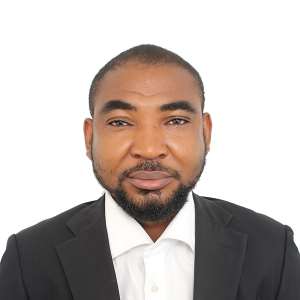
The President of the Institute of Financial and Economic Journalists (IFEJ) and Founder/Managing Editor of News Ghana, Roger Agambire Agana, has called for a comprehensive overhaul of Ghana’s constitutional and legal framework to make it more responsive to the country’s present economic, social and governance needs.
Speaking in an interview on the ongoing constitutional reform process, Mr. Agana said Ghana must move beyond piecemeal amendments and instead redesign a governance system capable of addressing the country’s most pressing challenges — including unemployment, excessive political appointments, institutional weaknesses and the persistent lack of continuity in national development planning.
“We must domesticate our Constitution”
According to him, Ghana has changed governments, political parties and leaders several times since independence, yet has failed to adequately review the foundational rules that shape how the state is governed.
He stressed that the question is not whether Ghana should remain a democracy, but whether its democratic institutions and laws are capable of producing the development outcomes the country urgently needs.
“We need to look at what is applicable here and what works for Ghana. We cannot simply continue with arrangements because they have existed for many years. We have to domesticate our Constitution and our laws to reflect our own realities,” he said.
Mr. Agana believes the current review process presents a rare opportunity to correct longstanding structural weaknesses and craft governance rules that reflect Ghana’s unique circumstances.
Rethinking Public Appointments
One of the key areas he highlighted is the country’s approach to public appointments.
He questioned why a nation grappling with high unemployment — including among graduates — continues to operate a system where a small group of individuals can occupy multiple influential public positions.
He cited the practice of appointing Members of Parliament as ministers or assigning them additional government responsibilities, arguing that Ghana must examine whether opportunities can be distributed more broadly among qualified citizens.
His position, however, is not to exclude experienced people from government.
“This is not about saying experience is not important. But if someone who has experience is no longer available tomorrow, what happens? If the person dies, retires or becomes incapacitated, are we saying Ghana cannot find somebody else to continue the work?” he asked.
He said Ghana must develop a wider pool of competent people who can serve in public institutions and strategic national programmes, rather than limiting opportunities to a small circle of politically connected individuals.
Competence Over Politics
Mr. Agana argued that the constitutional and legal framework should encourage governments to create opportunities for a broader section of the population.
He said public appointments should increasingly be guided by competence, qualifications, performance and accountability — not political considerations alone.
“We have many people who are capable of working for Ghana. We need a system that gives them the opportunity to do so,” he said.
Separating the Executive and Legislature
He also called for a serious reconsideration of the relationship between the Executive and Legislature.
According to him, MPs should be able to focus fully on legislation, representation and oversight, while the Executive should have the flexibility to bring qualified people from diverse backgrounds into government.
He said the debate should not be reduced to whether MPs should become ministers, but rather how Ghana can design a system that makes the best use of its human resources.
Ending Policy Discontinuity
Mr. Agana emphasised the need for a long-term national development framework that remains relevant regardless of which political party wins an election.
He said political parties should be free to introduce their own programmes, but these should operate within a broader national development plan agreed upon by the country.
“Every political party comes with its own promises. But we should have a national development agenda that every government works within. When another government comes into power, it should continue from where the previous government ended,” he said.
He warned that Ghana’s tendency to abandon projects and policies simply because political power has changed hands undermines national progress.
“If it is a 20-year plan, then we should be achieving it over 20 years. A government can add one or two programmes of its own, but the basic national agenda should continue,” he said.
Implementation, Not Endless Committees
Mr. Agana expressed concern about the repeated establishment of committees to examine constitutional and governance issues without implementing their recommendations.
“If we keep establishing committees and their reports are not implemented, then another government comes and establishes another committee, what are we achieving?” he asked.
He said constitutional reform must include clear implementation mechanisms, timelines and accountability structures to ensure agreed reforms are carried out.
A National Development Imperative
Mr. Agana stressed that Ghana has reached a point where constitutional reform should be treated as a national development priority rather than a political project belonging to any particular administration.
He said Ghana has enough experience to identify weaknesses in its governance system and develop laws that promote broader employment, stronger institutions, continuity in national planning and greater accountability.
“Our politicians know many of the problems Ghana faces. They know what needs to be done. The question is whether we are prepared to change the laws and the system so that what needs to be done can actually be done,” he said.
He urged the Constitutional Review Committee, political parties, civil society organisations, academics, the media and other stakeholders to approach the reform process with a long-term national perspective.
A Constitution That Fits Ghana
Mr. Agana said the goal should be to develop a constitutional and legal framework that reflects Ghana as it is today and provides a foundation for the Ghana the country aspires to become.
“We need laws and a constitution that fit Ghana, support development, create opportunities for our people and ensure that every government works for the long-term interests of the country,” he said.
He concluded that the success of the current review process should be measured not by the number of recommendations produced, but by whether those recommendations lead to meaningful changes in how Ghana is governed.
To him, this moment offers Ghana the chance to move beyond a system heavily centred on elections and political turnover toward one built on continuity, productivity, accountability and long-term national development.
 Two Aduman SHS teachers remanded over alleged sodomy case involving two minors
 'What are the technical reasons for the new cedi notes?’ – Oppong Nkrumah questi...
 GES forwards 347 salary arrears cases of 2024 teacher recruits for payment
 No basis for rent increases in Ghana today – Kwakye Ofosu cites reduced building...
 2027 Budget: New Economy is ‘copy and paste’ of 24-hour policy – Amin Adam
 2027 Budget: Ato Forson contradicted himself on borrowing – Amin Adam
 Microsoft says it is 'deeply sorry' after widespread outages cause global chaos
 Microsoft outage causes global chaos
 The Nvidia affair: Are markets about to fall out of love with AI?
 'Too early to discuss presidential bid’ – Dr. Ato Forson


