




In a functioning democracy, the law is a blind arbiter of justice, treating the high-profile politician and the ordinary citizen with the same unwavering fairness. Yet, the recent emotional spectacle broadcasted on Wontumi TV and Movement TV, where legal practitioner Dr. Maurice Ampaw begged President John Dramani Mahama and businessman Ibrahim Mahama to intervene in the incarceration of Bernard Antwi Boasiako (Chairman Wontumi), threatens to reduce our judicial system to a playground of political patronage. Wontumi was sentenced to 20 years in prison with hard labour by Justice Audrey Kocuvie-Tay for unauthorized illegal mining (galamsey) on the Samreboi concession and faces a GH¢50 million bail condition regarding separate EOCO investigations into alleged fraud and money laundering.
To reduce this severe judicial outcome to "political suffering" is not only an insult to the intelligence of Ghanaians but a dangerous attempt to subvert the rule of law. If Ghana is to survive its environmental and economic crises, justice must be served cold, without regard to political tears, media-driven PR campaigns, or elite connections.
The Devastating Reality of Galamsey: Crimes Against the Republic
The primary failure of Maurice Ampaw’s appeal is its complete disregard for the sheer devastation caused by the crimes for which Wontumi was convicted. Galamsey is not a victimless, technical infraction; it is environmental terrorism that inflicts generational trauma on the state:
- Ecological and River Devastation: The operations facilitated by Akonta Mining Limited have poisoned major water bodies with heavy toxic metals like mercury and arsenic. Rivers that once sustained entire regions have been turned into dead, mud-choked streams with turbidity levels reaching hazardous extremes.
- The Destruction of Cocoa and Food Security: Vast forest reserves and fertile agricultural lands have been stripped bare, permanently crippling cocoa farms and destabilizing rural food security. While the elite count their gold, local farmers lose their only means of livelihood.
- Public Health Crisis: Communities downstream are bearing the physical brunt of illegal mining, suffering from poisoned water tables and a rising incidence of severe health complications.
- The Double Standard of Suffering: To weep on live television over a wealthy politician’s prison discomfort while turning a blind eye to the birth defects, poisoned ecosystems, and ruined rural populations caused by galamsey is the height of moral blindness.
A Weaponized Microphone: The Collapse of Media Ethics
The broadcasting of this emotional plea exposes a deeply troubling trend in the landscape of Ghanaian media ethics, where public airwaves are weaponized to subvert judicial authority:
- Conflict of Interest on Party-Owned Media: Utilizing Wontumi TV—an outlet directly owned by the convict—to launch emotional campaigns for his release is a flagrant breach of journalistic neutrality. The media house was transformed from a public information platform into a private tool for political pressure and emotional blackmail.
- Normalizing Judicial Subversion: By airing demands for the Executive branch or private tycoons like Ibrahim Mahama to "do something" about a valid court ruling, the media normalizes the dangerous idea that justice is negotiable outside the courtroom.
- Emotional Distortion of Legal Truths: Media ethics demand that legal reporting prioritize statutory facts, the severity of crimes, and judicial text. Instead, these broadcasts chose to amplify theatrical narratives of "frozen bank accounts" and "political witch-hunting," deliberately misleading the public and muddying the waters of accountability.
Strategic Recommendations for Ghana’s Justice System
To ensure this landmark case sets a healthy precedent rather than a blueprint for political evasion, the following actions are urgently required:
- Resist Executive Interference: The Presidency must maintain absolute silence and neutrality. Any attempt by the Executive arm of government to influence Wontumi’s prison conditions or the EOCO probe will permanently damage the integrity of Ghana's democratic separation of powers.
- Sanction Ethical Violations on Airwaves: The National Media Commission (NMC) must hold broadcasting stations accountable when they are utilized by legal practitioners to threaten state institutions or orchestrate contempt against the judiciary.
- Fast-Track Legal Appeals Transparently: The Court of Appeal should process the defense's filed application swiftly and transparently. Let the legal arguments stand or fall on their own merit in open court, proving to the public that the judiciary cannot be swayed by media campaigns.
- Strengthen Environmental Prosecution: The Attorney-General's department must use this milestone conviction as a baseline. The law must aggressively pursue all galamsey kingpins, regardless of political affiliation, to shatter the culture of elite protectionism.
A Litmus Test for the Republic
Ghana stands at a critical crossroads where it must decide whether it is a nation governed by laws or a nation governed by influential men. Chairman Wontumi’s current plight is not a political tragedy; it is the logical consequence of a judicial system attempting to assert its independence against environmental devastation and corporate misconduct.
When Maurice Ampaw laments frozen bank accounts and prison hardships, he forgets that the law cares about actions, not status. If we allow tears, political alignments, or family ties to dilute court sentences, we might as well open the gates of our prisons and let every inmate walk free. For the sake of our poisoned rivers, our degraded lands, and the future of our democracy, the state must remain firm. Justice has spoken, and the law must take its full, uninterrupted course.
✍️ Submitted by:
Retired Senior Citizen
For and on behalf of all Senior Citizens of the Republic of Ghana 🇬🇭
Teshie-Nungua
[email protected]

 I’ll sue NPP if the constitutional amendment at delegates conference goes throug...
 NPP executives are like lions being led by a goat – Odike
 Two final-year students killed by speeding tipper truck in Ekumfi
 Afenyo-Markin cautions NPP members against working secretly to undermine party
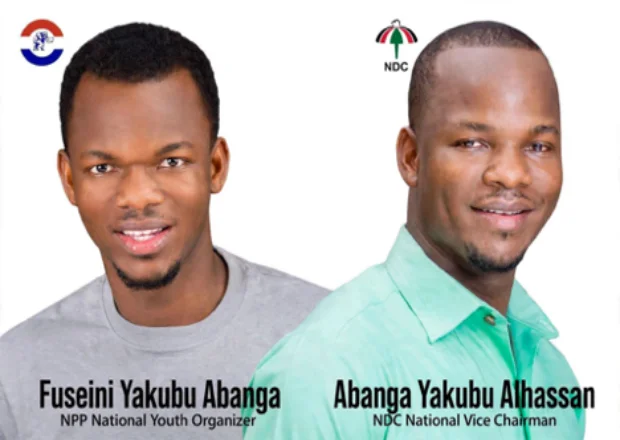 The Abanga twins: Two brothers, two parties, one political family
 Fair Wages and Salaries Commission engages striking teachers over conditions of ...
 Tema Central MP details disputes with Ebi Bright amid assault allegation
 PAC raises alarm over GH¢5.2bn financial irregularities in MDAs
 Teachers to remain on strike as talks with FWSC end in stalemate
 La Pleasure Beach demolition: Committee to determine compensation for affected b...


