




Once, you couldn’t get a false statement into the media. Sharp‑eyed editors would spot it if the proofreader(s) didn’t.
I learnt from a very early age that proofreading was one of the most important jobs in the media. A newspaper editor I knew would go to “stone” every now and then, indelible pencil in his hair. He would pull off “wet” copies of “matter,” read them, and sign them off. Even so, the chief proofreader would also read the “matter.” Between them, errors caused by bad setting or typing would have a hard time staying in the edition.
Nowadays, spell‑check systems encourage news people to be lazy. Yet the systems are man‑made and therefore capable of making mistakes. Certainly, the human eye should check what a human‑created algorithm comes up with! But alas, lazy, so‑called professionals keep leaving “literals” or errors in the media to confuse consumers.
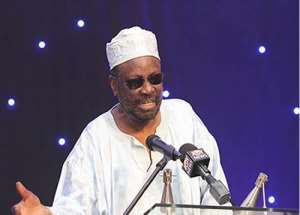
There is nothing worse than seeing one’s own name appear in a false media report, as I found out to my cost the other day. Someone called Jefferson Sackey, whose name I have never come across in my 70 years in journalism, has apparently achieved so much fame that he has published a memoir of his attainments. Unfortunately, he mentioned my name as one of the journos with whom he jostled for fame! But having been so kind as to acknowledge my existence as a contemporary, he cruelly killed me off by inserting one fatal word before my name! And the Asaase Radio website, where a review of Mr Sackey’s memoir was published, left the fatal word in unchanged.
Did Mr Sackey check his facts before he sent his memoir to his publisher? I don’t know. Did the book’s editor check the facts in the book? Did the Asaase Radio website check the facts in the article before publishing it?
Well, I firmly refuse to be killed off. Mr Sackey and his accomplices should note! Only Allah can do that job. And by His Mercy, He hasn’t penned my name down yet!
So there, Sackey et al.
By the way, Mark Twain is among a large group of celebrities who have lived to see their demise allegedly occur before it actually did!
Who can forget Mark Twain’s opening words in his book Tom Sawyer?
QUOTE: “Tom!”
No answer!
Long live good writing.

 'Ghana Jollof' case is a foolish case – Martin Kpebu tells Police CID
 'I don’t know Kevin Taylor, I will speak to his father to stop him from insultin...
 CPP appeals to Mahama for return of confiscated party property after overthrow o...
 Drug bust: 'Ghana’s reputation is not one party’s reputation’ – Dr. Adomako Kiss...
 ‘What is happening in the media space is horrifying’ – Kwesi Pratt condemns ‘irr...
 Mahama asks MFWA, GJA to lead national dialogue on hate speech
 Teenage pregnancy: Parents ‘too busy’ to notice warning signs – Protect Our Futu...
 NPP intelligence points to cocaine manufacturing in Ghana – Baffour Awuah
 NPP's Obiri Boahen sues two Tiktokers over alleged defamation
 Ghanaian Pastor Rev Emmanuel Boakye-Danquah on the run over alleged counterfeit ...


