




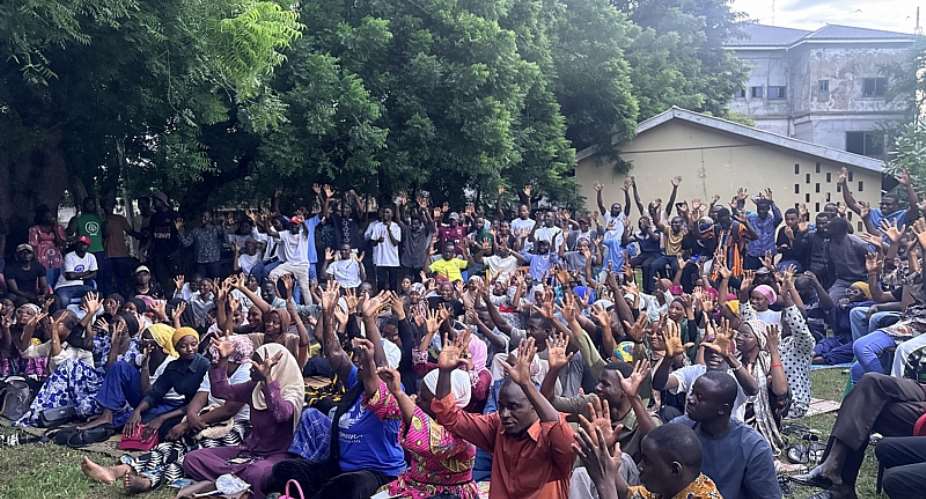
“Every big obstacle comes with new alternatives”.
Over the years, Ghana’s civil society space has largely operated on a simple model: apply for funding from external donors, implement projects, report, and start the cycle all over again. This continues until an organisation is no longer able to attract funding and either fades out or transforms into something new.
My intention is not to undermine this system. It has created real impact in many communities. It has given people a voice and provided communities with the tools and resources to improve their living conditions.
But the civil society space is changing. Recent developments are putting pressure on this traditional model and forcing organisations to think differently about how they survive, remain relevant, and continue creating impact.
In this piece, I want to look at what is changing and explore some of the emerging models that could strengthen Ghana’s civil society space.
The newest cliché in the nonprofit landscape is social enterprise. This new model challenges organisations to turn their expertise into services that people can pay for or develop products that are in demand. Part of the proceeds from these enterprises can then be used to fund activities and projects that support the organisation’s vision.
It is a solid idea and is often praised by many people in the space as one of the sustainable ways for organisations to respond to the growing challenges around external funding. But while organisations are exploring social enterprise, another model is already taking shape, especially among young people.
Young people are becoming smarter about how they create change in their communities. They are using social media to drive advocacy, mobilise people around issues, organise community activities and share information without necessarily waiting for funding.
Many youth-led groups are operating with little or no external funding. They rely on their networks, skills, creativity and the willingness of their members to contribute. A campaign may start with a WhatsApp group, a few social media posts and a group of young people who care about an issue. From there, they can organise a community sensitisation, invite resource persons to speak, produce educational content or mobilise people to take action.
What makes this model interesting is that the community is not always treated as a beneficiary waiting for a project to arrive. People become part of the solution. They contribute their time, knowledge, contacts, spaces and sometimes even money. The young people coordinating the initiative provide the energy and organisation needed to bring these resources together.
Social media has also made advocacy cheaper and more accessible. A youth group does not need a large communication budget to start a conversation about an issue. A well-made video, a simple infographic or a personal story can reach thousands of people. In some cases, online conversations can also lead to offline action.
This does not mean that funding is no longer necessary. There are projects that require significant resources and cannot be sustained through goodwill alone. But the growing number of youth groups finding ways to organise, advocate and provide community education without external funding raises an important question: Do we need to rethink what we consider a successful civil society organisation?
Perhaps the future of civil society will not be built around one funding model. It may instead be a combination of social enterprise, community contributions, volunteerism, digital advocacy and traditional donor support.
The interesting part is that young people are already experimenting with this future, whether we have given the model a name or not.
Examples of the New Model
Two good examples of this emerging model are the work of 3S Foundation and Ghana Offline Community.
3S Foundation is a youth-led organisation in the Northern Region focused on promoting healthier communities through three main pillars: Screen, Sensitize and Sanitize. The organisation brings together volunteers, many of whom are health professionals, to provide community health services and education. It also mobilises resources such as test kits through crowdfunding and other community-based support.
What is interesting about 3S Foundation is that it is not waiting for a large donor-funded project before it can act. It identifies a need, brings together people with the skills to respond to that need, and mobilises resources from its network and the wider community. A health professional contributes their expertise, another person may help with logistics, while others contribute money or materials. The result is a model built around shared responsibility.
The Ghana Offline Community is another example of this approach. The organisation is championing youth-led change in Northern Ghana by creating networking opportunities for young people, providing safe spaces for interaction and encouraging young people to question and challenge existing narratives.
Over the past four years, the community has grown through the commitment of its members rather than external project funding. Members contribute in different ways. Some give their time, others contribute their professional skills, connections, ideas or resources. This has allowed the community to organise conversations, campaigns, volunteer activities, sensitisation programmes and other initiatives around issues that matter to young people.
What makes the Ghana Offline Community model particularly interesting is that the community itself has become a resource. The value is not only in the money members can contribute. It is also in the hundreds of people who are willing to give their time, skills, networks and knowledge to make something happen.
These examples do not suggest that external funding is no longer important. Donor funding remains critical for many organisations, particularly those implementing large-scale programmes that require substantial resources. The point is that external funding does not have to be the only fuel for civic action.
There is also something to be learned from how young people are organising. They are starting small, using what they have, building communities around shared interests and finding creative ways to respond to problems. They are showing that impact can sometimes begin with a group of people who are willing to give their time and skills before they have the money to do everything they want to do.
Where Does This Leave Civil Society?
Ghana’s civil society space is entering a period where organisations may have to rethink how they operate. The traditional donor-funded model will probably remain, but it may no longer be enough on its own.
Social enterprise provides one alternative. Community-driven funding, volunteerism and crowdfunding provide others. Digital advocacy has also lowered the cost of organising and made it possible for small groups to reach large audiences without the resources of established organisations.
The biggest opportunity may therefore be in combining these approaches. An organisation can use donor funding where it makes sense, generate some income through social enterprise, mobilise its community when resources are needed and use digital platforms to amplify its advocacy.
But there is also a bigger lesson here. Civil society should not only be measured by the size of its grants, offices or projects. We should also look at the communities it has built, the people it has mobilised, the conversations it has started and the problems it has helped people solve.
The funding challenges facing civil society may be an obstacle, but they are also forcing organisations to think differently. And sometimes, when the old ways become difficult, new alternatives emerge.
Perhaps the future of Ghana’s civil society space will not belong only to organisations that can attract the biggest donors. It may also belong to those that can build strong communities, mobilise people and create impact with whatever resources they have.
Young people are already showing us what that future could look like.
 Highly influential people sponsoring Ghana Jollof TikTok activities – CID
 'Ghana Jollof' case: Bawumia's condemnation of nurse's arrest is hypocritical – ...
 Ahafo Ano South West MP involved in road accident
 Constitutional Review alone will not solve Ghana’s problems – Kwesi Pratt Jnr.
 East Legon Football Academy applauds NPA Boss for supporting youth football
 Gov't didn't show NPP enough respect in constitutional review process – Martin K...
 September 18: Cedi sells at GHS12.15 on forex market, GHS11.53 on BoG interbank
 Lawyer challenges two-week remand of Salomey over connection to wanted 'Ghana Jo...
 Minority calls for NSA boss Ampofo Ankrah, others to be dismissed over alleged 2...
 ‘You gave us GH¢60,000 to run 66 offices nationwide and expect us to function?’ ...



Comments
people are creating change and making impact and that's so amazing. well done 3S Foundation, we see you and we admire you👏