




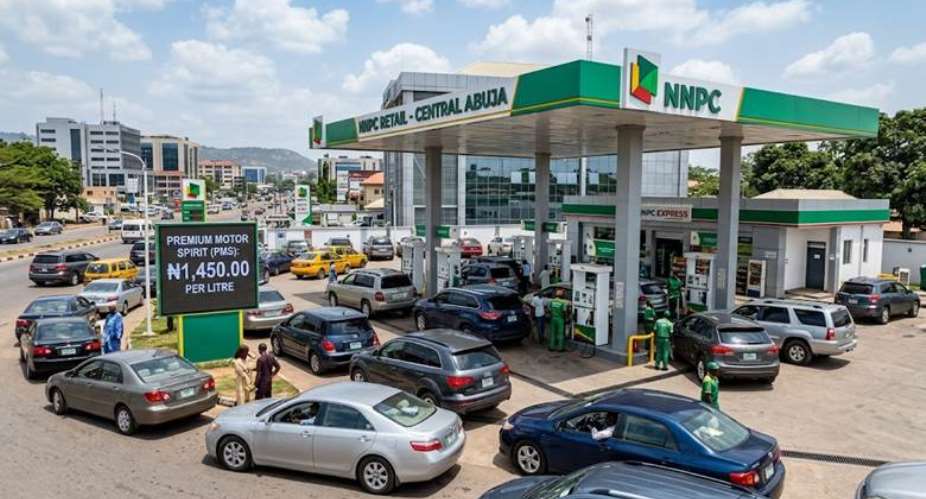
Barely three weeks into the 2026 ‘ember months, businesses in Nigeria are once again confronted with a familiar but increasingly dangerous challenge: rising energy and transportation costs. Petrol prices are approaching the N1, 500 per-litre mark in parts of the country, following another upward adjustment in the price of Premium Motor Spirit (PMS) by the Dangote Petroleum Refinery. In very many locations, pump prices have already crossed N1, 400, while reports from parts of the South-West indicate prices around N1, 500 per litre. The immediate concern is not merely what motorists will pay at filling stations, but what this latest increase means for virtually every economic activity that depends directly or indirectly on petroleum products.
For Nigerian entrepreneurs, manufacturers, farmers, transporters, traders and ordinary household, the critical question is not simply why petrol has become more expensive again. It is why prices are rising at a time Nigerians expected the coming on stream of the Dangote refinery to bring sustained relief.
The answer lies in understanding the difference between refining petroleum in Nigeria and producing petroleum at a permanently cheap price for Nigerians. The Dangote refinery has dramatically changed Nigeria's refining landscape. It has reduced the country's dependence on imported petrol and has become an important supplier of refined products, operating at a scale of about 700,000 barrels per day. But a domestic refinery does not automatically insulate Nigeria from movements in the international crude-oil market. This distinction is especially important in 2026.
International crude-oil prices have been pushed sharply upward by the war and disruption surrounding Iran and the wider Middle East. The Strait of Hormuz, through which a substantial share of the world's petroleum trade normally passes, has experienced a dramatic reduction in shipping traffic. Reuters reported that only four commodity vessels passed through the strait on one recent day, compared with a pre-war average of about 125 daily transits. The disruption has created fear of shortages and added a geopolitical risk premium to crude prices.
The consequences have been felt beyond crude itself. Attacks and disruptions affecting Saudi Arabia's energy infrastructure and alternative oil routes compounded the problem. On September 15, Brent crude settled at $108.75 a barrel after a sharp rise, while concerns remained that continuing disruption could push prices even higher. On September 16, Brent eased to about $107.53, but the underlying supply concerns remained. That is the part of the story that is sometimes lost in the Nigerian conversation about fuel prices.
Nigeria may produce crude oil. Dangote may refine crude oil in Nigeria. But crude oil is still a globally traded commodity. Its international value influences the opportunity cost of the crude supplied to a Nigerian refinery and, consequently, the economics of refined petroleum products. For example, if a barrel of crude becomes considerably more valuable on the international market, a Nigerian refinery cannot necessarily behave as though the international price does not exist. A refinery buying crude must consider the cost of acquiring that crude, the cost of refining it, financing, logistics, transportation, storage, operating expenses and the value of selling the resulting products. If the global market value of crude and refined products rises, the replacement cost of the product rises too. This helps explain what appears, at first sight, to be a contradiction: how can Dangote Refinery reduce petrol prices at one point and increase them later?
This is possible because refinery pricing is not permanently fixed. Earlier in 2026, Dangote did announce reductions in petrol prices as market conditions changed. In June, for example, its ex-depot price was reported to have fallen from N1, 250 to N1, 175 per litre. Later, the refinery again reduced its price. But the reverse has also happened. In August, Dangote increased its petrol gantry price from N1, 185 to N1, 200 per litre. In early September, it increased the price again to about N1, 266. Most recently, the refinery raised its gantry price to N1, 350 per litre, citing rising crude-oil prices and higher product replacement costs. The important point, therefore, is that the refinery has not failed simply because its price has increased. Rather, the expectation that domestic refining would automatically mean permanently cheap petrol needs to be reconsidered.
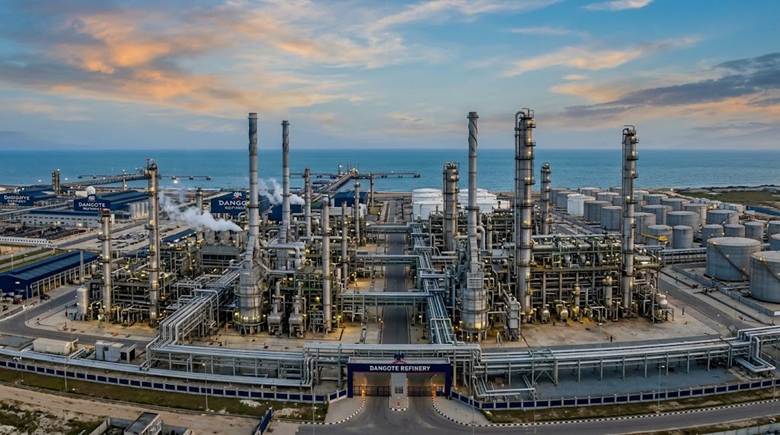
Dangote Refinery
Indeed, the present international environment is extraordinary. Reuters reported that Dangote Refinery has itself benefited from the global fuel shortage, exporting substantial volumes of jet fuel and other products to Europe while Middle Eastern supply has been disrupted. In the first half of 2026, the refinery reported a $1.82 billion net profit on revenues exceeding $13 billion. And there is nothing inherently contradictory about this. A refinery is a business operating in a global commodity market. When international refined-product prices rise, an efficient refinery can become more profitable. At the same time, Nigerian consumers can face higher domestic prices. The interests of the refinery as a commercial enterprise and the interests of Nigerian consumers are not necessarily identical.
This is why the debate should move beyond the simplistic expectation that Dangote Refinery alone can solve Nigeria's fuel-price problem. The immediate casualty is the Nigerian business community. For manufacturers, petrol and diesel are not simply fuels for vehicles. They are inputs into production. Where electricity supply is unreliable or expensive, businesses depend on generators. Petrol and diesel power transportation, logistics, distribution and, directly or indirectly, production. When the price of fuel rises, the cost of operating a generator rises. The cost of moving raw materials rises. The cost of delivering finished goods rises. The cost of workers travelling to and from workplaces rises. Eventually, the cost of the product on the shelf rises.
Small businesses are particularly vulnerable in such circumstances because they have little room to absorb shocks. A large company may be able to negotiate bulk fuel purchases, restructure logistics or spread increased costs across a large volume of sales. A small bakery, restaurant, sachet-water producer, mechanic, tailor, farmer, shopkeeper or local transporter cannot necessarily do the same. The result is often a vicious cycle. Fuel becomes more expensive. Transporters increase their charges. Businesses increase prices to cover higher logistics and operating costs. Workers demand higher wages because their own transport and food costs have risen. Consumers reduce purchases because their incomes have not increased at the same pace. Businesses then experience falling demand even as their costs continue to rise.
The rural farmer occupies an especially vulnerable position in this chain. Consider a farmer who produces tomatoes, yam, cassava, plantain, pepper, vegetables, maize or poultry products in a rural community. The farmer may not consume a large quantity of petrol personally. But almost every stage between the farm and the urban consumer is affected by fuel prices. Farm inputs have to reach the farm. Seeds, fertilizer, pesticides, animal feed, equipment and other materials have to be transported. In many rural communities, agricultural machinery depends on diesel or petrol. After harvest, farm produce must be transported from the farm or village to a local collection point, then perhaps to a larger market, and eventually to such cities as Lagos, Ibadan, Abuja, Port Harcourt, Kano, Kaduna, Onitsha or Enugu. The farther the farm is from the consuming centre, the more significant transportation becomes.
This is where the Nigerian farmer can be trapped in a particularly cruel economic situation. The farmer faces higher production and transportation costs but does not necessarily have the power to increase the farm-gate price sufficiently to compensate. A middleman or transporter may tell the farmer that transporting a truckload of produce has become more expensive. The farmer cannot simply command the urban consumer to pay more. Perishable products such as tomatoes, vegetables, fruits and fresh agricultural produce are especially problematic because the farmer cannot keep them indefinitely while waiting for a better price. The farmer could, therefore, be compelled to sell cheaply at the farm gate while the same product becomes dramatically more expensive in the city.
The difference is not necessarily evidence that the farmer has become richer. It may represent the accumulated cost of fuel, vehicle maintenance, road conditions, loading, unloading, storage losses, informal charges, market fees and the risks involved in moving the product. Rising fuel prices can consequently create the paradox of expensive food and poor farmers at the same time.
Recent Nigerian experience already demonstrates how rapidly energy shocks can pass through to food and transportation prices. Analysis of 2026 inflation data linked higher food and transport costs to the transmission of fuel-price shocks through logistics and supply chains.
This is why simply telling Nigerians that domestic refining will eventually solve the problem is insufficient. Nigeria needs a broader strategy.
The first priority should be to reduce the amount of petroleum required to move Nigerian goods. This sounds obvious, but it has enormous implications. Better rural roads can reduce vehicle operating costs, shorten journey times and reduce fuel consumption. Efficient rail freight can move large quantities of agricultural produce and industrial goods over long distances at lower unit transportation costs. Inland waterways, where economically and environmentally appropriate, can provide another alternative.
Agricultural production should also be reorganized around clusters and processing centres. Instead of transporting highly perishable agricultural products over hundreds of kilometres in their raw form, governments and private investors should encourage processing closer to production areas. Tomatoes can be processed into paste; cassava into flour, starch and other products; fruits into concentrates; milk into dairy products; grains into finished or semi-finished products. Such decentralized agro-processing would do more than reduce transport costs. It would create rural employment, reduce post-harvest losses and allow farmers to capture more value from their production.
The country must also confront the electricity problem. Every naira added to the price of petrol or diesel becomes more painful when businesses are forced to operate generators because grid electricity is unreliable. A more reliable electricity system would act as an indirect fuel-price subsidy for businesses—not by reducing the price of petrol, but by reducing the amount of petrol and diesel businesses need to survive.
Solar power, mini-grids, gas-fired generation and other distributed-energy solutions have an important role to play, particularly for small businesses and rural communities. The objective should not be to replace petroleum overnight. It should be to progressively reduce the economy's vulnerability to petroleum-price shocks.
There is also a case for a targeted, transparent transport intervention. If government attempts to suppress the pump price for everybody regardless of income, it risks recreating the old subsidy problem, with enormous fiscal costs and substantial benefits going to people who consume the most fuel. A better approach would be targeted support for public transportation, farmers, food logistics and other economically vulnerable sectors.
For example, government could support mass-transit operators through carefully monitored mechanisms rather than attempt to make every litre of petrol artificially cheap. It could provide temporary transport support during extreme price shocks. It could establish transparent freight-support programmes for the movement of agricultural commodities from designated producing zones to major markets.
Such interventions must be measurable. If public money is used, Nigerians should be able to see how much was allocated, who benefited, what quantity of fuel or transport service was supported and what the programme achieved. The government should also resist policies that make domestic refining unnecessarily expensive. If Nigeria is fortunate enough to have large refining capacity on its soil, domestic refineries should have reliable access to crude under transparent and commercially sustainable arrangements. Dangote has recently secured substantial Nigerian crude supplies for October 2026, including volumes from NNPC and additional tender purchases.
But domestic crude supply should not become an opaque privilege for any individual company. The long-term objective should be a competitive refining industry in which Dangote, the rehabilitated government refineries and other private operators compete on efficiency, reliability and price.
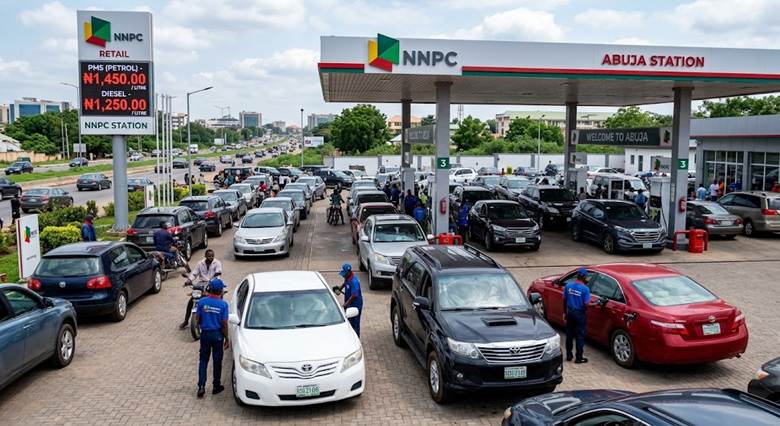
Competition matters because Nigerians should not be dependent on one refinery, one importer or one supplier. The government should equally make fuel-price formation more transparent. Consumers need to understand how international crude prices, exchange rates, refinery costs, freight, taxes, margins and other charges translate into the final pump price. When Nigerians understand the mechanism, there will be less room for suspicion and misinformation. At the same time, transparency must apply to the entire petroleum value chain. If prices rise because crude costs have risen, consumers should be told clearly. If prices remain high after crude prices fall, the reason should also be explained. The ordinary Nigerian does not need propaganda. What is needed is clarity.
There is another uncomfortable reality: Nigeria cannot continue to build an economy whose survival depends overwhelmingly on petrol and diesel. Every international oil shock will otherwise become a Nigerian cost-of-living crisis. Diversification is therefore not a slogan. It is an economic necessity. The country needs to move more people and goods by efficient public transport; generate more electricity from a diversified energy mix; process agricultural commodities nearer farms; improve storage and cold-chain infrastructure; develop local manufacturing of machinery and spare parts; and make Nigerian cities less dependent on long-distance daily commuting.
Businesses, too, will have to adapt. Firms that depend almost entirely on petrol generators and fuel-intensive logistics face greater risks in an era of volatile energy prices. Energy efficiency, route optimization, shared logistics, solar installations, modern inventory management and local sourcing can reduce exposure to future shocks. But it would be unfair to place the entire burden of adjustment on businesses and citizens. The government has a responsibility to create an environment in which businesses can adapt without being crushed.
The immediate objective should be to prevent today's energy shock from becoming tomorrow's food crisis. And that requires special attention to agriculture. Farmers need affordable access to inputs, storage, rural roads, irrigation, extension services and reliable markets. Transporters moving food should be treated as part of the nation's food-security infrastructure. Cold storage and aggregation centres should be expanded. Governments should work with private operators to establish efficient farm-to-market corridors.
If the cost of moving food from the village to the city falls, both farmers and consumers can benefit. For ordinary Nigerians, however, the most important intervention remains income. A household can survive a high petrol price more easily if wages and business incomes rise with productivity. What makes fuel-price increases devastating is the combination of expensive energy and stagnant purchasing power.
The long-term solution is not merely cheaper petrol. It is a more productive Nigerian economy in which people earn enough to absorb unavoidable international shocks. That is the larger lesson of the present crisis. Dangote Refinery is a major development for Nigeria. It has reduced the country's dependence on imported refined petroleum products and has demonstrated that Nigeria can operate a refinery on a globally significant scale. But the refinery cannot repeal the laws of international commodity markets. The recent price increases are occurring against a background of extraordinary global oil-market disruption, with Brent crude recently trading above $100 a barrel and shipping through the Strait of Hormuz severely constrained.
Nigerians should therefore be wary of two opposite simplifications: the claim that the Dangote refinery should automatically make petrol permanently cheap, and the claim that nothing can be done because international oil prices are beyond Nigeria's control. Both are incomplete.
Nigeria cannot control the price of Brent crude or the security situation in the Middle East. But it can control how vulnerable its citizens are to those external shocks. It can improve roads. It can expand rail freight. It can fix electricity. It can support targeted public transportation. It can make domestic refining competitive. It can strengthen agriculture. It can reduce post-harvest losses. It can expand local processing. It can make energy efficiency a national priority. It can make fuel-price formation more transparent. And it can protect the poorest citizens without returning to an uncontrolled, expensive universal fuel subsidy. The present petrol-price shock is therefore more than a story about what Nigerians pay at the pump. It is a warning about the structure of the Nigerian economy.
If every increase in the price of crude immediately translates into more expensive transportation, food, electricity, manufacturing and household consumption, then the country remains dangerously exposed. The way forward is not to pretend that global oil prices do not matter. It is to build an economy in which they matter less.
For the Nigerian farmer, that means getting produce from the farm to the market at lower cost. For the manufacturer, it means reliable electricity and efficient logistics. For the transporter, it means better roads and alternatives to petroleum-dependent movement. For the small business owner, it means lower operating costs and access to affordable finance. For the ordinary household, it means affordable transport, food and energy, backed by rising productive incomes. And for the country as a whole, it means turning the current petroleum crisis into an opportunity to finally reduce Nigeria's dependence on petroleum itself. That is the real way forward.


 Highly influential people sponsoring Ghana Jollof TikTok activities – CID
 'Ghana Jollof' case: Bawumia's condemnation of nurse's arrest is hypocritical – ...
 Ahafo Ano South West MP involved in road accident
 Constitutional Review alone will not solve Ghana’s problems – Kwesi Pratt Jnr.
 East Legon Football Academy applauds NPA Boss for supporting youth football
 Gov't didn't show NPP enough respect in constitutional review process – Martin K...
 September 18: Cedi sells at GHS12.15 on forex market, GHS11.53 on BoG interbank
 Lawyer challenges two-week remand of Salomey over connection to wanted 'Ghana Jo...
 Minority calls for NSA boss Ampofo Ankrah, others to be dismissed over alleged 2...
 ‘You gave us GH¢60,000 to run 66 offices nationwide and expect us to function?’ ...


