




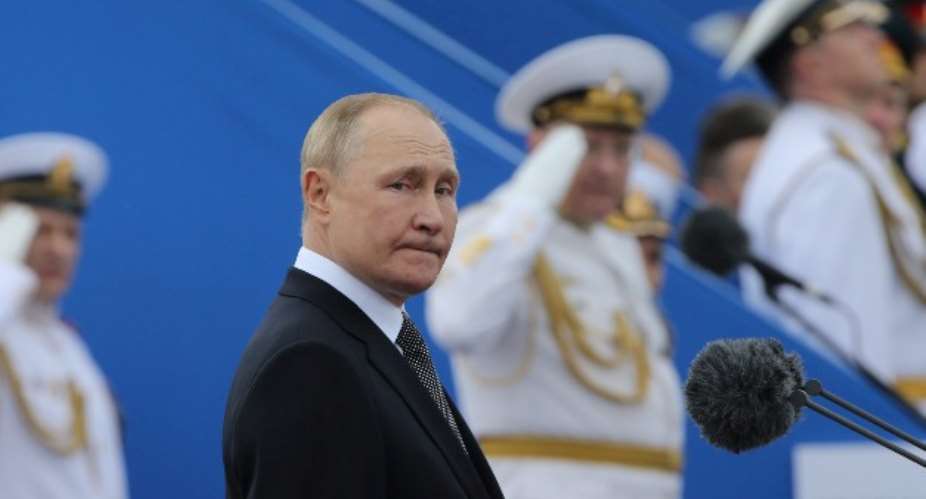
More than four years into its full-scale war on Ukraine, Moscow is sending starkly contradictory signals to the West. On one track, Russian officials continue to meet American envoys and speak of "serious talks" toward a lasting peace.
On another, Western intelligence agencies and European capitals describe a Kremlin actively working to fracture NATO and the EU from within and preparing, in some assessments, to test the alliance's core defence guarantee within years.
The honest answer to whether Russia wants all-out war or peace with the West is that neither framing quite fits what analysts are actually observing: a strategy of pressure calibrated to stay below the threshold that would trigger a direct NATO-Russia war, while working to weaken Western unity by other means.
The case that Moscow is choosing confrontation
Reporting citing Western intelligence sources paints a picture of deliberate, long-term hostility toward Euro-Atlantic institutions. The New York Times has reported that Vladimir Putin instructed Russian intelligence agencies and military leadership at a closed December 2025 meeting to work toward fracturing NATO and the EU from within during 2026, with Moldova described as central to that effort. Notably, this instruction reportedly came even as Putin was publicly striking a different tone, having accused European leaders in a separate December address of stoking hysteria over the Russian threat.
That alleged strategy has a track record. Western officials reportedly rank control of Moldova as Moscow's second priority after subduing Ukraine, and the past year has brought a Russian strike near the Moldovan border that contaminated water supplies on both sides of the frontier, along with a drone strike on a power line that knocked out electricity to a large share of Moldova.
U.S. intelligence agencies, according to the Wall Street Journal, reportedly believe Putin could test NATO's collective-defence commitment by attacking a member state sometime between late 2026 and 2029, and Germany's top military commander has said Russia is systematically using drones to probe European air defences for exploitable weaknesses.
The pattern extends across the continent. NATO fighters flew nearly three times as many intercept missions in 2025 as in 2023, as Russian military activity surged along the alliance's periphery. Moscow's Zapad-2025 exercises, officially declared smaller, actually involved well over 100,000 troops and nuclear-capable systems a show of force widely read as demonstrating Russia's ability to keep pressure on NATO's eastern flank.
Germany has publicly blamed Russia for a string of sabotage incidents and responded by closing Russian diplomatic and cultural facilities; Chancellor Friedrich Merz summed up Berlin's assessment by saying the country is no longer at peace, even if it isn't yet at war.
An unannounced late-August visit to Moscow by CIA Director John Ratcliffe was reportedly intended partly to warn Russian leaders against attacking NATO allies, and drew comparisons to a similar pre-invasion visit by a former CIA chief in early 2022.
The case that Moscow wants a negotiated peace on its terms
Set against that picture is a real and ongoing negotiating track. Russian and U.S. officials have been in sustained contact throughout 2026, including formal talks in Abu Dhabi in January and February that covered force disengagement, ceasefire monitoring, and a prisoner exchange involving several hundred people.
In early September, U.S. envoys Steve Witkoff and Jared Kushner held a Kremlin meeting with Putin lasting more than three hours, which Putin's foreign policy adviser Yuri Ushakov afterward described as frank and constructive.
One Ukraine-based analyst told Al Jazeera that Putin remains publicly open to peace talks. Russia and Ukraine have also honoured limited, holiday-linked truces, including a 32-hour Orthodox Easter ceasefire in April 2026 accompanied by a prisoner swap.
Yet even this track is shadowed by mixed signals from Moscow. Kremlin spokesman Dmitry Peskov said after the September talks that Russian officials had indicated Moscow's underlying position remained unchanged, while Deputy Foreign Minister Sergei Ryabkov told state media that Washington needed to account for battlefield realities that he said were shifting away from Kyiv's favor.
Even as envoys shuttled between Moscow and Kyiv, Russia struck the headquarters of Ukraine's security service with a drone, and both sides continued long-range strikes on each other's territory. Peace, on Moscow's own account, still means a settlement that excludes Ukrainian NATO membership and any further alliance expansion closer to a negotiated capitulation by Kyiv and the West than to genuine reconciliation.
What most analysts actually conclude
The consensus among European and American security institutions is more measured than either "war" or "peace" implies. The EU Institute for Security Studies' 2026 risk survey found that experts do not expect a direct NATO-Russia war; instead, the greatest danger is judged to be slow-burn actions that steadily degrade Europe's security environment while staying below NATO's Article 5 threshold.
The same survey rated a Ukraine ceasefire struck on Russia's terms as a top-tier risk in its own right not because it would end the fighting, but because it would reward aggression and erode deterrence across the continent.
The Atlantic Council has argued that Russia's current pressure campaign against Europe reflects Putin's mounting desperation rather than strength, pointing to Russian forces' minimal battlefield gains through the first eight months of 2026 despite record losses.
On that reading, the hybrid campaign against NATO and the EU is less a prelude to deliberate war than an attempt to fracture Western political resolve while Moscow's position on the ground stalls. Even so, the same analysts note that many European officials assess Putin does not currently want direct military confrontation with NATO a judgment that could shift if Russia's military reconstitutes faster than expected.
CSIS analysts note that process is already well underway, with Russian forces having rebuilt to something close to pre-war strength thanks to a war economy backed by China, Iran and North Korea.
The bottom line
Neither "Russia wants all-out war" nor "Russia wants peace" survives contact with the evidence intact. What emerges instead is a Kremlin pursuing a dual-track strategy: talk of peace to manage relations with Washington and probe for a settlement favourable to Moscow, paired with sustained sabotage, cyber operations, airspace incursions and political interference designed to weaken NATO and EU cohesion without crossing the line into open war for now.
The question dividing analysts is not whether Russia is content with the current uneasy peace, but how long Moscow will judge that hybrid approach sufficient before testing the alliance more directly.
Mustapha Bature Sallama
Medical/ Science Communicator,
Private Investigator, Criminal Investigation and Intelligence Analysis,
International Conflict Management and Peacebuilding. ( USIP)
[email protected]
+233555275880
Sources: The New York Times (via The New Voice of Ukraine); Atlantic Council; EU Institute for Security Studies; CSIS; GLOBSEC; Al Jazeera; CNN; PBS News


 Veteran Nollywood actor Olu Jacobs dies
 SHS placement: ‘You cannot simply build and label schools Category A’ – Kwasi Kw...
 September 16: Cedi sells at GHS12.20 on forex market, GHS11.49 on BoG interbank
 South Africa evacuation: Minority boycotts Foreign Affairs Committee meeting ove...
 GES releases outstanding 2023 Capitation Grant arrears to basic schools
 Mahama announces review of Airport enclave road network amid growing development
 'He collected GH¢82 million' — Angry Agbodza gives Top International Friday dead...
 'I faced those who openly insisted that there’s no galamsey going on' – Prof Gya...
 Trump threatens to not reopen Kennedy Center after board blocks renaming
 Minority boycotts Foreign Affairs Committee meeting on South Africa evacuation o...


