




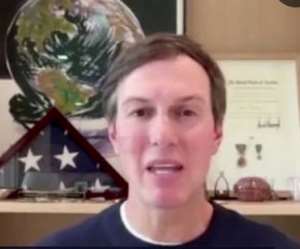
In a rare moment of unscripted candour from the Trump administration's inner circle, US Special Envoy for Peace Jared Kushner has admitted that Israel's failed September 2025 strike on Hamas leadership in Doha was a diplomatic disaster that Washington ultimately turned to its own advantage in brokering the Gaza ceasefire.
Speaking remotely to the Yalta European Strategy conference in Ukraine, Kushner did not mince words. He described the operation which targeted senior Hamas political figures gathered in Qatar to weigh a US ceasefire proposal as "a terrible thing" and "unsuccessful as a military operation."
The intended targets survived; several lower-ranking Hamas members, bodyguards, and a Qatari security officer did not. The strike drew swift condemnation from Doha and the UN Security Council, and forced Israeli Prime Minister Benjamin Netanyahu into an unusual position: apologising to Qatar and pledging never to violate its territory again.
From Liability to Leverage
What makes Kushner's remarks noteworthy is not the account of the strike itself, but his admission of what came after. According to him, the very isolation Israel suffered in the wake of the botched raid became a tool Washington used deliberately to press Tel Aviv toward the ceasefire and hostage-release framework that took shape by October 2025.
"We used that dynamic in order to push them into a deal that now, today, they are quite happy with," Kushner said, adding that Israeli leaders were "a little uncomfortable" with the pressure at the time.
It is a striking window into the mechanics of US-brokered diplomacy in the region: not a clean, linear negotiation, but one built on months of groundwork punctuated by the opportunistic exploitation of a self-inflicted Israeli crisis. For a senior figure this close to President Trump to say so publicly rather than leave it to background briefings, as has been the pattern until now is itself a small rupture in how such processes are normally discussed.
Israel Pushes Back
Predictably, the framing has not gone down well in Jerusalem. Israeli officials speaking to i24NEWS rejected Kushner's version outright, arguing it was the Doha strike itself not the isolation that followed that convinced Hamas it enjoyed "no immunity," and that this is what ultimately produced the hostage deal. Likud added its own counter-narrative, crediting Netanyahu's Gaza City offensive, combined with the Doha strike and direct pressure from Trump, for forcing Hamas to abandon its earlier demands.
The dispute is more than a squabble over credit. It reflects two competing theories of coercive diplomacy: one in which strength and unilateral action force an adversary's hand, and another in which strategic setbacks and international pressure do the same work by different means. Kushner's account favours the latter; Israeli officials insist on the former.
The Bigger Picture
Whichever interpretation holds, the episode is a reminder of how fluid and at times contradictory the logic of great-power mediation in the Middle East has become.
Washington's willingness to leverage its closest regional ally's missteps, even while publicly standing by that ally, underscores the transactional nature of the current peace process. For observers across the Sahel and West Africa, where great powers routinely court and pressure governments in pursuit of strategic aims, the pattern is a familiar one: allies are useful right up until their failures become useful too.
Implementation of the broader 20-point Gaza plan brokered by Kushner and fellow envoy Steve Witkoff has, in any case, stalled well short of completion a fact that lends Kushner's triumphant framing of the deal's origins a somewhat premature air.
Mustapha Bature Sallama
Medical/ Science Communicator,
Private Investigator, Criminal Investigation and Intelligence Analysis,
International Conflict Management and Peacebuilding. ( USIP)
[email protected]
+233555275880
Sources
The Times of Israel, "Kushner: After Doha strike, we used Israel's 'global isolation' against it to push through Gaza deal," Sept. 13, 2026 https://www.timesofisrael.com/liveblog-september-13-2026/
The Media Line, "Kushner Says US Used Israel's Isolation After Doha Strike To Secure Gaza Deal," Sept. 13, 2026 https://themedialine.org/headlines/kushner-says-us-used-israels-isolation-after-doha-strike-to-secure-gaza-deal/
i24NEWS, "Israeli officials reject Kushner's account of Doha strike's role in Gaza deal," Sept. 13, 2026 https://www.i24news.tv/en/news/international/americas/artc-israeli-officials-reject-kushner-s-account-of-doha-strike-s-role-in-gaza-deal
Israel National News (Arutz Sheva), "Kushner: US used fallout from Qatar strike to pressure Israel on Gaza deal," Sept. 13, 2026 https://www.israelnationalnews.com/news/433088
The Jerusalem Post, "Jared Kushner: US leveraged Israel's failed Doha strike to secure Gaza agreement," Sept. 13, 2026 https://www.jpost.com/israel-news/article-908465
Bytes Europe (syndicated from Jerusalem Post), "Jared Kushner: US leveraged Israel's failed Doha strike to secure Gaza agreement" https://www.byteseu.com/2362679/


 How IGP Yohuno led Police team to rescue victim, arrest four kidnappers in Assin...
 Akufo-Addo would have used Accra-Kumasi expressway for galamsey – Mahdi Gibrill
 Nigeria's Dangote refinery launches continent's biggest IPO
 Accra-Kumasi Expressway to cut travel time to 2hours, drive 120km per hour — Mah...
 'Our own money $2billion ready, we have not gone to borrow money from anywhere' ...
 Founder’s Day September 21 declared public holiday
 Council of State was not qualified to determine prima facie case against Torkorn...
 'Grounds for removal of Chief Justice and justice of superior court shallow, eph...
 Don't be a Bar that flips on principles but a Bar that is consistent — AG tells ...
 Prostate cancer may show no symptoms until advanced stage – Urologist warns


