




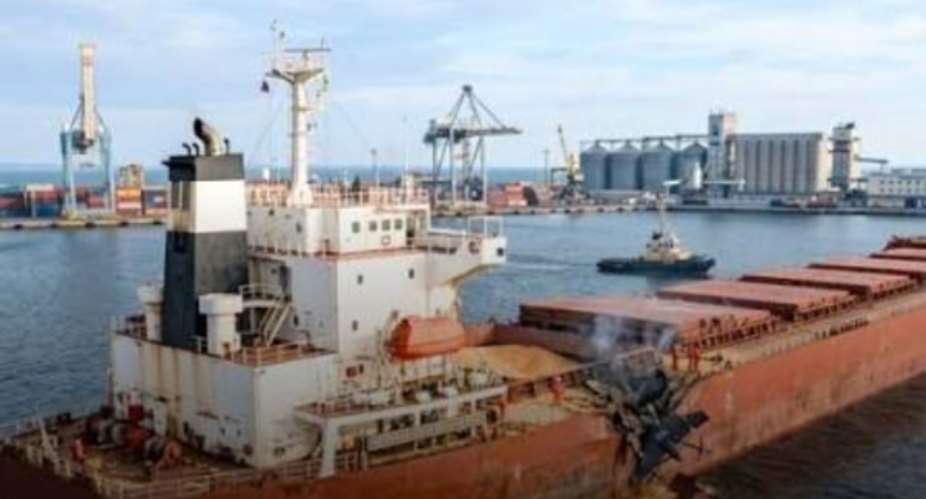
A Russian-flagged cargo vessel linked to Moscow's military logistics network was hit by drones off the coast of Africa on September 6, 2026, in an incident that analysts say could signal a new front in the Russia-Ukraine conflict one that stretches into African ports and coastal waters.
The Attack
The vessel, Lady Mariia (IMO 9220641), operated by the Russian shipping company MG-Flot, was struck 12 times by drones while sailing off Africa's coast. It had recently left the Algerian port of Oran after departing from Saint Petersburg in early August, and was en route to Syria when it came under attack.
The strikes damaged the deck, cranes, and superstructure, sparking localized fires. The ship did not sink; it is currently adrift in the Ionian Sea.
No group has claimed responsibility. But the attack fits a pattern: it closely resembles a string of earlier drone strikes on Russia-linked vessels in the Mediterranean, including the tanker Qendil in December 2025 and the Arctic Metagaz in March 2026 attacks widely attributed to Ukraine. Lady Mariia is the third such vessel targeted in under ten months.
Why This Ship Matters
Lady Mariia is not an ordinary cargo carrier. It is under sanctions from the United States, United Kingdom, European Union, and Ukraine, and Ukrainian military intelligence (HUR) has identified it as a vessel used to move Russian military equipment particularly along the Russia-to-Syria supply route.
In February 2025, the same ship reportedly delivered weapons to Russian forces in Central Africa via a stop at Pointe-Noire, in the Republic of the Congo.
That history places the vessel squarely within a broader web of Russian maritime logistics supporting Moscow's paramilitary deployments across Africa first through the Wagner Group and, more recently, through its successor, the Africa Corps, which now operates in countries including Mali, the Central African Republic, Equatorial Guinea, Niger, the Republic of the Congo, and Togo.
A Pattern of Arms Shipments to Africa
Tracking of vessel movements shows at least six separate weapons shipments reaching West Africa since January 2025, carried by seven different ships:
January 2025 The Adler and Siyanie Severa delivered military vehicles to Conakry, Guinea, which were then moved overland to reinforce Russian forces in Mali.
February 2025 Lady Mariia delivered military equipment to Pointe-Noire, Congo, likely intended for the Africa Corps or Wagner forces in the Central African Republic.
May 2025 The Baltic Leader and Patria delivered military vehicles to Conakry, also destined for Mali.
May 2025 The Siyanie Severa unloaded equipment at Bata, Equatorial Guinea, where Africa Corps mercenaries have been deployed.
March 2026 The Sabetta delivered armored vehicles to Conakry before onward transport to Mali.
July 2026 The Mikhale Britnev unloaded military vehicles at Lomé, Togo, after being denied entry at Conakry; the equipment was then routed to Mali through Burkina Faso.
Separately, the vessel Patria has been anchored off Lagos, Nigeria, since July 21, 2026, and made a series of unusual voyages this year between the ports of Douala (Cameroon), Owendo (Gabon), and Lagos raising questions given the ship's own history of arms deliveries in 2025.
Could Ukraine Be Preparing to Strike Russian Assets in Africa Itself?
While the Lady Mariia attack took place in the Mediterranean rather than on the African coast, it raises a pointed question for the continent: if Kyiv is willing to disrupt Russian logistics outside the Black Sea, could Russian ships and Africa Corps positions on African soil become targets next?
There is precedent for suspicion closer to home. In November 2025, the Panamanian-flagged tanker Mersin operated by a Turkish shipping company and carrying Russian oil suffered four explosions while anchored off Dakar, Senegal.
No one claimed responsibility, and the ship was not under international sanctions at the time, but the timing was notable: the very next day, Ukraine claimed responsibility for drone strikes on the tankers Kairos and Virat in the Black Sea.
There are also signs of a more direct Ukrainian footprint on the continent. Open-source accounts have circulated images reportedly showing Ukrainian personnel in Mauritania, where Kyiv has opened a new embassy, delivered humanitarian aid to the Mbera refugee camp, and reportedly offered to train Mauritanian military forces.
What's at Stake for African Nations
Should similar drone strikes occur closer to African shores or inside African ports, the consequences could be severe:
Environmental and food security risks A sanctioned vessel loaded with weapons or fuel that catches fire or sinks in territorial waters could trigger a major oil spill.
The tanker Caroline Bezergi, which ran aground off Oman in June 2026, produced an oil slick spanning hundreds of square kilometres a stark warning given how many West African coastal communities depend on small-scale fishing.
Port and economic disruption An attack at a port such as Douala, Lomé, Conakry, or Pointe-Noire could trigger closures, congestion, and higher insurance costs across the shipping industry. Ghost fleet vessels frequently operate without valid insurance, leaving coastal states to absorb the cost of any salvage or cleanup.
Sanctions exposure and loss of aid Hosting or flag-registering sanctioned vessels can carry diplomatic consequences. Cameroon, for instance, came close to losing $15 million in EU aid over the large number of "dark fleet" vessels registered under its flag.
Broader risks Analysts also point to the likelihood of increased militarization of shipping lanes, rising insurance premiums for ports perceived as high-risk, and diplomatic fallout for governments seen as hosting Russian military logistics.
The Bigger Picture
The Lady Mariia strike did not occur in African waters, but it demonstrates that the capability to hit Russian maritime assets from long range clearly exists and Russian logistics chains, from Africa Corps weapons shipments to "ghost fleet" oil tankers, already run directly through African ports.
That reality is reshaping what was once a purely diplomatic question for African governments whether to allow Russian ships to dock into one of maritime sovereignty, environmental risk, and exposure to a conflict that originated thousands of miles away but has already begun washing up on Africa's shores.
Mustapha Bature Sallama
Medical/Science communicator, Private Investigator, Criminal Investigation and Intelligence Analysis,United States Institute of Peace (USIP), [email protected] +233555275880
Sources
This article is based on maritime-tracking and open-source intelligence reporting (vessel IMO records, sanctions listings, and Ukrainian military intelligence/HUR assessments) documenting the September 6, 2026 attack on the Lady Mariia and the pattern of Russia-linked arms shipments to West and Central Africa since January 2025.


 'If we were wrong, we must first apologise to NPP' – Mustapha Gbande on National...
 Han SHS to get boarding status as Mahama inspects GETFund projects in Upper West
 Late herbal doctor’s wife granted GH¢100,000 bail amid poisoning, arson claims
 NDC has failed to deliver on Agenda 1-3-3 for 24-hour economy – Sam Pyne
 Wa-Bolgatanga trunk road to be asphalted – Mahama
 Gbewaa College of Education lecturer dies after alleged military assault in Pusi...
 Ghana won’t back down on mining value addition – Ambassador Kojo Bonsu
 How Dr Jesse Amuah, wife was murdered over GH¢1,500 payment dispute
 Mahama announces 20% salary incentive for health workers in deprived areas
 Ghana must move from plastic policies to implementation – EPA CEO


