




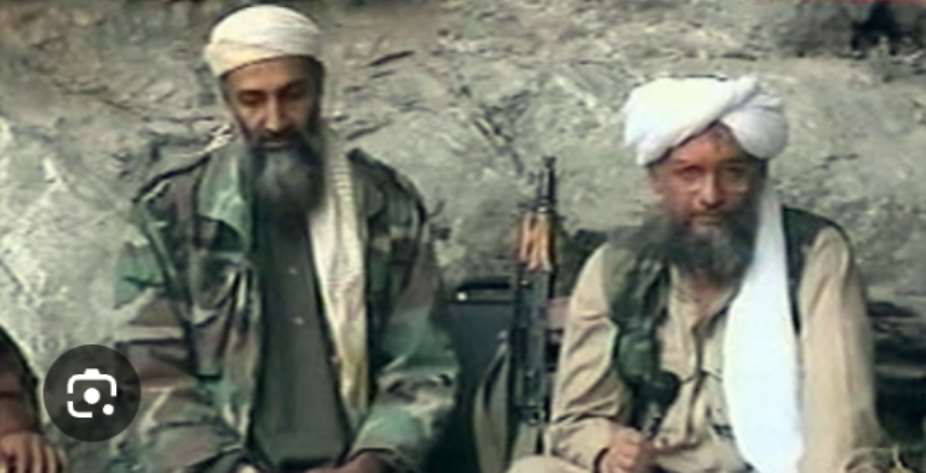
December 24, 1979, Soviet tanks rolled across the Amu Darya river into Afghanistan, beginning a nine-year occupation that would reshape global politics far beyond the Hindu Kush. What started as a Cold War proxy conflict between Moscow and a Western-backed insurgency would, by a strange and tragic historical irony, seed the organization that attacked New York and Washington on September 11, 2001.
A Holy War Draws Volunteers from Across the Muslim World
The Soviet invasion was framed by the Afghan mujahideen and soon by clerics and activists across the Muslim world as an assault on Islam itself. Afghan resistance fighters, deeply fractured along ethnic and tribal lines, found an unlikely source of reinforcement: thousands of young Arab men who left comfortable lives in Saudi Arabia, Egypt, Yemen, Algeria, and elsewhere to join what they saw as a defensive jihad against an atheist superpower.
These volunteers became known as the "Arab Afghans." Estimates of their total number vary widely, from the low thousands to over 20,000 across the war's duration, though most historians agree that relatively few ever saw direct combat. Many instead filled support roles logistics, fundraising, propaganda, and religious instruction in camps along the Afghan-Pakistani border.
The Role of the United States, Pakistan, and the Gulf
It's important to understand the geopolitical scaffolding that made this possible. The US Central Intelligence Agency, working through Pakistan's Inter-Services Intelligence directorate, funneled billions of dollars in weapons and funding to the Afghan resistance as part of Operation Cyclone one of the largest covert operations in CIA history. Saudi Arabia matched much of this funding, partly through official channels and partly through private Gulf donors eager to support a religious cause. Pakistan's military dictator, General Zia-ul-Haq, used this influx to entrench Islamist networks within his own intelligence services.
None of this aid was funneled directly to the foreign Arab volunteers, who operated largely outside formal US-Pakistani command structures. But the environment created by this multinational sponsorship training camps, weapons pipelines, and a permissive Pakistani border region gave the Arab Afghan movement the infrastructure it needed to organize independently.
Abdullah Azzam and the Services Bureau
The intellectual architect of the Arab Afghan movement was Abdullah Azzam, a Palestinian-Jordanian cleric and scholar who had taught at King Abdulaziz University in Jeddah, where one of his students was a young, wealthy Saudi named Osama bin Laden. Azzam issued religious rulings declaring jihad in Afghanistan a personal obligation for Muslims worldwide, and in 1984 he and bin Laden co-founded Maktab al-Khidamat, or the "Services Bureau," in Peshawar, Pakistan.
The Services Bureau recruited, housed, trained, and financed foreign fighters streaming into the region. Bin Laden, drawing on his family's construction wealth, funded guesthouses, training camps, and infrastructure, including reportedly helping build tunnel and bunker complexes used by fighters near the Pakistani border. He also saw combat himself, most notably at the 1987 Battle of Jaji.
From Services Bureau to al-Qaeda
As the Soviet withdrawal became inevitable in the late 1980s, tension grew within the Arab Afghan movement over what should come next. Azzam wanted the network's fighters redirected toward other conflicts involving Muslim populations, such as Palestine. Bin Laden, increasingly influenced by more radical Egyptian Islamist figures particularly Ayman al-Zawahiri of Egyptian Islamic Jihad favored building a more tightly organized, ideologically driven vanguard capable of global jihad against a broader set of targets, including, eventually, the United States itself.
In August 1988, bin Laden and a small circle of associates formalized this vision, establishing "al-Qaeda" literally "the Base" as a more centralized successor to the looser Services Bureau network. Azzam was assassinated by a car bomb in Peshawar in November 1989, under circumstances still debated by historians, removing the movement's most prominent voice for a narrower, defensive conception of jihad and clearing the way for bin Laden and Zawahiri's more expansive agenda.
The Soviet Withdrawal and the Aftermath
Soviet forces completed their withdrawal from Afghanistan in February 1989, having suffered roughly 15,000 dead and having failed to install a durable, friendly government in Kabul. For the Arab Afghan veterans, the war's end posed a question with enormous consequences: what next for thousands of trained, ideologically charged fighters with combat experience and transnational networks?
Many returned home, where some became involved in insurgencies against their own governments most notably in Algeria and Egypt. Others stayed in the region as Afghanistan descended into civil war among rival mujahideen factions, a chaos that eventually enabled the rise of the Taliban in the mid-1990s.
Bin Laden himself returned briefly to Saudi Arabia before his opposition to the presence of US troops during the 1991 Gulf War led to his exile, first to Sudan and later back to Taliban-controlled Afghanistan.
The Long Road to September 11
Over the 1990s, al-Qaeda evolved from a organization rooted in the Afghan jihad into a global terrorist network with its own doctrine, hierarchy, and strategic objectives most consequentially, bin Laden's 1996 and 1998 declarations of war against the United States, and the 1998 US embassy bombings in Kenya and Tanzania.
The organizational skills, financial networks, religious justifications, and personal relationships forged in the anti-Soviet jihad of the 1980s carried directly through to the planning of the September 11, 2001 attacks.
The irony is stark: a war fought with substantial Western backing to bleed the Soviet Union eventually produced the infrastructure and ideology behind the deadliest terrorist attack on American soil. It remains one of the most frequently cited examples in modern history of unintended blowback from Cold War proxy warfare.
Mustapha Bature Sallama
Medical/Science communicator, Private Investigator, Criminal Investigation and Intelligence Analysis,United States Institute of Peace (USIP), [email protected] +233555275880
Sources
History.com Editors, "Soviet Union invades Afghanistan," HISTORY, updated Dec. 2025 history.com/this-day-in-history/soviet-tanks-roll-into-afghanistan
Arab News, "The Soviet invasion of Afghanistan," arabnews.com/node/1661431
Congressional Research Service, "Al Qaeda: Statements and Evolving Ideology," Order Code RS22049 everycrsreport.com
The New Statesman, timeline entry on the founding of al-Qaeda, August 1988 newstatesman.com
National Commission on Terrorist Attacks Upon the United States (the "9/11 Commission Report"), on the 1988 founding of al-Qaeda in Peshawar
Wikipedia, "Maktab al-Khidamat" and "Osama bin Laden" entries, for founding dates and organizational details (cross-checked against the sources above)
Note: this draft draws on open-source historical summaries for a general-audience piece. For publication, primary and academic sources are recommended e.g., Steve Coll's Ghost Wars*, Lawrence Wright's* The Looming Tower*, and the 9/11 Commission Report itself (govinfo.gov/9-11commission).*


 'If we were wrong, we must first apologise to NPP' – Mustapha Gbande on National...
 Han SHS to get boarding status as Mahama inspects GETFund projects in Upper West
 Late herbal doctor’s wife granted GH¢100,000 bail amid poisoning, arson claims
 NDC has failed to deliver on Agenda 1-3-3 for 24-hour economy – Sam Pyne
 Wa-Bolgatanga trunk road to be asphalted – Mahama
 Gbewaa College of Education lecturer dies after alleged military assault in Pusi...
 Ghana won’t back down on mining value addition – Ambassador Kojo Bonsu
 How Dr Jesse Amuah, wife was murdered over GH¢1,500 payment dispute
 Mahama announces 20% salary incentive for health workers in deprived areas
 Ghana must move from plastic policies to implementation – EPA CEO


