




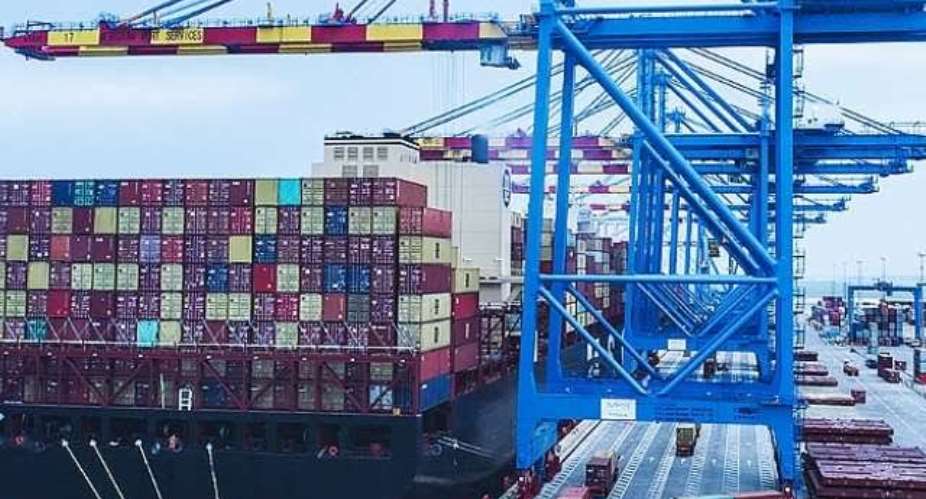
The Ghana Ports and Harbours Authority (GPHA) has stressed that congestion at the Tema Port alone cannot justify recent increases in cement prices, saying several operational and commercial factors influence the cost of bringing clinker and cement into the country.
The GPHA said it had taken note of a statement by the Chamber of Cement Manufacturers, Ghana (COCMAG), attributing the recent increase in cement prices to congestion at the Port of Tema.
In a statement signed by management, GPHA stated that its responsibility was to serve all port users while ensuring that port operations were conducted in a safe and hygienic environment.
It said the handling of food-related cargo, including rice and wheat, had to be properly separated from cement and clinker operations, a consideration that influenced the allocation and use of berths.
GPHA stated that it had, in anticipation of increasing vessel sizes, cargo volumes and vessel drafts, undertaken strategic dredging of the section of the Tema Port dedicated to bulk cargo operations, including clinker and cement.
It said cement companies were informed in advance about the project, its duration and the need to plan vessel arrivals and berthing schedules accordingly.
According to the authority, the cement industry was also a direct beneficiary of the completed dredging works, with Berth 13 now providing depths of up to 14 metres and Berth 14 up to 12 metres.
It said the increased depths created opportunities for cement companies to receive larger vessels and benefit from economies of scale, potentially reducing unit logistics costs.
GPHA explained that Terminals 1 and 2 of the Tema Port were multipurpose facilities handling various cargoes, including food products, steel and other general cargo.
“For hygiene, safety and environmental reasons, the handling of cement and clinker cannot be mingled with food-related cargo,” it said.
The authority said Berths 3, 12, 13 and 14 had consequently been designated as common-user berths for cement and clinker cargoes.
It stated that the berths were shared among several cement companies and could not be dedicated exclusively to one importer.
GPHA further noted that cement and clinker-related cargoes were also handled at the Port of Takoradi, providing an alternative within Ghana’s maritime logistics network.
It encouraged cement manufacturers to consider the most efficient combination of ports, vessel sizes, discharge arrangements, and inland transportation when planning their operations.
On cargo evacuation, the authorities said efficient movement of cargo from the port remained critical to reducing berth occupancy.
It explained that a vessel carrying approximately 40,000 tonnes of clinker could depend on a limited number of trucks to transport the cargo to factories located outside the port.
Where trucks were inadequate or delayed by traffic, it said, discharge operations could slow down, resulting in vessels occupying berths for extended periods, sometimes three to four weeks.
Such prolonged berth occupancy, GPHA said, affected berth availability for other vessels and placed additional pressure on port operations.
GPHA said it was also working to modernise the handling of cement and clinkers at the Tema Port, stating that it was moving towards more efficient cargo-handling systems under which traditional reliance on grabs and hoppers would be phased out.
The authorities urged cement companies to embrace and invest in the new handling technology as it was introduced.
It said the adoption of more efficient systems would improve discharge rates, reduce vessel turnaround times, optimise berth utilisation and contribute to a more efficient and competitive port operation.
GPHA emphasised that port efficiency was a shared responsibility requiring proper vessel planning, adequate trucking capacity, efficient discharge, adoption of modern handling technology, and timely evacuation of cargo.
It therefore urged stakeholders and the public to consider the entire logistics and supply chain, including vessel planning, discharge efficiency, trucking, factory location, port choice and other commercial cost factors, rather than attributing cement price increases solely to port congestion.
The GPHA reaffirmed its commitment to working with the cement industry and other stakeholders to improve berth utilisation, cargo evacuation and the overall efficiency of Ghana's ports.
GNA

 Ghana announces visa-free travel to Maldives, Zambia and Antigua and Barbuda
 Mahama swears in three new Supreme Court justices, urges judicial independence
 'Aren’t you over dramatising after you advised Akufo-Addo to give us ugly financ...
 Hopeson Adorye urges security agencies to investigate Obiri Boahen’s warning to ...
 'Administer justice without fear or favour, affection or ill will' — Mahama tell...
 Tema Port congestion alone cannot justify GHS12 cement price increment – GPHA
 UTAG-KNUST threatens legal action over Pro-VC and Dean appointments
 NPP is recycling failed politicians in its upcoming national executive elections...
 30,000 job creation projection for Accra-Kumasi Expressway is even conservative ...
 'You can't use profits to finance the creature comforts of management and boards...


