




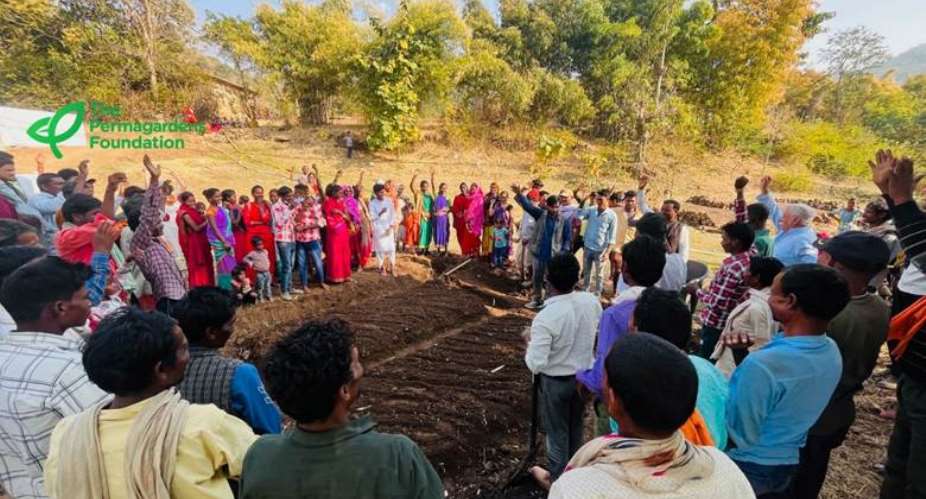
High in the hills of central India, the Baiga people live in areas with limited roads, limited electricity, and decreasing forest cover.
When COVID-19 lockdowns began in India in 2020, transport and market access were restricted. For villages in Umaria District and surrounding areas, road closures reduced access to food and basic supplies.
During the lockdown, roads serving remote communities were cut off. According to The Permagardens Foundation, one woman operated a community kitchen for 16 months to provide meals when external supplies were disrupted. Baiga women went into the forests that they knew so well, and brought whatever edibles they could find to the community kitchen. No one starved.
The kitchen addressed immediate food needs during the lockdown. It also highlighted a longer-term issue: many Baiga communities remain distant from markets, have limited access to reliable water, and have few opportunities to grow vegetables near homes. And climate change has hit them in a big way, with temperatures soaring as high as 119 degrees Fahrenheit.
In response, some Baiga communities began establishing permagardens to grow food closer to home.
A Garden In Unlikely Ground
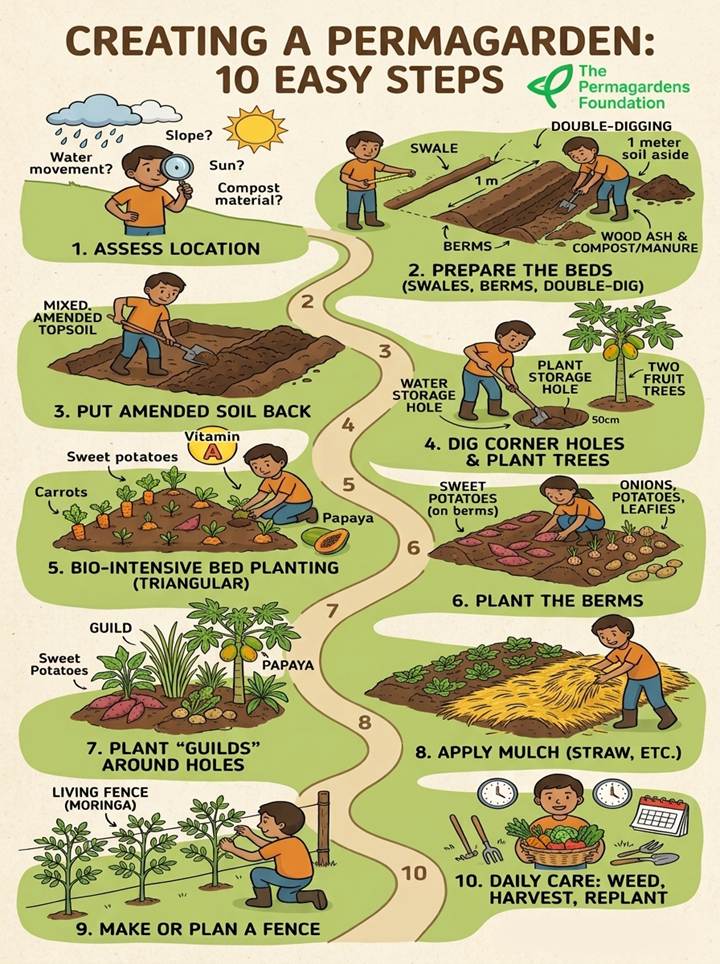 Ten steps outline Permagarden method for Baiga households
The journey to the community was itself a reminder of how isolated some Baiga settlements can be. Foundation representatives recall a trip that took about 33 hours to reach the area, where they encountered families living in conditions very different from those in nearby towns.
The first reaction to the land was not optimism. Much of it was rocky and difficult to cultivate, and the idea of establishing productive gardens there seemed unrealistic. “We can’t do this here. It’s stoney,” became a telling description of the challenge.
But the point of a Permagarden is not to wait for perfect farmland. The approach combines permaculture design with bio-intensive gardening, using careful water management, soil improvement and organic materials to make small household plots more productive. Instead of treating difficult land as the end of the conversation, the work asks a different question: what can be done with the resources already available?
From One Home to Many
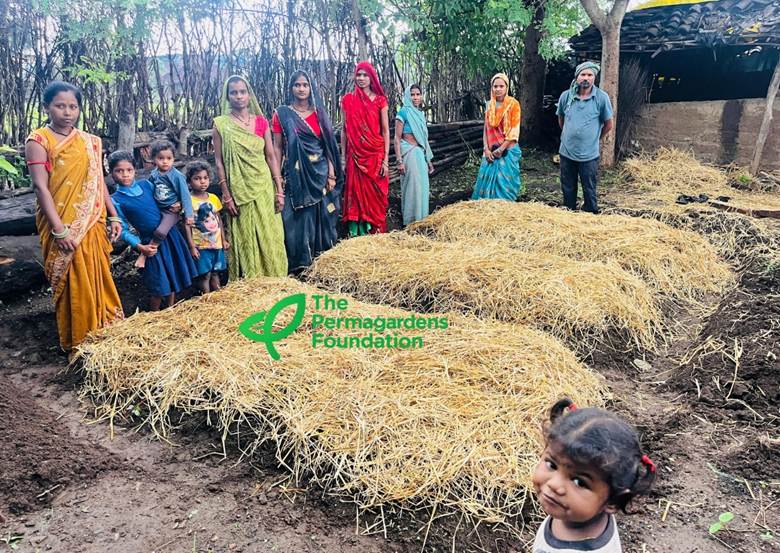 Family with mulched garden beds
For Phool Bai Singh, the answer became personal. After learning about Permagardens in India, she established her first garden at home and began growing vegetables for her children.
“I felt very happy because it allowed me to provide nutritious, home-grown vegetarian food to my children on a daily basis,” she says in a statement shared with the Foundation.
Her experience did not remain inside her household. Inspired by what she was able to grow, Singh began introducing Permagardens to other tribal families, turning a household garden into a community effort. According to her account, she and her team have since supported 759 families in establishing Permagardens.
The significance Is not simply the number of gardens. Families reported more regular access to fresh vegetables, while women began taking leading roles in managing gardens and teaching other households. Local trainers and community seed banks also emerged, helping knowledge and planting material remain within the community rather than depending entirely on outside support.
To date, some 1,200 Permagardens have been established among the Baiga. In surveys taken after the first dry season, more than 90% of families reported they are no longer worried about their food. Rates of malnutrition and stunting, endemic among Baiga children, are now falling. Health is improving. And the community has discovered that with food sovereignty comes increased community resilience, as they tackle the challenges facing them in living in an otherwise extremely difficult environment.
Making Water Work Harder
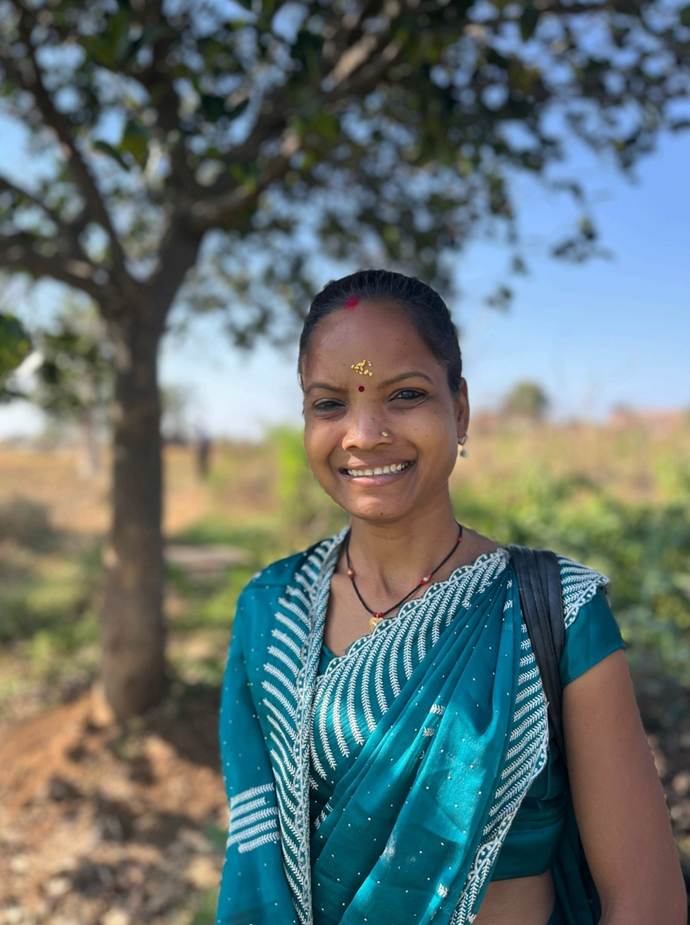 Phool Bai Singh leads permagarden expansion in Baiga community
Water is one of the hardest parts of gardening in a place where dry seasons can make food production difficult. That is why water management sits at the center of the Permagarden approach.
The gardens are designed to capture and hold water, while soil is strengthened with locally available organic materials such as compost and manure. Double-digging helps create deeper, more workable soil, allowing roots to access moisture for longer and helping families make better use of limited rainfall.
This is where the Foundation’s three ideas come together without needing to be treated as slogans. The gardens are water-wise because they are designed around conservation. They are climate-smart because they help households keep producing food through dry periods. And they are people-empowered because the knowledge, labor and decisions remain with the families who maintain them.
What the Families Are Seeing
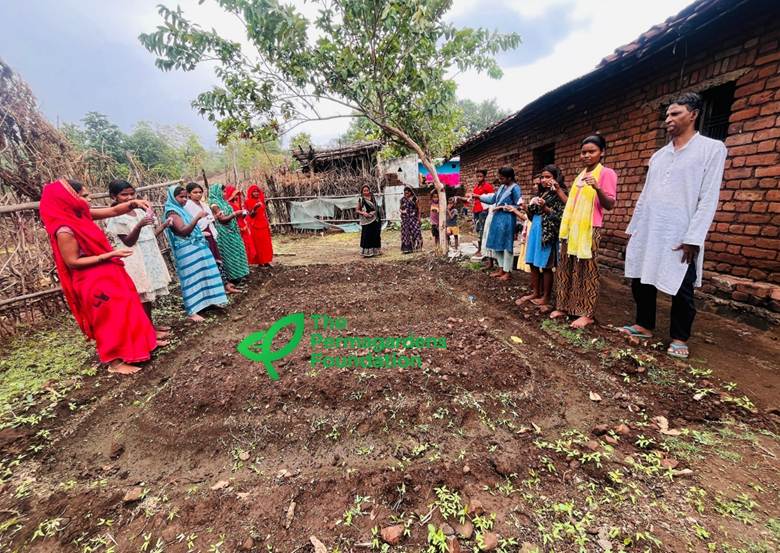 Women and children learn bed preparation together
A post-gardening survey of 40 families in Umaria provides a closer look at what changed after the gardens were established. Thirty families, or 75 percent, reported that fresh nutritious vegetables were highly available, while another six families said vegetables were available. Only four families reported that fresh vegetables were not available.
The sense of food security was also striking. Thirty-six families, or 90 percent, said they were not worried at all about having enough food. Thirty-eight families, representing 95 percent of those surveyed, said they could grow and harvest vegetables during the dry season.
The gardens also appear to be changing household roles. The Foundation’s survey reports that 93 percent of respondents saw an increase in women’s contribution to household decision-making. Families also reported lower spending on purchased vegetables, household savings and greater interest in saving seeds.
The results do not mean the challenges have disappeared. Families still identified water availability, fencing and protection from animals, lack of time and the need for continued technical guidance as obstacles. Their requests point to what comes next: better water management, fencing, seeds, technical training and regular field-level follow-up.
More Than a Garden
The story of the Baiga gardens begins with a road that closed and a community that needed to find another way to feed itself. It is tempting to see the garden as a simple solution to a difficult problem, but the experience is more complicated than that. A garden needs water, healthy soil, knowledge, time and the confidence to keep planting when the conditions are not ideal.
What has changed is the relationship between those challenges and the people facing them. A family that can harvest vegetables at home is less dependent on a distant market for every meal. A woman who learns to manage a garden can pass that knowledge to another household. A community that saves seeds preserves more than planting material; it keeps part of its food system in its own hands.
For Phool Bai Singh, the meaning is straightforward: “This is not just a garden, but a powerful step towards nutrition, self-reliance, and a dignified life.”
In the hills of Madhya Pradesh, that dignity is being built plot by plot. The roads may still be long, the water may still be limited and the soil may still be rocky. But where families once faced the possibility of an empty kitchen when the outside world could no longer reach them, they are now growing a measure of food security close to home.
The writer is a science journalist.
Email: [email protected]


 Ghana announces visa-free travel to Maldives, Zambia and Antigua and Barbuda
 Mahama swears in three new Supreme Court justices, urges judicial independence
 'Aren’t you over dramatising after you advised Akufo-Addo to give us ugly financ...
 Hopeson Adorye urges security agencies to investigate Obiri Boahen’s warning to ...
 'Administer justice without fear or favour, affection or ill will' — Mahama tell...
 Tema Port congestion alone cannot justify GHS12 cement price increment – GPHA
 UTAG-KNUST threatens legal action over Pro-VC and Dean appointments
 NPP is recycling failed politicians in its upcoming national executive elections...
 30,000 job creation projection for Accra-Kumasi Expressway is even conservative ...
 'You can't use profits to finance the creature comforts of management and boards...


