




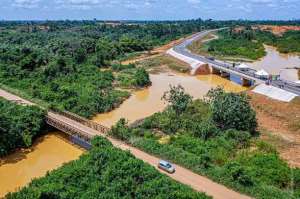
Gold mining has become a major force in the transformation of Abomosu, a town in Ghana’s Eastern Region. Once largely dependent on agriculture and small-scale trading, the community has gradually developed into a centre of mining-related commercial activity.
The industry has created jobs, attracted new businesses and increased demand for goods and services. However, the expansion of mining has also brought serious social and environmental consequences. The experience of Abomosu illustrates the complex relationship between mineral wealth and sustainable community development.
An expanding local economy
One of the most visible effects of gold mining is the increase in commercial activity. Traders, transport operators, food vendors, equipment suppliers and other service providers have moved into the town to take advantage of opportunities created by the industry.
The prospect of employment has also attracted people from different parts of Ghana. This migration has contributed to population growth, greater demand for accommodation and the expansion of the local economy.
Mining has provided employment for some residents, but the benefits have not been equally distributed. Many workers are engaged on a casual basis, receive relatively low wages and operate under difficult or unsafe conditions. While mine owners, contractors and other investors may earn substantial profits, many local families continue to experience economic hardship.
Social benefits and growing concerns
Mining revenues and related economic activities have supported some community development initiatives, including improvements in roads, education and other infrastructure. These developments have helped to increase the visibility and economic importance of Abomosu.
Nevertheless, the industry has introduced significant social challenges. Rapid population growth has placed pressure on housing, healthcare, sanitation, security and other essential services. Occupational accidents and exposure to hazardous working conditions remain concerns for miners and residents.
Abandoned mining pits can collect stagnant water, creating breeding grounds for mosquitoes and increasing the risk of malaria. When pits are left uncovered or poorly secured, they also pose a danger to children, farmers and livestock.
The unequal distribution of mining benefits has further widened social disparities. Concerns have emerged over child labour, school absenteeism, school dropout rates and the growing tendency of some young people to abandon education in pursuit of quick income from mining.
Mining has also reduced the community’s reliance on agriculture. Although the industry may offer immediate financial rewards, excessive dependence on mining could threaten food production and leave the local economy vulnerable when mineral deposits decline.
Environmental damage
The environmental impact of gold mining is among the most serious challenges facing Abomosu. Mining activities have contributed to the clearing of vegetation, soil erosion, the destruction of farmlands and the degradation of previously productive land.
Farmers who lose access to fertile land may struggle to maintain their livelihoods, while the cost of restoring mined areas can be enormous. Where reclamation is delayed or neglected, the land may remain unsafe and unsuitable for farming or development for many years.
Water pollution is another major concern. Mining activities can contaminate rivers, streams and other water sources used for drinking, irrigation and domestic purposes. Polluted water threatens human health and undermines farming and fishing activities.
The destruction of forests and contamination of water bodies also contribute to the loss of wildlife habitats and biodiversity. Over time, this weakens the ecological balance and reduces the community’s ability to withstand climate and environmental pressures.
The way forward
Gold mining has brought undeniable economic opportunities to Abomosu, but mineral wealth should not come at the expense of public health, education, agriculture and the environment.
Mining companies and operators must comply with environmental and workplace-safety regulations. Degraded land should be properly reclaimed, abandoned pits must be filled, and polluted water bodies should be restored. Regulatory institutions must also monitor mining activities consistently and apply sanctions when operators violate the law.
The community deserves a fair share of the wealth generated from its natural resources. Mining revenues should be invested transparently in education, healthcare, clean water, sanitation, roads and skills development.
At the same time, alternative livelihoods in agriculture, food processing, tourism, entrepreneurship and vocational training must be promoted. Such investments will ensure that Abomosu remains economically viable long after its mineral resources have been exhausted.
Gold can contribute to the development of Abomosu, but its true value will be measured by the lasting improvements it brings to the lives of the people. Sustainable mining, environmental responsibility and fair distribution of benefits are therefore essential to securing the town’s future.


 'The height of absurdity' — Ayew Afriye slams BNI over invitation of Efya Royal ...
 US envoys arrive in Moscow to thrash out plan to end war in Ukraine
 'Chief Justice was talking as a citizen; you have to look at the context in whic...
 Mandatory towing to remove broken-down, stationary vehicles from roads to begin ...
 Domelevo backs OSP probe into alleged GH¢70,000 payment to Appiagyei despite den...
 WAEC releases 2026 WASSCE results, cancels entire results of 861 candidates for ...
 Baffour Agyeman-Duah explains why profitability may not be only reason behind SO...
 Kofi Bentil defends Mahama’s dissolution of nine State Boards
 5-year-old girl dies after falling into water-filled manhole at Winneba
 Sierra Leone ex-president to return after treason case dropped

