




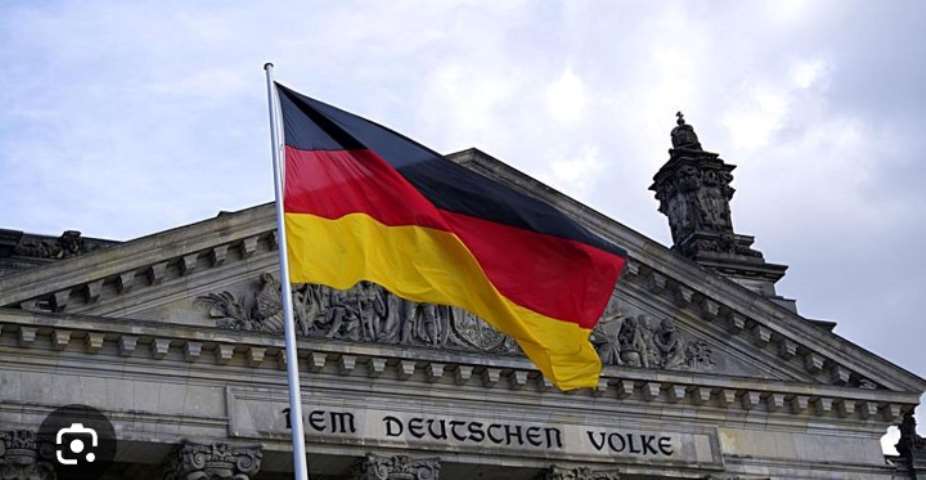
More than half of German citizens believe their country's security is currently threatened by Russia, according to the latest ARD-DeutschlandTREND survey released on September 3, 2026 a finding that lands against the backdrop of a drone incident at Leipzig/Halle airport that Berlin has directly attributed to Moscow.
The Numbers
The survey, conducted by infratest dimap among 1,319 eligible voters between August 31 and September 2, 2026, found that 56 percent of respondents consider Russia to pose a strong or very strong threat to Germany's security, while 39 percent see little or no threat. The margin of error is between 2 and 3 percentage points.
The timing of the fieldwork is notable: on the Tuesday the survey was in the field, the German government publicly held the Russian state responsible for an incident in which a drone loaded with explosives was found at Leipzig/Halle airport in early August, and announced a package of sanctions measures in response. Russia has denied any involvement.
A Divided Country
Threat perception splits sharply along Germany's old east-west line. In the western federal states, 59 percent of respondents view Russia as a strong or very strong threat, against 36 percent who see little or none. In the eastern states, the picture is closer to reversed: only 42 percent see Russia as a strong or very strong threat, while 47 percent see little or none . That gap has persisted across successive Deutschlandtrend surveys and tracks with the eastern states' generally more Russia-sceptical or Russia-tolerant political culture, where the Alternative for Germany (AfD) polls strongest.
Ukraine Support Loses Ground
More than four and a half years into Russia's full-scale invasion of Ukraine, German public backing for arming Kyiv is softening. Just over half of respondents still support the policy in some form: 38 percent call Germany's weapons support "appropriate" (up two points from December 2024), and 14 percent say it does not go far enough (down four points). But a relative plurality of 42 percent now say the support goes too far the highest figure infratest dimap has recorded on this question since the war began.
Who Germans Trust to Keep the Peace
Asked which party they trust most to secure peace in Europe, 23 percent named the Christian Democratic Union (CDU/CSU), 16 percent the AfD, 12 percent the Social Democrats (SPD), 8 percent the Greens, 6 percent the Left Party (Die Linke), 3 percent the Sahra Wagenknecht Alliance (BSW), and 2 percent the Free Democrats (FDP). Nineteen percent said they trusted no party at all on the question.
Why It Matters
The findings arrive as German domestic intelligence officials have separately warned that Russian sabotage, espionage, and disinformation activity in Germany has reached levels not seen since the Cold War, and as Berlin braces for a string of regional elections where Moscow-friendly and Moscow-sceptic parties are contesting starkly different narratives about the Russian threat.
The east-west split in this survey suggests that narrative contest is far from settled and that public opinion on Ukraine support, even as threat perception of Russia itself remains elevated, is moving in a more cautious direction.
Mustapha Bature Sallama
Medical/ Science Communicator,
Private Investigator, Criminal Investigation and Intelligence Analysis,
International Conflict Management and Peacebuilding. ( USIP)


 I have not been invited by OSP over fake GH¢70,000 memo — Patricia Appiagyei
 Vetting committee has never taken bribes or gifts from nominees — Bernard Ahiafo...
 Chief Justice Baffoe-Bonnie clarifies controversial remarks
 Dunkwa-Ayanfuri road construction to commence in 2027 – Finance Minister
 PRESEC, St. Augustine’s College and Accra Academy set for NSMQ grand finale on S...
 Appiagyei denies alleged GH¢70,000 vetting payment in memo
 Lawyer challenges GRA’s power to grant passenger baggage tax exemptions
 Agbogbloshie waste heap is as high as 10-storey building – Mahama Ayariga
 'How did we get here, to be told to go to Rwanda to learn cleanliness?' – Mahama...
 'After getting the gold, you will get thirsty' – Kwaku Bonsam explains why galam...

