




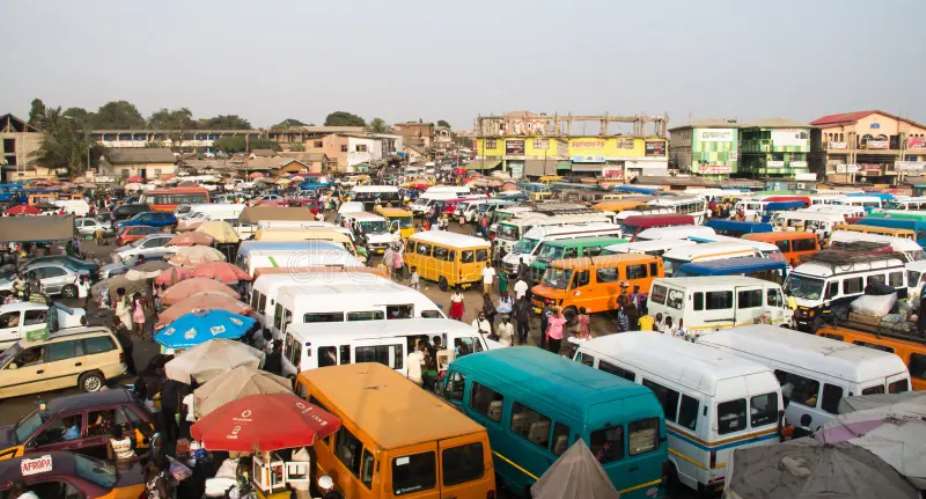
The Ghana Private Road Transport Union (GPRTU) has warned that it may be difficult to maintain current transport fares if fuel prices rise again, citing increasing fuel and operational costs facing commercial transport operators.
Deputy Public Relations Officer of the GPRTU, Samuel Amoah, said the union was closely monitoring developments at the fuel pumps before deciding whether to adjust fares.
“We are on standby looking at what will happen at the pump before we take a final decision,” he said in an interview on Eyewitness News on Monday, August 31.
The warning follows a projection by the Chamber of Oil Marketing Companies (COMAC) of a 4.80% increase in petrol prices and a 2.10% rise in diesel prices from September 1. LPG prices, however, are expected to fall by about 1.50%.
The projected increases come after the government introduced a GH¢2 per litre reduction in the regulatory margin on diesel in August. The intervention led the GPRTU and other transport operators to suspend a planned 30% increase in fares.
Mr Amoah said the union had earlier appealed to its drivers to suspend fare adjustments on the expectation that fuel prices would decline following the government’s intervention.
“But now that we will not see them coming down, it will be very, very difficult for us to go back again to convince our drivers not to increase transport fares,” he said.
He acknowledged the government’s intervention, saying the GH¢2 reduction had helped prevent diesel prices from rising even further.
However, Mr Amoah stressed that fuel costs were only one part of the expenses incurred by commercial transport operators, with other operational costs also increasing.
“Every component that we are using has gone high. Spare parts are very, very high. Lubricants are high. Taxes, insurance, DVLA, all of them have gone high,” he said.
He explained that transport unions had an agreement with the government under which fares could be reviewed when fuel prices crossed a 10% threshold.
According to him, the cumulative increase in fuel prices since the last fare reduction had already placed significant pressure on drivers and operators.
“When we had our 15% reduction and checking where we are now, we have even exceeded close to 40% increment,” he said.

 Trump threatens to ‘hit Iran hard’ as strikes resume after month-long lull
 Marketer accused of threatening to kill EOCO staff granted GH¢100,000 bail
 GAF opens 2026 recruitment portal September 4 as Military Academy requirements e...
 Railway Workers Union commends government for clearing 20 months’ salary arrears
 SOEs swing from GH¢2.2bn loss to GH¢19.8bn profit in 2025
 'Every component that we are using has gone high' — GPRTU warns of possible fare...
 NPA surplus jumps 76% to GH¢447million as revenue surges in 2025
 Teacher unions suspend planned strike after 'sweet' talks
 Sammi Awuku demand answers on waived $1million MV Sankofa penalty
 Afenyo-Markin urges Mahama to take bold steps, tighten GoldBod controls to preve...

