




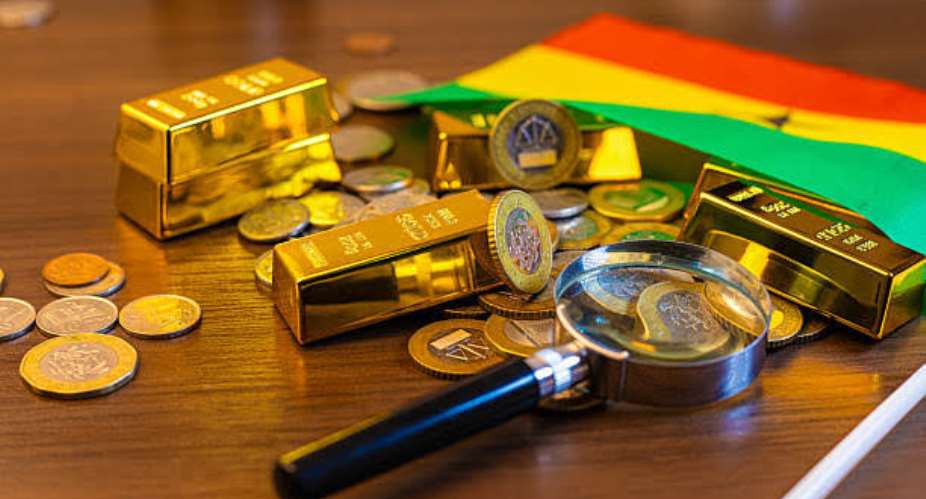
Let me start with a question that cuts to the heart of Ghana's resource debate. What is the point of digging gold out of the ground if we ship it out raw and let other countries create the jobs, build the industries, and capture the profits? For decades, Ghana has exported most of its gold as doré—unrefined, unprocessed, and undervalued. That is changing. The Ghana Gold Board per report by The Accra Daily Mail has directed that all gold purchased by Self-Financing Aggregators must now be refined locally before export. The directive takes effect on September 1, 2026. And the Association of Small-Scale Miners is asking Ghanaians to think beyond the cost.
The Directive: What GoldBod Is Requiring
The Ghana Gold Board according to The Accra Daily Mail has directed all Self-Financing Aggregators to refine gold doré in Ghana before exporting it. The refining cost will be borne by the SFA or its approved offtaker, depending on their commercial arrangement . This is part of a broader push to retain more value from Ghana 's gold before it leaves the country.
In January, GoldBod signed an agreement with Gold Coast Refinery to refine one metric tonne of gold weekly from the small-scale mining sector. The arrangement was designed to deepen local value addition and create jobs . GoldBod has now moved to make local refining mandatory.
The Miners' Response: Look Beyond the Cost
Communication Director of the Association of Small-Scale Miners, Abdul Razak Alhassan, acknowledged concerns over the cost implications. But he argued that operators in the sector already face significant expenses before they even obtain the gold-bearing ore.
"Gold itself is a commodity whereby there are so many challenges in it. So sometimes you need to work on yourself; you need to weigh yourself before you enter into that industry," he said on Joy News' PM Express.
He argued that the cost of operating in the small-scale mining sector must be considered alongside the cost of refining. "So the operational cost and everything, we as industry players, even to get the ore itself, you incur so many challenges or so many costs."
For him, requiring miners and aggregators to absorb the refining cost should therefore not be considered unreasonable. "If they are also taking the other side of it, I don't think there should be any big deal. So I think them bearing the cost shouldn't be anything, because it will also help the country and then reduce youth unemployment."
The Jobs Argument: Why Refining Matters
Alhassan believes the employment opportunities that could emerge from a stronger domestic refining industry should form part of the policy debate. "Because when this refinery kicks off, as my other colleague said, they have some number of people, youth, that they will employ. So we should look at the balance."
That is the crux of the issue. Refining gold locally creates jobs. It builds industrial capacity. It reduces the need to ship raw materials abroad. It keeps value in Ghana . And it contributes to the government's goal of reducing youth unemployment.
The Cost Reality: What Refining Actually Costs
Currently, refining costs for Ghana's small-scale gold are estimated at around $10 per ounce compared to $2.50 in London . That is a significant difference. For a miner producing 100 ounces a month, that is an additional $750 in costs. For a larger aggregator handling thousands of ounces, the cost difference is substantial.
But Alhassan argues that the wider national benefits should also be considered. "While they are looking at the cost, yes, the operational cost may be higher, but we should also look at the way we are handling these two issues. And I think they have to bear the cost."
The Bigger Picture: Ghana's Gold Strategy
The directive is part of a broader push by the Ghana Gold Board to retain more value from Ghana's gold before it leaves the country. Ghana is Africa's largest gold producer, but most of its gold is exported as doré—unrefined gold that must be processed elsewhere. By requiring local refining, Ghana is trying to capture more of the value chain.
This aligns with the government's broader industrialisation agenda. The National Energy Compact targets $20 billion in investments for grid modernisation, renewable projects, and energy efficiency . The Ghana Gold Board's directive is a smaller but significant piece of that puzzle.
The Accra Daily Mail Bottom Line
The debate over local gold refining is not just about cost. It is about jobs. It is about industrialisation. It is about whether Ghana will continue to export raw materials and import finished goods, or whether it will finally capture the value that has been flowing out of the country for centuries.
The miners are willing to bear the cost. They are asking Ghanaians to look beyond the immediate expense and see the bigger picture. Refining gold locally creates jobs. It builds capacity. It keeps value in Ghana. And it is a step toward a more self-reliant economy.
As Alhassan said, "We should look at the balance." The cost of refining may be higher, but the benefits of local value addition are greater. The question is whether Ghana is ready to pay the price of progress.

 Trump says Russia, Ukraine agree to energy ceasefire – 'news for me', Zelensky s...
 Ethiopia intel chief visits flashpoint Tigray region
 Djibouti boat wreck leaves 139 migrants dead, 84 missing: UN
 Brazil's Lula accuses social media giant Meta of election interference amid tigh...
 Upper Dixcove: Dumsor is killing our business – Chief Fisherman
 South Africa protests: Ghanaians warned to limit travel in Johannesburg and Durb...
 UN cautions against forced tenant evictions without prior consultation
 UN advises Ghana to strengthen Rent Control Department with requisite logistics
 ECG announces three-day power outages in parts of Accra from Monday
 Ghana’s banking assets rise to GH¢500.2billion


