




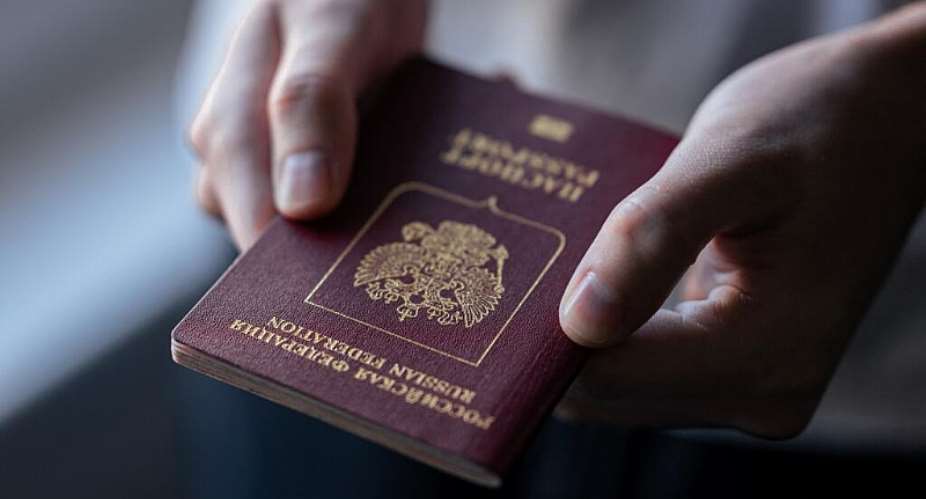
Relokatz, a platform linked to exiled Russian opposition figure Maxime Katz, said it is receiving around 120 enquiries a day from people seeking advice on moving abroad – up from 10 to 20 previously.
In recent months, more people have asked about leaving Russia before September or October amid reports that the Kremlin is considering another mobilisation after September's parliamentary elections.
Russian officials have denied that another call-up is planned.
Relokatz was established after the first major wave of emigration triggered by Russia's invasion of Ukraine and the partial military mobilisation ordered in 2022. The site provides practical information on visas, residence permits, document legalisation and transporting pets abroad, as well as paid administrative assistance.
Looking abroad
Interest has been growing steadily since February, said Relokatz editor-in-chief Alexandra Nazarova.
“Between February and April, traffic to the site and the number of queries sent to our AI bot tripled,” Nazarova told RFI.
Where Relokatz once received between 10 and 20 enquiries a day, the figure rose to around 70 in April before climbing again over the summer.
“We now receive around 120 enquiries a day,” Nazarova said.
Concerns over the war are increasingly combining with frustration over tighter restrictions inside Russia, she said.
“Before, people wrote for very specific reasons, because they were genuinely affected first-hand. Today, it's a more widespread feeling: it's impossible to live in Russia, you have to leave. And then, of course, there's the fear of mobilisation.”
The figures are based on people contacting the platform directly and therefore cannot provide a complete picture of attitudes across Russia. But the increase offers a glimpse of unease among part of the population.
Ukraine war was Putin's 'fatal mistake' says Russian politician exiled in Paris
Below the 2022 peak
Google Trends data provides another, indirect sign of renewed interest in leaving Russia. Searches for the phrase “how to leave Russia” showed several noticeable peaks in March and July 2026.
Even so, search volumes remain considerably below the levels recorded in 2022, when Russia's invasion of Ukraine and President Vladimir Putin's announcement of a partial mobilisation in September of that year prompted an unprecedented wave of departures.
Estimates compiled by Deutsche Welle suggest that between 500,000 and one million people may have left Russia during 2022.
Russia's Federal State Statistics Service, Rosstat, gives a more conservative figure, recording 668,000 departures over the course of the year. Those figures need to be treated cautiously, however, as not every recorded departure necessarily represented permanent emigration.
This year's renewed interest comes despite the absence of any official announcement from the Kremlin about another mobilisation.
The prospect of a new call-up after Russia's parliamentary elections is nevertheless fuelling concern, particularly among men of military age.
“Men are writing more often that they need to leave urgently before September or October to avoid being mobilised, should that happen,” Nazarova said.
Relokatz is also receiving messages from 17- and 18-year-olds approaching conscription age. Some are looking for universities abroad where they could continue their studies while reducing the risk of being called up.
Most enquiries come from people under 40.
Messages are divided almost equally between men and women, Nazarova said, although women frequently contact the platform on behalf of a male relative or partner.
“They tell us: 'He's just received his mobilisation notice or is at risk of receiving one. What should we do? Where can we go with him?'” she said.
Putin says army fighting 'aggressive' NATO-backed force in Victory Parade address
Nearby destinations
The most popular destinations have changed relatively little since the large-scale departures of 2022.
Armenia, Georgia and Serbia remain among the leading choices because entry and settlement procedures are comparatively accessible for Russian citizens.
Armenia has one particularly important advantage: Russians can enter using a domestic Russian passport, making it an option for people who do not have an international passport.
Georgia allows Russian citizens to remain for an extended period without a visa.
Serbia has also become an established destination for Russian emigrants, offering several possible routes towards obtaining residency, including employment, setting up a business, studying or enrolling a child in school.
Its sizeable Russian-speaking community can also make the transition easier for newcomers.
Turkey, which was among the most popular destinations during the first wave of departures in 2022, has become less attractive as obtaining or renewing certain residence permits has grown more difficult.
Some Russians contacting Relokatz are consequently looking much further afield.
Latin American countries are increasingly being considered by those prepared to put greater distance between themselves and Russia, Nazarova said.
This has been adapted from an original article in French by RFI's Sophia Khatsenkova


 62 Ghanaians Dead, 15 Missing: Ablakwa Sounds Alarm Over Illegal Recruitment Int...
 GUTA Warns: Ghana May Miss China Zero‑Tariff Windfall Without Urgent Support for...
 Ghana’s ‘Boom Without Backbone’: New Study Says a Decade of High Growth Masked a...
 “The Warnings Were There — We Missed Them”: Ex‑BoG Deputy Gov Says Ghana’s Debt ...
 Oppong Nkrumah Mulls Supreme Court Review After Injunction Blow: “Ruling Admits ...
 Agbodza Targets ‘Inflated Compensation Cartel’; EOCO Probe Looms for Two Surveyo...
 Ghana Secures €163m Debt Deal With Belgium, Edging Closer to Full Restructuring ...
 'I did not communicate my intended position well' — Nii Lante Vanderpuye apologi...
 UN holds second informal straw poll for next leader
 GoldBod cannot escape scrutiny over $1.7bn DGPP loss — Kofi Tonto

