




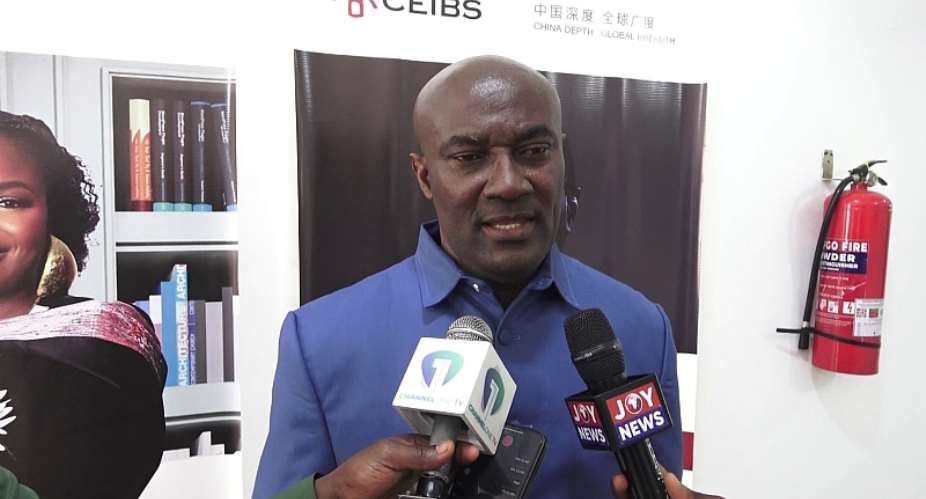
The Ghana Union of Traders’ Associations (GUTA) is urging government to move swiftly to ensure Ghanaian businesses can fully benefit from China’s zero‑tariff policy, warning that the opportunity could slip away if local manufacturers are not adequately supported.
GUTA President Clement Boateng says Ghana’s track record with other duty‑free arrangements — including AGOA and the EU’s Economic Partnership Agreement (EPA) — shows that preferential tariffs alone do not guarantee export success.
“We have other zero or quota‑free tariffs we’ve already been enjoying… AGOA from the US, EPA from the EU. Have we taken advantage of those arrangements? I would say no. Because we are constrained by a number of factors,” he said at a High‑Level Ghana‑China Zero Tariff Policy Roundtable.
Mr Boateng highlighted long‑standing challenges that continue to limit Ghana’s export competitiveness:
- Lack of long‑term financing for manufacturers
- High utility tariffs
- Difficulty meeting international standards
- Weak packaging and finishing for export markets
He noted that manufacturers often struggle to secure financing that matches the long timelines required to set up factories.
“If you want to set up a factory, you need about six months to one year before you even start testing machines and go into production,” he said, adding that banks’ short repayment periods make such investments nearly impossible.
“We need long‑term funding, and because our banks are not prepared to do that, our manufacturers are found wanting.”
GUTA is calling on government to intervene with affordable financing, competitive utility tariffs, and targeted support to help manufacturers scale up production for export.
“The onus lies on us to position ourselves. I am urging government to come to the aid of manufacturers so they can take advantage of this zero‑tariff policy,” Mr Boateng stressed.
He said Ghana should prioritise sectors where local businesses have a natural competitive advantage and can source raw materials domestically.
Clement Boateng cited a Ghanaian tile manufacturer currently exporting to Europe as proof that local companies can thrive internationally when given the right support.
“If government will assist these companies in terms of funding and well‑deserved utility tariffs, then I think we can take advantage and move into the productive sector and make those exports into the Chinese area,” he said.
GUTA says China’s zero‑tariff policy presents a major opportunity for Ghana to expand exports — but warns that without deliberate government action, the policy could become yet another missed chance.

 62 Ghanaians Dead, 15 Missing: Ablakwa Sounds Alarm Over Illegal Recruitment Int...
 GUTA Warns: Ghana May Miss China Zero‑Tariff Windfall Without Urgent Support for...
 Ghana’s ‘Boom Without Backbone’: New Study Says a Decade of High Growth Masked a...
 “The Warnings Were There — We Missed Them”: Ex‑BoG Deputy Gov Says Ghana’s Debt ...
 Oppong Nkrumah Mulls Supreme Court Review After Injunction Blow: “Ruling Admits ...
 Agbodza Targets ‘Inflated Compensation Cartel’; EOCO Probe Looms for Two Surveyo...
 Ghana Secures €163m Debt Deal With Belgium, Edging Closer to Full Restructuring ...
 'I did not communicate my intended position well' — Nii Lante Vanderpuye apologi...
 UN holds second informal straw poll for next leader
 GoldBod cannot escape scrutiny over $1.7bn DGPP loss — Kofi Tonto

