




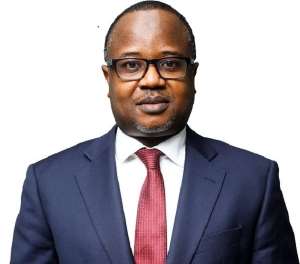
Ghana’s much‑celebrated decade of rapid economic growth before its debt crisis hid a far more troubling reality: the economy was expanding without the productivity gains or structural transformation needed to sustain rising debt. That is the central argument of a new study by former First Deputy Governor of the Bank of Ghana, Dr Maxwell Opoku‑Afari, published by the Finance for Development Lab (FDL).
The report shows that Ghana averaged 6.7% real GDP growth between 2010 and 2019 — far above the 4.1% Sub‑Saharan African average. Yet beneath those impressive numbers, the economy’s productive engine was weakening.
Following debt relief under HIPC and MDRI, Ghana entered a period of strong expansion. Oil production from 2011 boosted an economy already anchored by gold and cocoa. Growth hit 14% in 2011, and hovered around 8% in 2017 and 2018.
But the study stresses that what Ghana produced mattered more than how fast it grew.
- Exports remained concentrated in gold, cocoa and oil.
- Labour‑intensive manufacturing failed to scale.
- Productivity‑enhancing sectors lagged behind extractives.
Between 2013 and 2024:
- Extractives grew at 5.6% annually.
- Agriculture grew at 4.7%.
- Manufacturing trailed at 3.3%, contributing only 10.8% of GDP on average.
The result was an economy capable of generating high GDP growth without expanding its productive and revenue‑generating capacity fast enough to service rising debt.
One of the study’s most striking findings is the persistent decline in total factor productivity — the efficiency with which labour, capital and technology combine to produce output.
Dr Opoku‑Afari finds that Ghana’s productivity has been falling for more than four decades, meaning growth has relied heavily on adding labour, capital and natural‑resource extraction rather than becoming more efficient or technologically advanced.
He argues that this distinction is critical for debt sustainability:
Borrowing is safe when it finances investments that raise future productivity, exports and revenue. Borrowing becomes dangerous when debt grows faster than the economy’s capacity to repay.
Ghana, he says, increasingly fell into the latter category.
The study highlights a troubling trend: even as borrowing increased, capital expenditure collapsed.
- Capital spending fell from 27.5% of government expenditure in 2010
- To 15% in 2016
- And 12.8% in 2022
This meant a shrinking share of public spending went into investments that could expand future productive capacity.
At the same time, Ghana leaned heavily on commercial borrowing. Between 2007 and 2021, the country issued US$15.59 billion in Eurobonds — largely for general budget financing, not self‑financing infrastructure.
Dr Opoku‑Afari stresses that borrowing at commercial rates to fund recurrent expenditure adds liabilities without creating future income streams.
The analysis reframes Ghana’s debt crisis: it was not simply a case of borrowing too much. It was also about what the economy produced, what government borrowed for, and whether growth was productive enough to sustain rising liabilities.
Between 2013 and 2024, Ghana’s sectoral structure barely shifted:
- Agriculture stayed around one‑fifth of GDP.
- Industry was dominated by volatile extractives.
- Services remained the largest sector.
What failed to emerge was high‑productivity, export‑oriented manufacturing capable of expanding foreign‑exchange earnings, tax revenue and employment.
The study warns that restoring macroeconomic stability — lowering inflation, rebuilding reserves, reducing deficits and improving debt ratios — is necessary but not sufficient.
To avoid another cycle of debt distress, Dr Opoku‑Afari argues Ghana must:
- Link borrowing directly to productivity‑enhancing investment
- Expand sectors capable of generating exports, jobs and revenue
- Shift from consumption‑driven growth to transformation‑driven growth
The challenge, he says, is bigger than reducing debt ratios. It is about changing the economic model that supports those debts.
Ghana’s experience shows that strong GDP growth is not the same as a strong economy — especially when productivity is declining, exports remain narrow, and borrowed resources do not expand the country’s capacity to repay.

 62 Ghanaians Dead, 15 Missing: Ablakwa Sounds Alarm Over Illegal Recruitment Int...
 GUTA Warns: Ghana May Miss China Zero‑Tariff Windfall Without Urgent Support for...
 Ghana’s ‘Boom Without Backbone’: New Study Says a Decade of High Growth Masked a...
 “The Warnings Were There — We Missed Them”: Ex‑BoG Deputy Gov Says Ghana’s Debt ...
 Oppong Nkrumah Mulls Supreme Court Review After Injunction Blow: “Ruling Admits ...
 Agbodza Targets ‘Inflated Compensation Cartel’; EOCO Probe Looms for Two Surveyo...
 Ghana Secures €163m Debt Deal With Belgium, Edging Closer to Full Restructuring ...
 'I did not communicate my intended position well' — Nii Lante Vanderpuye apologi...
 UN holds second informal straw poll for next leader
 GoldBod cannot escape scrutiny over $1.7bn DGPP loss — Kofi Tonto

