




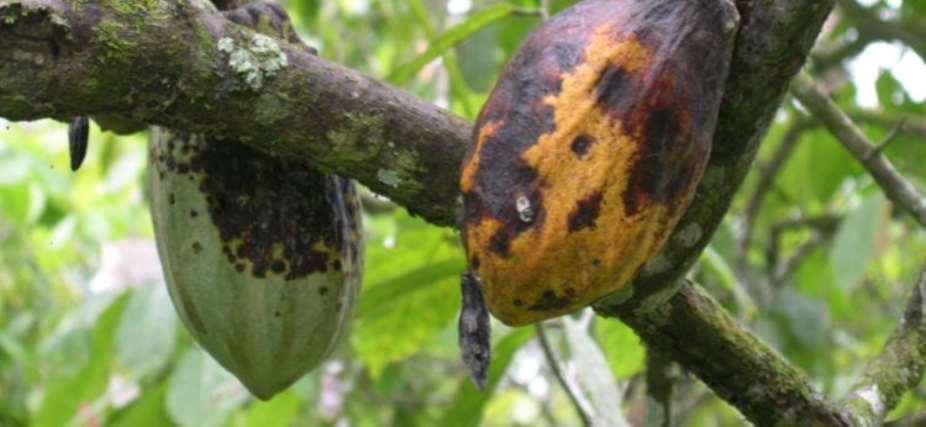
Cocoa remains the backbone of Ghana's agricultural economy, yet an invisible enemy is quietly draining the livelihoods of our hardworking farmers. Recent field research conducted in the Atwima Mponua district of the Ashanti Region has revealed a worrying reality: Cocoa Swollen Shoot Virus Disease (CSSVD) is causing massive crop failures, with yield losses skyrocketing between 15% and 50%.
Even more alarming is that 72.5% of local farmers surveyed admitted they are completely struggling to implement effective control measures. Without immediate, structured intervention, the economic foundation of these farming communities risks collapsing entirely.
The Root of the Struggle
CSSVD, caused by a badnavirus, is primarily spread by mealybugs moving from tree to tree. While COCOBOD has historical eradication programs, the reality on the ground is that smallholder farmers lack the resources, technical know-how, and strict biological protocols needed to halt transmission. When nearly three-quarters of a district's farming population cannot manage a disease, it is no longer an individual farm issue it is a national agricultural crisis.
A Way Forward: Integrated Pest Management
To save Atwima Mponua’s cocoa estates, Ghana must shift toward an Integrated Pest Management (IPM) plan. This scientific, multi-pronged framework focuses on three immediate actions:
- Strict Tool Sanitization: Farmers must be aggressively educated on disinfecting pruning and harvesting tools. Unsanitized tools easily transfer the virus from infected trees to healthy ones.
- Biological Controls: Introducing natural predators to suppress the destructive mealybug populations without damaging the local ecosystem.
- Targeted Insecticide Treatment: Moving away from blanket chemical applications toward highly targeted, efficient insecticide use to stop mealybug vectors in their tracks.
An Urgent Call to Action
We cannot afford to let our cocoa production drop further. COCOBOD, agricultural extension officers, and local government authorities must coordinate to supply Atwima Mponua farmers with the training and resources required to deploy these IPM strategies. If we secure Atwima Mponua today, we protect Ghana’s cocoa golden goose tomorrow.
The writer is a researcher at the University of Energy and Natural Resources (UENR). The full data set for this article can be verified via Zenodo https://zenodo.org/doi/10.5281/zenodo.20932702

 Macron promises tough punishments for rioters during nationwide day of action
 Trump endorses embattled Israeli PM Netanyahu ahead of October 27 election
 We are going to provide emergency airstrip in regions without airports — Mahama
 Nana Konadu maiden memorial mass set for October 23
 'Double standards are not helpful, wrong yesterday is wrong today' – Ablakwa on ...
 NPP has resolve internal wrangling — Bawumia
 Ghana, US Virgin Islands agree on recruitment of Ghanaian teachers, nurses
 “Soldiers Will Stay There”—Mahama Declares Permanent Military Presence in Forest...
 ‘No Borrowing Involved’ — Mahama Rolls Out US$10bn New Economy Policy
 “Ask Jean Mensa to resign first”—Tanko-Computer fires back



Comments
Thank you, Modern Ghana, for highlighting this critical research. Our fieldwork in Atwima Mponua shows that traditional farming practices must evolve.We must aggressively transition toward Vector Focused Integrated Pest Management to save our cocoa estates. I welcome all feedback, questions, or policy ideas from industry stakeholders and students on this thread!