




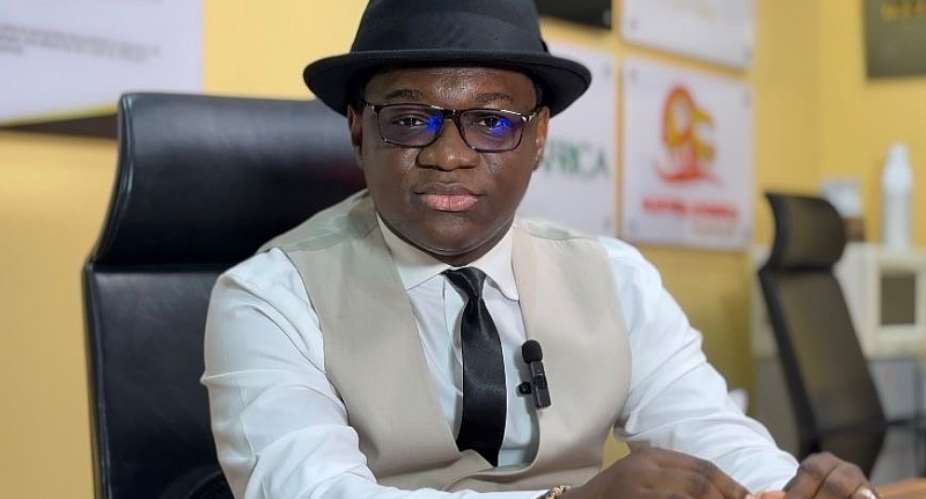
Failure has become one of the most misunderstood words in our vocabulary. We speak of it with a finality that it rarely deserves. A failed business, a failed investment, a failed examination, a failed relationship. Our language encourages us to believe that these events represent conclusions rather than moments in time. We attach labels to individual episodes and then quietly assume that the label applies to the person as well. It is an unfortunate habit, because most of the things we eventually celebrate as success are built upon foundations that, at an earlier stage, looked remarkably like failure.
I have never had a particularly emotional relationship with failure. I do not celebrate it, nor do I romanticise it. There is nothing admirable about poor judgement, inadequate preparation or avoidable mistakes. Failure can be expensive. It can damage confidence, strain relationships, consume capital and delay ambitions. Anyone who claims to enjoy failing has probably never experienced its genuine consequences. Yet neither have I come to fear it. Over time, I have found that failure is usually a more honest teacher than success. Success often confirms what we already believe about ourselves. But failure forces us to question what we believe about the world.
Perhaps this is because success tends to flatter. When things go well, we instinctively attribute the outcome to our intelligence, our planning or our discipline. Occasionally that is true. Just as often, however, success contains elements of timing, favourable circumstances or good fortune that are difficult to recognise while they are happening. Failure offers no such comfort. It strips away convenient explanations and leaves us confronting reality in its simplest form. An assumption was wrong. A judgement was flawed. A risk was misunderstood. There is an intellectual honesty in failure that success seldom demands, and it is this honesty that gives failure its enduring value.
One of the greatest misconceptions about failure is that it exists as the opposite of success. I no longer believe that to be true. The opposite of success is not failure; it is inertia. Failure belongs on the same side as success because both require action. Every entrepreneur who has built something meaningful has made decisions that did not work. Every investor has backed opportunities that disappointed. Every leader has hired people they later realised were unsuitable or pursued strategies that proved ineffective. These experiences are not evidence that the individual was incapable; they are evidence that the individual was engaged. The only people who never fail are usually those who never venture far enough beyond certainty to discover what they might actually be capable of achieving.
This distinction matters because modern society has become remarkably efficient at rewarding the appearance of certainty. We admire confidence even when it is unsupported by evidence. We mistake decisiveness for wisdom and mistake polish for competence. Social media has amplified this tendency by encouraging us to publish outcomes while concealing processes. We see successful companies but not the abandoned ideas that preceded them. We see accomplished executives but not the negotiations that collapsed, the proposals that were rejected or the opportunities that quietly disappeared. We compare our own unfinished journeys with other people's carefully edited destinations, and then wonder why our lives appear so much more complicated than theirs.
The reality is that every worthwhile endeavour is an experiment. Entrepreneurship is an experiment. Investing is an experiment. Leadership is an experiment. Even education is an experiment, because every decision is based upon incomplete information about an uncertain future. We like to imagine that good decisions guarantee good outcomes, but the world rarely operates with such mathematical precision. A sound decision can produce an unfortunate result because circumstances change. Equally, a poor decision can occasionally produce a favourable outcome through sheer luck. The quality of a decision should therefore be judged not merely by what happened afterwards, but by whether it reflected disciplined thinking at the time it was made. Understanding this difference has changed the way I respond to both success and failure.
For that reason, I have become increasingly reluctant to describe any setback as a permanent failure. History has a remarkable habit of rewriting our conclusions. Businesses that appeared unsuccessful often become the experiences that make later enterprises possible. Rejected proposals sometimes redirect careers towards opportunities that were previously invisible. Investments that disappoint can provide lessons that prevent far greater losses in the future. It is only with hindsight that we begin connecting these seemingly unrelated events into coherent narratives. What looked like failure in one chapter frequently becomes an indispensable part of success in another. The mistake lies in assuming the story has ended simply because a particular episode did not unfold as expected.
This is why I believe the greatest danger in professional and personal life is not failure itself but excessive caution (I thought twice before typing this part as I simultaneously consider myself extremely risk-averse). There is a subtle difference between managing risk and avoiding it altogether. Responsible people should analyse decisions carefully, prepare diligently and think critically before acting. That is prudence. Paralysis, however, disguises itself as prudence while quietly preventing action altogether. Many intelligent people spend years waiting for certainty before launching a business, making an investment, changing careers or pursuing an ambitious idea. They imagine they are reducing risk when, in reality, they are simply exchanging the visible risk of failure for the invisible risk of regret. Time has a habit of making that exchange increasingly expensive.
Entrepreneurs understand something that is often overlooked outside business. Every unsuccessful attempt generates information. Products fail because customers reveal preferences that market research overlooked. Partnerships collapse because values were less aligned than initially believed. Strategies disappoint because assumptions about markets, regulation or competition prove inaccurate. None of these outcomes is desirable, but each one improves the quality of future judgement. In this sense, failure is not merely an outcome; it is a process through which reality corrects our thinking. Organisations that learn quickly from failure become stronger. Those that refuse to acknowledge it merely postpone a more expensive lesson.
The same principle applies equally to individuals. Looking back over my own journey, I can identify decisions that I would gladly revisit if such opportunities existed. Yet I cannot honestly say I wish those experiences had never happened. They taught me patience where I had been impatient, humility where I had been overconfident and discernment where I had been overly optimistic. More importantly, they reminded me that competence is never a finished achievement but an ongoing discipline. Noticed how my LinkedIn profile is packed with both ongoing and completed courses and certifications? It’s a reflection of my enthusiasm for continuous learning and growth. Because while every success tempts me to believe I have mastered the game, every failure reminds me that there is still more to learn. I have found the latter lesson to be considerably more valuable.
Nonetheless, I truly worry about one particular kind of failure. It is not the failure of a business, an investment or a professional ambition. Those can usually be repaired, replaced or rebuilt. The failure that concerns me most is the failure to become the person I know I am capable of becoming. It is entirely possible to accumulate wealth while neglecting character, to acquire influence without exercising wisdom or to achieve recognition without making a meaningful contribution. Such lives may appear successful by conventional standards, but they represent a deeper form of failure because they fall short of their true potential. I don’t want that for myself, or anyone for that matter. Ultimately, our careers are measured not only by what we accomplish, but by who we become in the process. And a failure to see that is indeed a failure in its pure form.
This understanding has shaped my relationship with failure more than anything else. I no longer view it as a verdict upon my abilities or a stain upon my record. I view it as evidence that I am still learning, still testing assumptions, and still willing to venture beyond the comfortable boundaries of certainty, while constructing the set of principles and programs by which I live my daily life. Success remains something worth pursuing, but not at the cost of avoiding every possibility of failure. The pursuit of meaningful work demands the courage to accept that some efforts will not succeed exactly as planned. That is not weakness; it is the inevitable price of attempting anything worthwhile.
Perhaps, then, the real question is not whether we have failed, but whether we have allowed failure to complete the story. Most failures are temporary. Most disappointments are transitional. They acquire permanence only when we decide that the lesson has ended and the journey should end with it. In my experience, the most successful people are not those who have failed least. They are those who have refused to mistake an unfinished chapter for the final page.
Thank you for reading. I welcome your reflections, questions, and suggestions for future topics. Subscribe to the ‘Entrepreneur In You’ newsletter here: https://lnkd.in/d-hgCVPy, follow me on all social platforms at @thisisthemax, or get weekly updates via my official WhatsApp channel: www.bit.ly/whatsappthemax.
Wishing you a purposeful and successful week ahead!
'-'-'-'-'-'-'-'-'-'-'-'-'-'-'-'-'-'-'-'-'-'-'-'-'-'
The author, Dr. Maxwell Ampong, serves as the CEO of Maxwell Investments Group. He is also an Honorary Curator at the Ghana National Museum and the Official Business Advisor with Ghana’s largest agricultural trade union under Ghana’s Trade Union Congress (TUC). Founder of WellMax Inclusive Insurance and WellMax Micro-Credit Enterprise, Dr. Ampong writes on relevant economic topics and provides general perspective pieces. ‘Entrepreneur In You’ operates under the auspices of the Africa School of Entrepreneurship, an initiative of Maxwell Investments Group.
Disclaimer: The views, thoughts, and opinions expressed in this article are solely those of the author, Dr. Maxwell Ampong, and do not necessarily reflect the official policy, position, or beliefs of Maxwell Investments Group or any of its affiliates. Any references to policy or regulation reflect the author’s interpretation and are not intended to represent the formal stance of Maxwell Investments Group. This content is provided for informational purposes only and does not constitute legal, financial, or investment advice. Readers should seek independent advice before making any decisions based on this material. Maxwell Investments Group assumes no responsibility or liability for any errors or omissions in the content or for any actions taken based on the information provided.

 PMMC audits were initiated in 2024, not 2025 – Former MD replies Sammy Gyamfi
 Fire at GRIDCo’s Mallam Substation disrupts power supply to parts of Accra
 Chairman Wontumi’s lawyer says plea-bargaining talks with state ended over unfav...
 University Administrators demands 114% market premium before calling off strike
 We need your support in fight against illegal mining - Mahama appeals to chiefs
 Haruna Iddrisu orders suspension of Obuasi SHTS headmaster over alleged sexual m...
 World Cup visas: Hold TRIBE Culture Fest liable for defrauding applicants – Kofi...
 Police arrest farmer seen in viral video assaulting wife in Agona Nkwanta
 NDC appoints Julius Kwame Anthony as Deputy Communications Director
 French counter-terrorism body to investigate 14-year-old behind school shooting


