




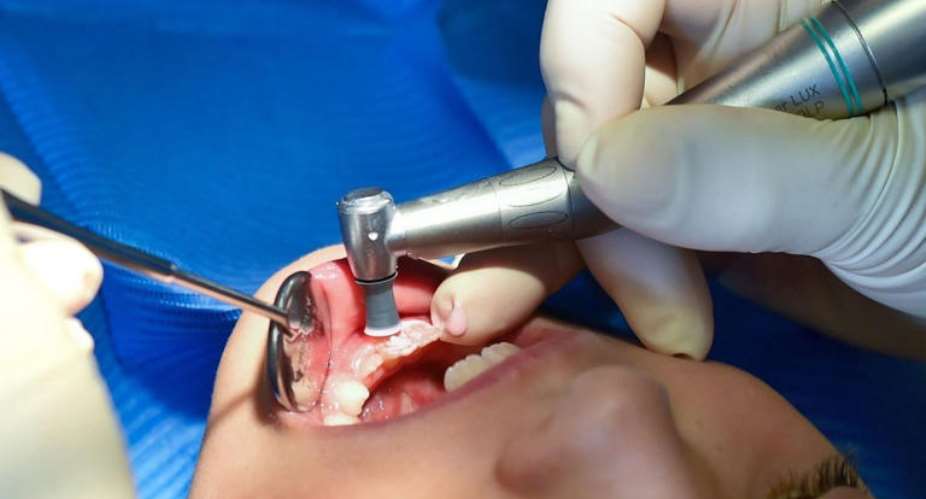
Almost five years after the death of a four-year-old girl at a dental surgery in Kronberg-Germany, the case is being heard in court once again. The anaesthetist, now aged 69, must answer for his actions before the Frankfurt Regional Court. This time, the focus is on one question in particular, was his conduct manslaughter or murder?
In November 2024, the Regional Court had sentenced the doctor to ten years and six months imprisonment. At the time, the judges found him guilty of manslaughter by omission and, in three further cases, attempted manslaughter by omission. The prosecution, however, had sought a life sentence for murder and attempted murder.
However, the German Federal Court of Justice (BGH) quashed key parts of this judgement in January 2026. In the view of the judges in Karlsruhe, the Regional Court had set the threshold for a conviction for murder or attempted murder too high. Another criminal division in Frankfurt must therefore now reassess the case.
Four children fell seriously ill following anaesthesia
The events date back to 28 September 2021. According to the court, the anaesthetist was working at a dental practice in Kronberg in the Hochtaunus district at the time. He first anaesthetised an adult patient, then four children. In doing so, he used propofol from the same bottle. The anaesthetic was contaminated.
All four children subsequently developed sepsis. A four-year-old girl, who had been the last to be treated that day, died the following night on the premises of the dental practice. According to the Federal Court of Justice (BGH), a nine-year-old boy and another four-year-old girl were in immediate danger of dying. A third child was also in mortal danger. The three children were saved after being admitted to hospital and, in some cases, receiving several weeks of intensive care.
State of shock: Children were simply sent home
Even at the first trial, it was not just the breaches of hygiene standards that were at issue. The doctor’s conduct after the children’s condition had deteriorated significantly was also a decisive factor. According to the findings, he recognised the symptoms of a critical state of shock but failed to initiate the appropriate life-saving measures. Three children were initially sent home despite their condition.
During the first trial, t-online also reported on a remark that took on particular significance for the prosecution: whilst the other children were still in danger following the girl’s death, the doctor is said to have told the dentist that there was ‘‘no need to make such a big fuss“. The prosecution interpreted this as an indication that he wanted to cover up the consequences of his hygiene errors. It is precisely this possible intention to cover up the facts that is now at the heart of the second trial.
Would the girl have survived if help had arrived in time?
The prosecution maintains that the doctor deliberately failed to admit the children to hospital promptly in order to conceal his previous errors. According to the prosecution’s assessment, the four-year-old girl would have survived had she received timely medical treatment. The prosecution had therefore already sought a life sentence in the first trial for murder by omission and attempted murder in three cases.
The Regional Court did not accept this line of argument at the time. Whilst it accepted that the doctor had knowingly accepted the children’s deaths, the court did not consider the evidence sufficient to prove the intent to conceal the crime, which is necessary for a conviction of murder. The defence had also argued that the doctor had attempted to save the girl, there was no evidence of an intent to kill or to conceal the crime.
The Federal Court of Justice (BGH) deemed this assessment insufficient. The new court must examine more closely whether the doctor failed to administer life-saving measures precisely in order to conceal his previous errors, or whether other base motives were decisive for his behaviour. If both intent to kill and a corresponding element of murder are established, a conviction for murder by omission may be considered.
The Doctor is already in 2019 convicted of the negligent homicide of a woman
The doctor has been in pre-trial detention since the end of January. After the Federal Court of Justice (BGH) quashed the initial verdict, the Frankfurt public prosecutor’s office again applied for an arrest warrant to be executed on the grounds that there was a risk of him absconding. The man was subsequently arrested at his home in Bensheim, in southern Hesse.
The anaesthetist already has a criminal record. He was convicted of the negligent homicide of an adult female patient in 2019; according to Hessischer Rundfunk, his medical licence has since been revoked.
Francis Tawiah (Duisburg, Germany)

 UCC-UTAG demands clearer boundaries for GTEC’s regulatory role to avoid interfer...
 Mahama congratulates Lula da Silva on ‘well-deserved’ re-election as Brazil Pres...
 Mahama arrives in Moscow to push for Russia-Ukraine ceasefire at Russia–Africa S...
 'Irresponsible media coverage is hurting Obuasi SHTS abuse probe' – Gender Minis...
 ECG announces 7-hour power outages in parts of Ashanti Region on Tuesday
 World Cup visa scandal deepens discontent among NDC grassroots – Prof Smart Sarp...
 'It is frivolous' – State declines to respond to motion challenging its oppositi...
 'We still have feelings' — Wontumi proposes conjugal visit facilities for marrie...
 'Young men must work and eat' – Prophet Badu Kobi backs Sammy Gyamfi on galamsey
 Foreign Affairs Ministry seeks names of evacuees allegedly shortchanged in GH¢5,...


