




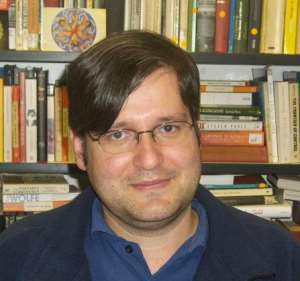
The self-inflicted passing of Jason Arday this month following his resignation from the University of Cambridge is an unsettling yet fitting reminder about what the groves of academe tolerate (or not) regarding its members. Arday’s unmasking as a plagiarist and fabulist was treated as a tour de force by a contingent of conservatives and right-wing academics, keen to neuter the dogma of diversity and return to perceived notions of unalloyed merit. For his defenders, the exposure was tantamount to bad faith, diminished by the personal defects of those making the claim. The university’s chancellor Lord Chris Smith described much of the criticism directed at Arday as “a racist feeding frenzy over a particular academic.” The Labour MP Diane Abbott told those gathered for a vigil organised by Stand Up To Racism in Trafalgar Square that Arday had been the target of a “vicious and bitter media campaign”. Implausibly, Ibram X. Kendi celebrated the late academic as “shining a light on anti-Black racism” who had been attacked by “racist propagandists”.
Much was made of the views of Arday’s foremost accuser, former Cambridge philosopher Nathan Cofnas, who had been dismissed by Emmanuel College in 2024 for his “race realist” stance, insisting that institutions such as Harvard would have no black academics in the absence of “DEI [diversity, equity and inclusion] ideology”. In the unfolding maelstrom, the argument about hopeless academic integrity was less relevant than a challenging background made good, fond feelings, sound identity (“the youngest Black person ever appointed to a professorship” at Cambridge) and innovative brashness. Charlatans had never had it so good.
Except that charlatans have always done mightily well in the groves of learning. Arday was very much a dominant type in the academy. Far from being unusual, he was only different by the sheer daring of his deception, chancing his arm that the authorities foolish enough to employ him would connive in his own fantastic claims. Had he kept his nerve and moderated his vim, pruned his more absurd accounts (illiterate till 18; running 600 miles in six days) and stuck to a tolerable fraudulence he would just be another individual of self-advertised achievements swimming in academic ether. Like many academics, he would have pilfered material from students without detection from time to time, telling them with a flashing smile that it was for their own good, or shirked research (he was candid about not enjoying doing something as mundane as that), being bored at staff meetings though always making a point of being seen, and turning up to propaganda sessions for the university. Oh, and invent the odd, hard-to-verify story.
Charlatanry, it follows, is the essential condition of modern academe. Much of this is a structural, institutional matter. The absurd hunger for mass publication – vast quantities of dribbling dross prized over occasional but singular contributions – offers that first incentive, even prerogative: to lie about contributions to a paper rather pedestrian to begin with. The object here is to get your name on the damn thing because it is suitably ranked, appropriately “indexed”, and given the seal of approval by unknown commissars of education and industry. While the sciences pioneered the dreaded multi-authored paper, with laboratory directors, armies of soul-crunched research assistants and focused funding bodies, the humanities have snapped up the model, relegating knowledge to a poor simulacrum of itself while putting, in its place, the appearance of industry and constructive collaboration. But when so many authors blot a paper, attribution becomes virtually impossible and cheating becomes irresistible. Percentages vanish in the solvent of conspiratorial collegiality, bound by the academy’s version of the mafia’s omertà. An argument can even be made that none of the participants can be trusted about who contributed what. Often, the more senior members will have a passing acquaintance with the material (passing is the word); the juniors will be the packhorse scribblers and interpreters, having conducted the archival research, the literature overviews, and come up with the original findings. A good rule of thumb here is to suspect the order of authorial relevance. The first one off the rank is often a gibbering dud and the worthiest candidate for top charlatan; the last noted author, responsible for the lion’s share, can also be counted as a charlatan by not taking the due credit. “I hope,” says Cecily to Algernon in Oscar Wilde’s imperishably delightful The Importance of Being Earnest, “you have not been leading a double life, pretending to be wicked and being really good all the time. That would be hypocrisy.”
There are other symptoms of academic charlatanry. Tedious specialisation is treasured over polymathic and omnivorous reading. Those with a credible grasp of various fields are viewed with suspicion as dilettantes and gadflies by cyclopean specialists. Interdisciplinary studies may be promoted as a sound pursuit, but it is eschewed in practice. The specialist is, by definition, limited to a narrow strip of desperately defended territory, often crowded with colleagues equally hermetic in disposition. Beyond that stale territory, the individual wilts in sheer terror, incapable of reading, let alone understanding a world that is not solipsistic and interiorised. It is therefore important to exaggerate the significance of that territory out of all proportion to its relevance, to insist that the sociological study of, say, lavatories in Paris between 1918 and 1939, commands equal footing to peace studies or projects dealing with the prosecution of war crimes. While this is by no means always the case, one finds that the tinier the field, the louder its occupants tend to be. The charlatan emerges in full plumage.
The mechanisation and bureaucratisation of the academy also offer instances for the charlatan to shine. There is the workplan, a nonsense document typical of the management university that encourages fictitious targets about papers and books that will never be written, and projects that will never be realised. The catch is that the academic not exaggerating achievements yet unattained will be disadvantaged by honesty and punished with a heavier complement of teaching. The cultic obsession with such corporate terms as “key performance indicators”, the expectation that academics will “generate income”, the reduction of university departments to competitive centres of production and entrepreneurial hubs for grant funding rather than arenas of actual learning and scholarship, creates a fuzzy picture easily exploited by those with street cunning. One is encouraged to advertise in the gaudiest way, to concoct projects to tie in with the grant scheme, to narrow the focus to necessary “targets” and “areas of alignment”. Little wonder that the modish and the trendy do well there, with Arday-styled self-advertising going a long way.
There has been much in the way of sorrow and utterances of tragedy regarding Arday. This is no doubt true for his family and friends. It is disingenuous for others to claim a share of it, reeking, as it does, of the Diana-effect. There is, however, an element of pity in it all. He could have gotten away with it. The university, and no doubt many of his colleagues, would have been more than happy to collude in his deceptions. He simply went too far.
Dr. Binoy Kampmark was a Commonwealth Scholar at Selwyn College, Cambridge. He currently lectures at RMIT University. Email: [email protected]

 Afenyo-Markin's claims on DGPP lacked facts and common sense — Sammy Gyamfi
 August 19: Cedi sells at GHS12.25 on forex market, GHS11.05 on BoG interbank
 NIA clarifies Ghana Card fees, says Prestige Centre is optional
 GES meets teacher unions over concerns about 2025 promotion
 High Court to hear Wontumi's bail pending appeal today
 Former NPP officials must explain why they took monies for contracts they did no...
 Three-month-old baby girl found abandoned in bush near Ada
 Govt pays GH¢10.82bn DDEP coupon to bondholders
 Nigeria election campaign begins as voters grapple with inflation crisis
 Ukraine's sacked defence minister Fedorov calls for wartime presidential electio...

