




Introduction
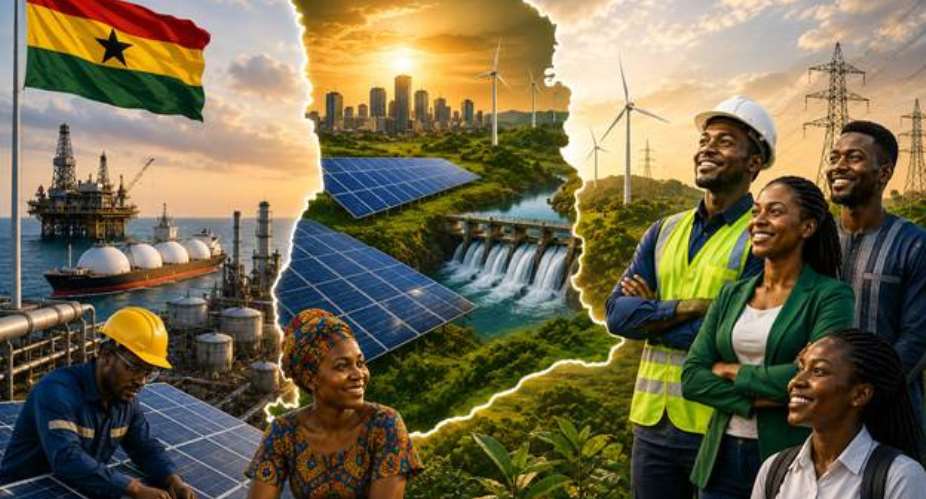
As the global economy accelerates its shift toward low-carbon energy systems, demand for critical minerals has surged. Ghana, endowed with significant reserves of both Lithium and Bauxite, stands at a critical juncture. This article analyzes Ghana's potential to capitalize on the emerging green economy. Drawing upon recent policy frameworks, Ghana possesses the geological potential to benefit immensely; realizing this value requires a paradigm shift from "Transition Finance" to "Transformation Finance”.
Data on Mineral Reserves and Production Potential in Ghana
Ghana's geological landscape positions it favourably within the critical minerals supply chain. The country's strategy has recently pivoted from traditional gold and cocoa exports to integrating green minerals into economic planning.
Lithium Reserves and Potential
Ghana's lithium potential is primarily concentrated in the Cape Coast lithium pegmatite catchments. The flagship project is the Ewoyaa Lithium Project, operated by Atlantic Lithium. Following the issuance of Ghana's first-ever lithium mining lease, the project has moved toward operational readiness in the 2026-2027 window.
Known reserves are estimated at approximately 35.3 million tonnes (Mt) grading 1.25% Li₂O. Mineral Resource: 36.8 million tonnes (Mt) at 1.24% Li₂O. Current reported figures include:
- Measured: 3.7 Mt at 1.37% Li₂O
- Indicated: 26.1 Mt at 1.24% Li₂O
- Inferred: 7.0 Mt at 1.15% Li₂O
Ore Reserves: 25.6 Mt at 1.22% Li₂O.
The Ewoyaa project is projected to produce around 365,000 tonnes of spodumene concentrate per annum over a 12-year mine life.
Bauxite Reserves and Potential
Bauxite, the primary ore for aluminum, is critical for lightweighting electric vehicles (EVs) and constructing renewable energy infrastructure (solar panel frames, wind turbines, and transmission lines). Ghana has a long history of bauxite mining but has historically exported raw ore.
Ghana holds an estimated 900 million metric tons of bauxite reserves, primarily located in Nyinahin, Awaso, and Kyebi. Through the Ghana Integrated Aluminum Development Corporation (GIADC), the country aims to expand production from roughly 1.5 million tonnes per annum to over 5 million tonnes.
The strategic goal is to establish a fully integrated aluminum industry that encompasses mining, alumina refining, and aluminum smelting (leveraging the existing VALCO smelter).
| Mineral | Estimated Reserves | Target Annual Production | Primary Green Economy Application | Key Domestic Projects/Entities |
| Lithium | 35.3 Mt (1.25% Li₂O) | 365,000 tonnes (Spodumene) | Li-ion Batteries (EVs, Grid Storage) | Ewoyaa Project (Atlantic Lithium) |
| Bauxite | 900+ Million tonnes | 5,000,000+ tonnes (Ore) | Solar PV frames, EV lightweighting, Grid lines | GIADC, VALCO, Nyinahin/Awaso mines |
Global Demand Analysis Driven by Energy Transition
The transition to a net-zero global economy is fundamentally a transition from a fuel-intensive energy system to a material-intensive one. The International Energy Agency (IEA) projects that achieving global climate targets will require mineral requirements for clean energy technologies to quadruple by 2040.
Lithium Demand
Lithium remains the irreplaceable core of modern battery technology. Driven by the exponential adoption of Electric Vehicles (EVs) and utility-scale battery energy storage systems (BESS), global lithium demand has shifted from a niche industrial market to a cornerstone of global energy security. Demand is projected to grow by over 400% between 2020 and 2030. USGS estimates global measured and indicated lithium resources at approximately 150 million tonnes, compared with about 37 million tonnes of reserves. USGS estimates Ghana's measured and indicated lithium resources at approximately 200,000 tonnes.
Aluminum (Bauxite) Demand
Although not always classified alongside rare earth elements, aluminum is the world's second most-used metal and is vital to the green transition. Solar photovoltaic (PV) systems require substantial aluminum for structural frames. Furthermore, expanding global electricity grids to accommodate renewable energy requires millions of kilometres of aluminum transmission lines. Global demand for aluminum is expected to rise by nearly 40% by 2030, heavily driven by the energy sector.
Supply and Demand Analysis: Ghana's Strategic Position
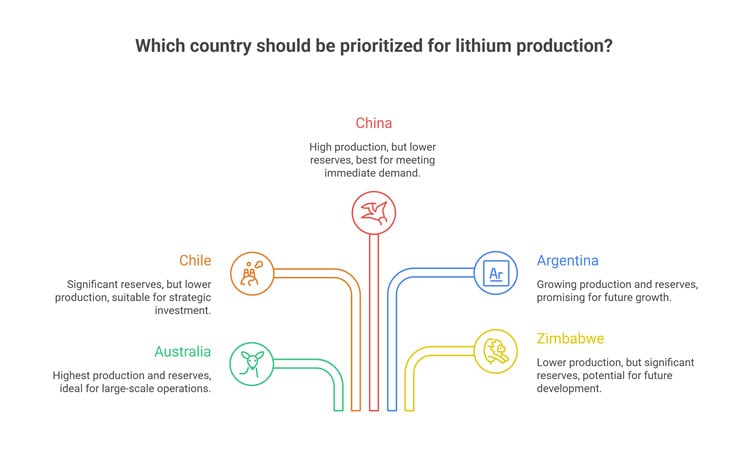
While global demand guarantees a market for Ghana's minerals, the economic benefit derived depends entirely on where Ghana positions itself within the supply chain. The global supply of lithium is currently dominated by Australia and Chile (for extraction) and China (for processing). For bauxite, Guinea and Australia dominate extraction, while China dominates aluminum smelting.
The Risk of "Green Dependency"
A profound policy fault line exists between Transition Finance and Transformation Finance. If Ghana merely extracts and exports raw spodumene and bauxite to meet global climate targets, it would be engaging in Transition Finance. In this scenario, value retention remains external, and Ghana becomes a site for green energy deployment rather than a center for green industrial production.
Moving Up the Value Chain
Ghana's potential position in the global market relies on its ability to process these minerals domestically:
- Lithium Processing: Ghana's Green Minerals Policy mandates that no lithium will be exported in its raw state. The goal is to establish chemical plants to process spodumene concentrate into lithium carbonate or lithium hydroxide.
- Integrated Aluminum: By refining bauxite into alumina and smelting it into aluminum domestically, the country can capture up to 10 times the economic value compared to exporting raw bauxite.
Significant Trends in the Green Economy Context
Geopolitical, environmental, and economic trends are reshaping the extraction, processing, and trade of green minerals. To maximize its benefits, Ghana's policy frameworks must align with these macro-trends.
Regional Value Chains and the AGII Framework
A major trend is the shift away from isolated national projects toward regional integration. The Africa Green Industrialization Initiative (AGII), heavily promoted at the 2026 Africa Forward Summit, aims to expand regional value chains. For Ghana, this could mean integrating its lithium output with cobalt from the DRC and manganese from its own reserves to build a pan-African battery manufacturing ecosystem, supported by institutions like the European Bank for Reconstruction and Development (EBRD) and Afreximbank.
Policy Imperatives for Meaningful Participation
To translate mineral wealth into genuine industrial transformation, we must adhere to three critical policy imperatives identified in recent macroeconomic discourse:
- Sequencing Matters More Than Scale: Attracting massive foreign direct investment (FDI) for mining is insufficient. Ghana must sequence its reforms—fixing domestic energy distribution infrastructure and tariff cost-reflectivity—before or alongside building mineral processing capacity. Processing plants that cannot secure reliable, cost-effective power will become stranded assets.
- Contractually Specified Technology Transfer: The history of African mining is replete with rhetorical promises of local content. In the green economy, technology transfer (e.g., battery chemistry engineering, alumina refining techniques) must be contractually specified in project agreements, including schedules for skills transfer and domestic maintenance obligations.
- Institutional Capacity and African Agency: Engaging with multilateral coalitions requires robust domestic institutional capacity. Ghanaian entities (such as the Minerals Commission and GIADC) must co-design project pipelines, ensuring deal structures serve domestic industrialization rather than merely efficient capital deployment for foreign investors.
ESG and Traceability
Global markets (particularly the EU and North America) are implementing strict Environmental, Social, and Governance (ESG) standards for battery materials (e.g., the EU Battery Regulation). Ghana's ability to trade its lithium and aluminum at a premium will depend on proving low-carbon extraction methods, zero child labour, and minimal ecological disruption. Using renewable energy (hydroelectric power from Akosombo) for aluminum smelting gives Ghana a unique selling proposition: "Green Aluminum."
“Geological blessing is not an economic strategy”
Ghana is exceptionally well-positioned to benefit from the global energy transition due to its rich reserves of lithium and bauxite. However, geological luck is not an economic strategy. To avoid the historical pitfalls of resource extraction—repackaging old dependency in "green" language—Ghana must leverage frameworks to enforce domestic value addition. By aligning its mineral strategy with comprehensive energy sector reforms and demanding contractually binding technology transfers, Ghana can shift from a green-economy supplier to a formidable industrial participant.
Email:[email protected]
Prof. Ernest Ofori Asamoah


 1,568 new lawyers must use law to advance justice — Chief Justice
 GH¢800,000 worth of goods lost in Kia Rhino truck fire at Amanfrom
 I never said Ghana has more nurses than it needs — Akandoh
 I have tried reaching Boakye Agyarko after NPP chairmanship race, but to no avai...
 Ghana’s Corporate Illusion: Why We Celebrate Professional Titles More Than Natio...
 Sam George, Armah-Kofi Buah, Phyllis Naa Koryoo and OPK among 1,568 lawyers call...
 Visa scandal: 'Ampofo Ankrah’s suspension not enough; Kofi Adams must also step ...
 'Let integrity, discipline guide your conduct' — Samson Lardi tells new lawyers
 Labour Minister optimistic teachers will suspend strike by close of day
 Dr Ato Forson urges MMDCEs to eliminate waste in public spending


