




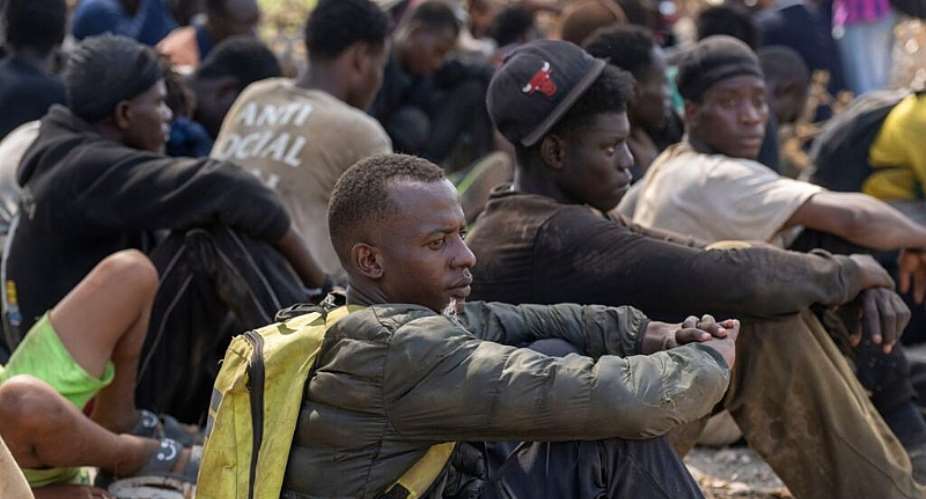
At the end of July, between 70,000 and 80,000 people crossed into the enclave from neighbouring Morocco. Most have since left, but Jimenez said thousands remain in Ceuta, including large numbers of children.
Many of those still stranded are asylum seekers from countries including Sudan, Yemen, Chad, Mali and Egypt. Some migrants have told aid workers they would rather die than return to Morocco.
Spanish authorities have sent additional police to Ceuta amid rumours of possible new arrivals, while on Sunday hundreds of migrants gathered on a beach to demand asylum and oppose any return to Morocco.
Jimenez spoke to RFI about the migrants still in the enclave, their living conditions and the response from Spain.
RFI: Madrid has given different figures for the number of migrants still in Ceuta. The interior minister puts the figure at 5,000, while the Ceuta's regional leader says at least 8,000. What are your estimates?
Maria Jimenez: It is difficult to get official figures because the authorities are not counting the number of people in Ceuta, which is a problem. They have estimates, but we NGOs work on the ground and part of our work is registering people – their names, countries of origin, ages and so on, especially minors.
People living in the surrounding countryside also help us. We estimate there are around 4,000 minors in the enclave, mainly around the city of Ceuta, in areas such as El Principe and Los Rosales. Local residents are feeding these children.
They have also taken over a football pitch so that women and young girls do not have to sleep on the streets because neither the municipality nor the government is doing anything on the ground, more than two weeks after the events.
They are not providing anywhere for people to sleep or even one meal a day. Police have registered 300 unaccompanied girls.
Morocco arrests nearly 300 migrants near Ceuta amid renewed crossing fears
RFI: What do we know about the adults who remain in Ceuta?
MJ: There are many asylum seekers from countries such as Sudan, Yemen, Chad, Mali and Egypt. We estimate there are around 3,500. That figure comes from the Spanish Red Cross, whose volunteers go to the beach every evening to provide one meal a day to each person. We're able to estimate the number of people from the number of meals distributed.
Overall, we have counted around 7,000 migrants in Ceuta, not including those hiding in the woods or elsewhere.
It is important to understand that many of them are asylum seekers. Since arriving in Ceuta, they have been telling us: "I would rather die here than go back to Morocco. My life is in danger if I go back to Morocco."
Some have fled countries in conflict, such as Sudan or Palestine, and it has taken them months, even years, to get here.
We really need to distinguish between people who crossed the border from Morocco and can return to their country, and those who have suffered for years to reach the enclave. It is very important to protect these lives by following all the legal procedures and looking at each case individually.
RFI: You say the authorities are not doing enough for these migrants. Why do you think that is?
MJ: This is only my analysis, but doing nothing is a way of telling people who want to come to Ceuta: "Don't come. There is no advantage to staying here. Your future will not be any better."
But the situation cannot continue like this indefinitely – without shelter, food or medical assistance, and without knowing what will happen to these people. The government must act urgently because this situation has now lasted for more than two weeks and tensions are beginning to emerge.
If the government wants to send more police officers, fine. But it also needs to deal with the situation. The Interior Ministry says it wants to remove the migrants, but that is not possible without a series of safeguards, not only for minors but also for asylum seekers.
Legal procedures need to be put in place: registration by the police, support for minors, access to the asylum process and the necessary assistance, including translators. In the meantime, people must be able to live in decent conditions.
Morocco steps up border security over fears of new mass crossing into Ceuta
RFI: There has been anger and some people have accused migrants of violence. How are Ceuta's residents reacting to what has happened?
MJ: In the first few days, they were afraid. Ceuta covers 20 square kilometres on the border with Morocco and has a population of around 80,000. Imagine 70,000 people entering the city in a single day. It is frightening, and that is understandable. People felt abandoned by the authorities.
Since then, some residents – especially around the city of Ceuta – have shown real solidarity. As for violence, there has been some, but it is not the main story. When you have to fight for a meal or a shower, that can create conflict. Violence can emerge because living conditions are unbearable.
This interview has been adapted from the original version in French by Murielle Paradon and edited for clarity


 Afenyo-Markin insists National Cathedral should be completed
 ‘GoldBod’s structure encouraging galamsey, buys whatever aggregators bring’ – Af...
 Mahama holds discussions with India's External Affairs Minister
 Afenyo-Markin leads NPP MPs to Christian Council over US$1.7 billion GoldBod los...
 Government moves to restore chiefs’ powers to summon subjects
 I’ll sue NPP if the constitutional amendment at delegates conference goes throug...
 NPP executives are like lions being led by a goat – Odike
 Two final-year students killed by speeding tipper truck in Ekumfi
 The Abanga twins: Two brothers, two parties, one political family
 Afenyo-Markin cautions NPP members against working secretly to undermine party


