




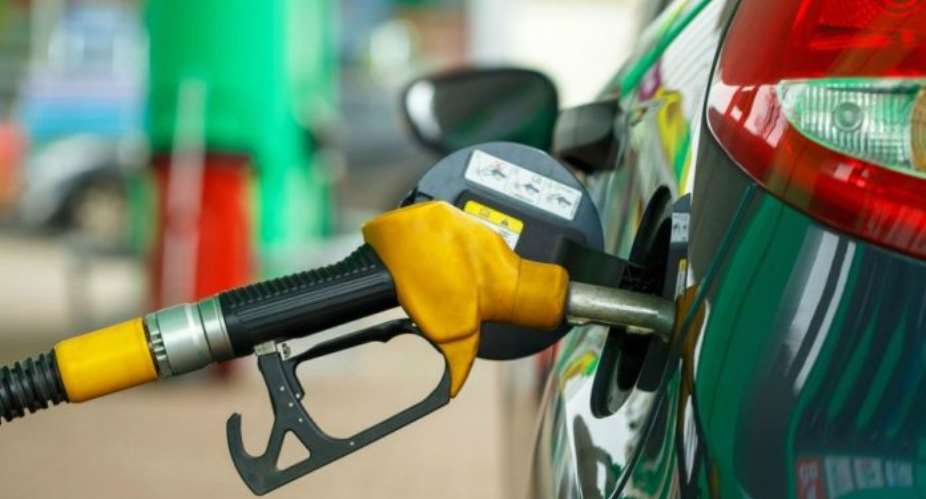
Whether one gallon for “trotro”, one litre for “aboboya” or one kilo for your cylinder, have you ever wondered what and how much you are really paying for “anaa” one ghana no be money? Be it as it may, I would like to shed some light on the cost component of our everyday fuel. So let's get down to it.
Introduction
Since the deregulation of Ghana’s downstream petroleum sector in 2015, the ex-pump prices of petrol, diesel, and liquefied petroleum gas (LPG) among other refined petroleum products have been determined through a structured pricing formula rather than direct government fiat. The National Petroleum Authority (NPA), established under the NPA Act, 2005 (Act 691), regulates the sector and publishes indicative price floors every fortnight, while Oil Marketing Companies (OMCs) and LPG Marketing Companies (LPGMCs) set final retail prices within that framework.
Beneath every price displayed at a Ghanaian filling station or LPG station lies a detailed build-up of components — the base cost of the product, statutory taxes and levies imposed under the Energy Sector Levies Act, 2015 (Act 899), and a series of regulatory margins that compensate the various players in the supply chain. This article explains, component by component, what makes up the ex-pump price of petrol, diesel, and LPG in Ghana.
The Pricing Framework
Ghana operates a bi-monthly pricing window system: the NPA reviews and adjusts indicative price floors twice a month (typically the 1st–15th and 16th–end of month) based on movements in international product prices and the cedi–dollar exchange rate. Within each window, OMCs and LPGMCs are free to set their own competitive prices, provided these do not fall below the published floor. This is why prices can differ slightly from one retail outlet to another within the same window.
Part One: The Base Cost
1. Import Parity Price / Ex-Refinery Price
This is the foundation of the entire build-up. Because Ghana imports the bulk of its refined petroleum products (or crude for the Tema Oil Refinery and Sentuo Oil Refinery), the base cost is benchmarked against international product prices — quoted on platforms such as Platts for petrol, diesel, and LPG (propane/butane). This figure moves with global crude oil and refined product markets and is quoted in US dollars.
2. Freight and Insurance
The cost of shipping each cargo from the source market (commonly the Amsterdam-Rotterdam-Antwerp hub, the Mediterranean, or the Gulf) to Ghanaian ports, together with marine insurance, is added to the base price. Freight rates fluctuate with global shipping demand and vessel availability.
3. Exchange Rate Conversion
Because the base price and freight are dollar-denominated while retail prices are in Ghana cedis, the cedi equivalent is calculated using a reference exchange rate (often referred to as the “Fufex” rate in industry pricing outlooks). Depreciation of the cedi against the dollar directly raises the cedi-denominated build-up even if dollar prices remain unchanged — this is one of the two dominant drivers of pump price movements in Ghana, the other being international market prices. This is why Bulk Import Distribution and Export Companies are very particular about the stability of government macroeconomic variables.
The sum of the import parity price, freight, insurance, and exchange rate conversion produces what is generally called the Ex-Depot/CIF Price — the landed cost of the product before Ghanaian taxes, levies, and margins are applied.
Part Two: Taxes and Levies (Statutory Charges)
For many years, Ghana’s fuel levy regime consisted of a long list of separately named charges — the Energy Debt Recovery Levy, Price Stabilisation and Recovery Levy (PSRL), Sanitation and Pollution Levy, Energy Sector Recovery Levy, Special Petroleum Tax (SPT), Road Fund Levy, and Energy Fund Levy — all imposed under the Energy Sector Levies Act, 2015 (Act 899), and its amendments.
This structure has since been overhauled. Parliament passed the Energy Sector Levies Act, 2025 (Act 1135), which repealed Act 899 and its 2017, 2019, and 2021 amendments, folding the older, fragmented levies into a smaller, consolidated schedule. Act 1135 has itself been amended twice in 2025–2026 (including the Energy Sector Levies (Amendment) Bill, 2026, passed in late July 2026), chiefly to adjust rates and close a loophole in the fuel-oil subsidy regime. Under the current schedule, the statutory fuel levies and their specific cedi rates are:
• Energy Sector Shortfall and Debt Repayment Levy (ESSDRL): This is the consolidated successor to the former debt-recovery and stabilisation-type levies, and it is the largest single statutory charge on fuel. Current rates are:
• Petrol: GH¢1.95 per litre
• Diesel: GH¢1.93 per litre
• Naphtha: GH¢1.95 per litre
• Marine gas oil: GH¢1.93 per litre
• Fuel oil: GH¢1.93 per litre (raised from GH¢0.24 per litre in the July 2026 amendment, to align it with the diesel/marine gas oil rate and close a loophole where diesel was being misclassified as fuel oil to evade the higher levy)
• LPG: GH¢0.73 per kilogram
Revenue from the ESSDRL is directed at settling energy sector legacy debts, funding subsidy shortfalls, and stabilising power supply.
• Road Fund Levy: Charged at GH¢0.48 per litre on petrol, diesel, marine gas oil, and naphtha, and — following the July 2026 amendment — now extended to fuel oil as well. It is dedicated to financing road construction, rehabilitation, and maintenance, reflecting the principle that fuel consumers, as road users, should contribute directly to the upkeep of the road network in Ghana.
• Energy Fund Levy: A smaller charge of GH¢0.01 per litre on petrol, diesel, marine gas oil, fuel oil, and naphtha (and GH¢0.01 per kilogram on kerosene), supporting the institutional and regulatory functions of the energy sector.
Two points are worth noting. First, these levies are specific cedi (or pesewa) amounts per litre or kilogram — not percentages of the retail price — so they do not automatically rise or fall with international product prices; they only change when Parliament amends the schedule. Second, the Special Petroleum Tax and several of the older named levies no longer appear as distinct line items following the consolidation into the ESSDRL; government has, at various points in 2026, also temporarily suspended or restructured elements of this charge as a relief measure during periods of sharp international price increases triggered by ie geopolitical tensions in the Middle East, subject to subsequent Cabinet review.
Collectively, taxes, levies, and regulatory margins have constituted a substantial share of the pump price — industry pricing outlooks over the course of 2026 have shown this combined share ranging from roughly 13% to over 39% of the ex-pump price of petrol, diesel, and LPG, depending on the pricing window and on whether government has temporarily reduced any levies or margins as a relief measure.
Part Three: Regulated Margins
Unlike taxes, margins are meant to reflect the actual cost of moving product through the supply chain and compensating industry players, though they are set or approved within the regulatory framework rather than left purely to market forces.
• Primary Distribution Margin(PDM): this component covers the cost of hauling bulk product from the coastal custombonded warehouses (Tema and Takoradi) to inland and landlocked ones in (Akosombo, Kumasi, Buipe and Bolgatanga), including trucking, pipeline, or rail costs. The PDM ensures that petroleum products are available at strategic inland and landlocked regions for the purpose of efficient and effective zonalisation and supply across the country. This is GH¢ 0.26 per litre for gasoil and gasoline.
• Unified Petroleum Price Fund (UPPF) Margin: this is a mechanism designed to ensure price parity across the country regardless of a retail outlet’s distance from the coast. Transporters delivering fuel to depots further inland are compensated through the OMCs from this fund, allowing a motorist in a remote region to pay broadly the same price as one in Accra, Tema or Takoradi. This is GH¢ 0.90 per litre for gasoil and gasoline.
• BOST Margin: Compensates the Bulk Oil Storage and Transportation Company (now BOST energies) for the maintenance and operation of national fuel storage depots, and supports the expansion of storage infrastructure. This is GH¢0.12 per litre for gasoil and gasoline.
• Fuel Marking Margin: Funds the chemical marking of petroleum products — a quality-control measure used to detect adulteration, prevent smuggling, and guard against revenue loss from illicit product diversion. This is GH¢ 0.09 per litre of gasoil and gasoline.
• Distribution Compensation Margin: An allowance to compensate for cost variances in distributing product to different parts of the country, complementing the UPPF mechanism for only LPG distribution to remote parts of Ghana. This is GH¢ 0.05 per kilogram of Liquified Petroleum Gas.
• Marketers’ Margin: The margin earned by OMCs (for petrol and diesel) or LPGMCs (for LPG) — the companies that brand and supply retail outlets. It covers their operating costs, including logistics, branding, and business overheads, plus their profit. This is a variable component of the price buildup.
• Dealers’/Retailers’ Margin: The margin due to the individual filling station operator or LPG station dealer, who typically runs the outlet under a franchise or dealership arrangement with an OMC/LPGMC. This compensates them for day-to-day station operations — staffing, utilities, and site maintenance.
Part Four: LPG-Specific Components
While LPG shares most of the general structure above, it carries a few distinct elements reflecting the peculiarities of gas distribution:
• LPG Filling Plant Margin: Compensates the operators of bulk LPG filling plants, which handle the storage and bottling of gas before it reaches retail LPG stations.
• Cylinder and Handling Considerations: Although not always broken out as a separate pricing-window line item, the safe handling, refilling, and distribution infrastructure for LPG cylinders represents an additional layer of operational cost embedded in the marketers’ and dealers’ margins for gas compared to liquid fuels.
• Administrative Margins: Certain administrative charges (sometimes grouped alongside Premix fuel and Marine Gas Oil pricing in NPA documentation) apply specifically to LPG’s distribution chain, given its use of a separate bottling and cylinder-exchange model rather than direct pump dispensing.
Because LPG pricing responds somewhat differently to international market movements — often lagging or moving independently of petrol and diesel — its levies and margins are not always adjusted in the same proportion during a given pricing window, which explains why LPG prices sometimes rise even when petrol or diesel prices fall, or vice versa.
Conclusion
Ghana’s ex-pump price build-up for petrol, diesel, and LPG is a layered structure combining a globally-determined base cost with a series of domestically-legislated taxes, levies, and regulated margins. Understanding each component — from the Energy Debt Recovery Levy to the UPPF and BOST margins — allows consumers, businesses, and policymakers to distinguish clearly between price movements caused by international market forces and those resulting from domestic fiscal and regulatory choices. This transparency is central to informed public debate whenever fuel prices rise or fall at the pump.
Author: Isaac Edem Ayitey
Supply Chain Analyst

 SDA partners government to complete selected Agenda 111 projects
 I never met Asante Berko or received money from him — Kwabena Donkor denies brib...
 Cabinet grants approval for resumption of work on stalled theatre projects in Ku...
 IGP promotes 25 police officers who helped bust robbery syndicates, intercept co...
 Will President Mahama Stop Deceiving Ghanaians And Tell Us What Happened To The ...
 Ghana Maritime Authority facilitates repatriation of 12 stranded seafarers
 Invite me to Parliament and let me expose your lies about GoldBod — Sammy Gyamfi...
 'A time may come where we cannot sow, yield fruit or crops on our galamsey-poiso...
 Atronie community goes berserk, performs night rituals in worsened Amoma river t...
 Let's not make former TOR MD bribery case NDC-NPP issue — Vicky Bright

