




Across the sprawling topography of Nigeria and indeed the farthest corners of the globe, the entrepreneurial spirit of the Igbo people of South East Nigeria is widely regarded as legendary. From the bustling commercial arteries of Lagos and Kano to the high-tech corridors of the UK, North America, Europe, and Asia, Ndigbo are renowned as consummate builders, unrelenting risk-takers, and tireless architects of modern commerce. Yet, these undisputed geniuses carry with them a deeply uncomfortable paradox that continues to haunt the collective conscience of their homeland. The worry is: if the Igbo possess the unique capacity to turn barren lands into thriving metropolises and stimulate the economic engines of distant nations, why does their South East Nigeria homeland remain largely underdeveloped, fragmented, and commercially constrained? This paradox is not a badge of honour to be proud of: it is an indictment. It is a sobering evidence to an enduring failure of strategic political leadership, and the time has come for the custodians of political power in Abia, Anambra, Ebonyi, Enugu, and Imo to look inward, recalibrate their collective vision, and engineer a radical renaissance at home.
The path to self-reliant transformation is not a utopian fantasy. But, in the case of the South East, it has a historical precedence carved into the very soil of the region. Decades ago, during the Second Republic, the visionary former Governor of old Imo State, Chief Sam Mbakwe, demonstrated what courageous, forward-thinking sub-national leadership should look like. Refusing to succumb to bureaucratic lethargy or wait for federal benevolence, Mbakwe reached across the Atlantic to negotiate directly with the state government of Nebraska in the United States to secure financing and technical partnerships for monumental infrastructural landmarks, including the iconic Imo Concorde Hotel. Mbakwe understood that a determined governor does not merely manage stagnation, he breaks boundaries, harnesses global capital, and creates assets that outlive his tenure. And if Dee Sam could do that decades ago, what stops today’s crop of South East governors from reviving this audacious template of international diplomacy and aggressive economic expansion to tackle the region's most pressing needs?
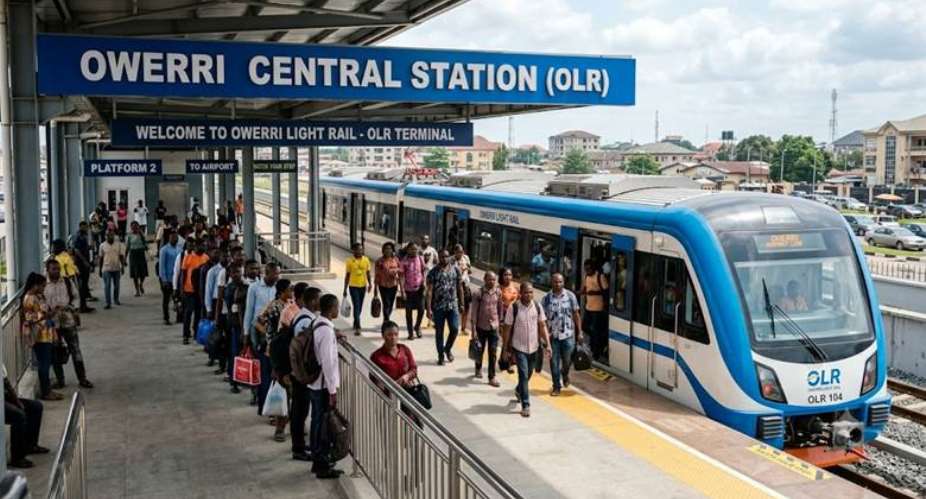
Most demanding among these deficits, and perhaps the single most potent catalyst for unlocking the trapped potential of the region, is a modern rail transportation. The South East governors must open their eyes, map the geography of their homeland, and envision what a modern, interconnected rail network would achieve across Abia, Anambra, Ebonyi, Enugu, and Imo. Picture a seamless light rail system running from the bustling market corridors of Onitsha and Nnewi, cutting through Awka, linking the industrial and coal city heritage of Enugu, snaking through the agricultural heartland of Abakaliki, connecting the commercial nexus of Aba and Umuahia, and terminating through the vibrant hospitality and trade hub of Owerri, with vital intra-state spurs connecting Okigwe, Orlu, and other key townships. Let them draw the diagram in their heads and visualize what the region would definitely look like.
The transformative benefits of such an infrastructural network are immense and far-reaching. At present, inter-state commerce within the South East is choked by dilapidated highways, crushing logistical bottlenecks, extortionate haulage expenses, and persistent security vulnerabilities on rural roads. A synchronized regional light rail system would instantly slash the cost of moving foodstuff, raw materials, and manufactured goods between production hubs and consumer markets. Traders in Aba and Onitsha could effortlessly transport heavy cargo to retail hubs in Enugu or Abakaliki within hours, free from the wear and tear of long road journeys. Commuters could reside in affordable suburban or rural towns while they work in major metropolitan centres, decentralizing urban congestion, boosting rural real estate, and distributing wealth evenly across the hinterland. Furthermore, reliable rail links would stimulate massive investments in regional agro-allied processing, open up dormant industrial corridors, create thousands of skilled and unskilled jobs, and dramatically improve public safety.
A regional awakening must also confront the tragic graveyard of our abandoned economic heritage. A painful stroll down memory lane reveals a once-formidable network of joint economic ventures that stood as monuments to regional foresight and industrial synergy. Today, we might as well be asking: where are the Cooperative and Commerce Bank and the African Continental Bank of yesteryears, institutions that once provided vital lines of credit to indigenous merchants and small businesses? What has become of the Nkalagu Cement Factory, a pioneer heavy industry that laid the literal foundations of eastern infrastructure? Why were the Anambra Motor Manufacturing Company in Emene and the Emene Flour Mills allowed to slip into near-total dormancy rather than being upgraded into continental powerhouses?
Both at home and across a vibrant, highly accomplished Igbo Diaspora, millions of citizens are united in the conviction that the South East Governors’ Forum must discard their narrow, insular state-centric mentalities and resurrect these unifying industrial anchors. When the founding fathers of the South East Governors’ Forum—Chimaroke Nnamani of Enugu, Chinwoke Mbadinuju of Anambra, Achike Udenwa of Imo, Sam Egwu of Ebonyi, and Orji Uzor Kalu of Abia—first sat in a meeting at the dawn of the Fourth Republic, they made a historic and solemn pledge. They resolved to rise above partisan divides and parochial interests to forge a common economic front for the collective advancement of all South Eastern communities. That founding vision must be reclaimed with urgency. The modern challenges of the South East region cannot be solved by five disparate administrations operating in isolation: they demand honest synergy, pooled capital, shared legal frameworks, and coordinated negotiations with domestic and global investors.
This economic imperative directly addresses the persistent socio-political anguish that has gripped the South East for decades. In the wake of the civil war and decades of structural marginalization, feelings of alienation have frequently manifested as volatile agitations for complete national rupture. Yet, wisdom dictates that the ultimate guarantee of a people’s dignity is not found in endless confrontation, political lamentation, or romanticized secessionist slogans that cost precious lives and cripple local economies. It is entirely unnecessary to fixate on the formal dissolution of Nigeria when the Igbo possess the resources, intellect, and sheer human capital to build a thriving, self-sufficient regional homeland from within.
By pooling their resources and developing their states into a powerhouse of commerce, world-class healthcare, high-speed transit, and cutting-edge technology, Ndigbo would achieve the essence of self-determination without firing a single shot or incurring needless tragedy. They would, in effect, achieve genuine autonomy within the federation—breaking free from artificial limitations without breaking up the country. For the South East, navigating its complex historical realities, this economic-first paradigm represents the most pragmatic, sustainable, and sophisticated path forward.
South East political leaders only need to observe the structural arrangements of successful global unions to appreciate the wisdom of this approach. Look at Great Britain, for example. Here, four distinct nations—England, Scotland, Wales, and Northern Ireland—coexist within a unified political union. Each constituent nation possesses substantial legislative and administrative autonomy, manages its own distinctive domestic priorities, preserves its unique cultural identity, and, in places like Scotland and Northern Ireland, even issues its own legal tender banknotes backed by the central monetary authority. They all subscribe to a shared umbrella framework, yet their internal autonomy allows them to flourish independently, ensuring that none feels disenfranchised or subjugated.
South East governors, working alongside regional legislators and thought leaders, should champion and demand this model of true fiscal federalism and regional devolution within Nigeria. When the capacity to govern, build, and prosper is firmly retained and vigorously exercised at home, the Igbo will no longer perceive themselves as living in political bondage in Nigeria. Freedom, after all, is not merely the legal proclamation or a territorial boundary. There is freedom in economic sovereignty, infrastructural dignity, personal security, and the unfettered ability to chart one’s own destiny.
The vast Diaspora community of Ndigbo stands ready to be the bridge to this glorious future. Spread across every continent, these expatriates possess immense financial muscle, specialized technical expertise, and direct access to international development finance institutions and global infrastructure consortia. What they desperately seek is a credible, coordinated, and transparent regional leadership platform to partner with. They want to see their governors actively courting foreign investors, issuing regional infrastructure bonds, and signing binding public-private partnerships to build modern light rail trains that hum along the tracks connecting Aba, Onitsha, Abakaliki, Enugu, and Owerri.
The task before the political leaders of the South East is unambiguous. The era of waiting for distant interventions is over. The blueprint for regional greatness is already drawn in the entrepreneurial DNA of the people and the forgotten achievements of past leaders. If the political leadership can rise to this defining moment, cast aside partisan distractions, and unite behind a transformative regional master plan, the South East will not only rebuild its prosperity—it will demonstrate to the entire African continent that true freedom comes through self-reliance, strategic unity, and the unyielding power of economic self-determination. Freedom comes in many ways.


 Baffour Awuah may spend night in EOCO custody — Lawyer
 Suspend Ghana-Colombia port and visa deals over cocaine seizures — Minority
 Ghana Law Society proposes National Service for fresh lawyers
 'We cannot continue to be a Bar of Accra, by Accra, for Accra' — Ghana Law Socie...
 Stop speculation, premature conclusions; allow investigation to determine Baffou...
 Judge halts Ex-NAFCO CEO's trial until ruling on seized phones
 Manhyia South MP who resisted arrest reports to EOCO a day after arrest warrant ...
 "Show us evidence" —Upper West teacher unions demand proof of payment before end...
 Adenta: Bolt driver jailed 25 years for cutlass attack and robbery of beautician...
 EOCO drags Manhyia South MP to former law firm, residence for search


