




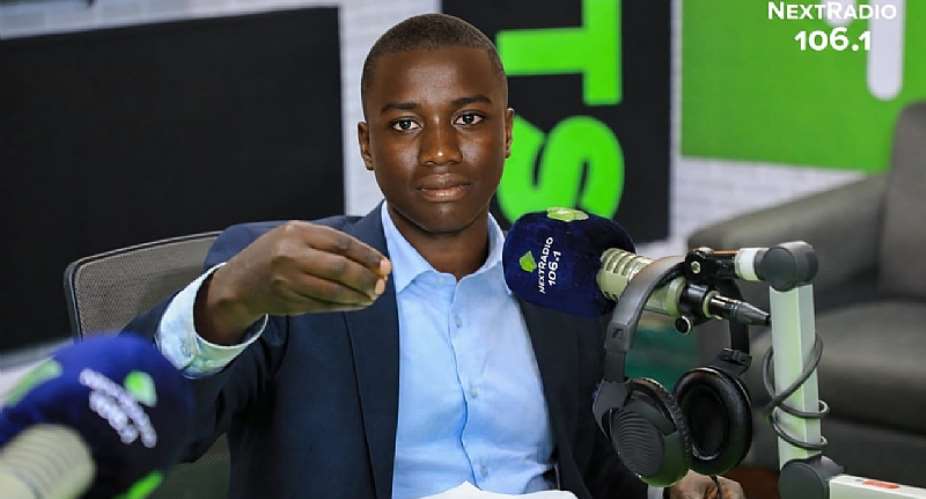
The government has failed to deliver what citizens expect mainly because of two deep problems: widespread corruption and the refusal to give real space to fresh ideas, especially from the youth.
Corruption remains the biggest obstacle. Many government officials are involved in it, and it has entered public facilities. When corruption is this widespread, it becomes almost impossible to deliver proper social services. That is one of the main reasons Uganda continues to lag behind other countries.
Our education system is a clear example. Globally, schools have moved into the digital age and use technology in teaching. In Uganda, many schools are still stuck with chalk. The dust from that chalk enters students’ eyes and causes flu and eye problems. Our education system is roughly forty years behind. That is not progress.
Another serious problem is people remaining in the same positions for too long. When a minister stays in one docket for many years, unfinished old programmes compete with new priorities. Time moves on, but the same person is still trying to finish yesterday’s work while handling today’s demands. This keeps the system behind.
This is why regular change of MPs and ministers is necessary. If someone performs well in one term, renew them. If they do not, replace them. That pressure forces people to deliver. I appreciated that President Yoweri Museveni changed many ministers this term. Local Government now has an active minister in Balaam Barugahara, with Justine Nameere as State Minister. Those are the kind of changes we need — people who know that if they do not work, they will be replaced.
We the youth have ideas that can move this country forward, but the system still treats us as if we have nothing useful to contribute. Our suggestions are often dismissed as mere talk. Yet when you look carefully, some of the ideas that appeared in the Protection of Sovereignty Bill before it became law were ideas I had already put forward in earlier drafts. The similarity is clear. Young people are not empty-headed. We have practical proposals for good governance. The government needs to open real space for us to participate and implement ideas.
I am not saying people should stop supporting the opposition. Government and opposition need each other. No president will ever be perfect. Even Idi Amin had people who liked him and people who disliked him. Today many say Uganda would have developed faster without him. Look at Singapore. After colonialism it was in a similar economic position to Uganda, yet today it is a first-world country while we remain in the third world. Leadership and systems matter.
The government has failed in many of its duties because it has not allowed the youth to take real part in its programmes and because corruption has been allowed to grow. Government must deliberately work with young people. It must also work with the opposition properly. When a bill is tabled, the opposition must be allowed to give its views. Those views should be weighed carefully. If the proposal is good, pass it. If it is not, reject or withdraw it. Passing laws only because government has the majority is not how Parliament should function.
Even the notes we study in school are misleading. They teach that Uganda is a republic and list the characteristics of a republican state, including that Parliament is the supreme organ. In reality the executive dominates. These things need to be corrected if we want genuine good governance.
That is also why I support the mission the Chief of Defence Forces, General Muhoozi Kainerugaba, launched against corruption. He has pushed the UPDF forward and promised action on roads and other areas. The army has become better armed and more professional under new leadership. Change and the pressure that comes with it produce results. The same logic must apply to ministers.
We have already seen useful movements: Kiryowa Kiwanuka moved from Attorney General to Minister of Defence and Veteran Affairs, while Balaam Barugahara moved from State Minister for Youth and Children Affairs to Minister of Local Government. These shifts show that positions are not permanent.
Corruption and the exclusion of youth are the two biggest reasons the government has failed to meet citizens’ expectations. Until both are confronted seriously — through real accountability, regular renewal of leaders, and genuine inclusion of young people — Uganda will continue to lag behind.
Nyanzi Martin Luther is a media entrepreneur and youth civic leader.
 “I am upset by some free speech arrests sanctioned by police; it hurts governmen...
 WAEC withholds results of 9 BECE private candidates over suspected collusion
 Forestry Commission laments how illegal miners return to forest reserves with ne...
 Here are areas to face outages as ECG announces 4-day power outage scheduled mai...
 Mion NPP Chairman resigns barely two weeks after winning constituency polls
 Ghana’s Deputy Ambassador to Saudi Arabia Sanni Jajah dies
 Prof. Opoku-Agyemang reveals the driving force of her partnership with Mahama
 'Mahama gov’t has arrested more for free speech than Akufo-Addo's eight years' –...
 'Mahama called Akufo-Addo 'Akyem sakawa mafia'; Nana Yaa Jantuah called him Nebu...
 NPP Asante Mampong Parliamentary aspirant Beatrice Owarewa Siaw dies

