




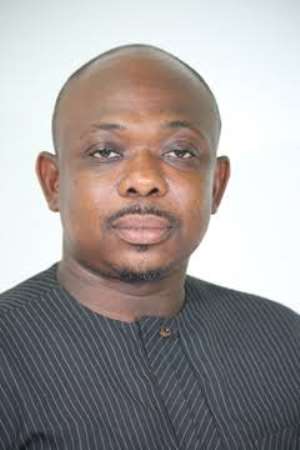
Dear Hon. James Agalga,
Permit me to congratulate you on your elevation to a position of considerable responsibility in Ghana's Parliament.
Leadership positions in Parliament are not merely rewards for political loyalty or parliamentary experience. They are positions of trust. They carry responsibilities that extend beyond political parties and beyond the immediate interests of governments.
I recently wrote an open letter to the Minority Leader, Hon. Alexander Kwamena Afenyo-Markin, urging him to appreciate that the office he occupies requires more than eloquence, energy and vigorous opposition. I reminded him that Ghana needs a Minority Leader who is not merely a political combatant but a statesman capable of presenting credible alternatives to the government. I offer you the same counsel, but from the other side of the aisle.
You have reportedly indicated that you intend to be tough. There is nothing wrong with being tough. Indeed, Parliament needs people who are prepared to stand their ground. But I respectfully suggest that being tough and being effective are not necessarily the same thing. Ghana does not need another political warrior merely occupying the Majority Leader's chair. Ghana needs a results-oriented gentleman.
Toughness Is Not the Same as Effectiveness
There is a temptation in African politics to measure parliamentary effectiveness by how loudly one speaks, how aggressively one responds to the opposition or how frequently one defeats an opponent on the floor of the House. That is political theatre. The real measure of parliamentary leadership is what Parliament accomplishes for the people.
- Did Parliament pass good laws?
- Did it scrutinize government expenditure properly?
- Did it improve the quality of legislation?
- Did it protect the public purse?
- Did it strengthen accountability?
- Did it resolve problems rather than merely debate them?
- Did it make government more effective?
These are the questions history will eventually ask. A Majority Leader who wins every verbal exchange but fails to improve the quality of legislation has not necessarily succeeded. Conversely, a leader who occasionally concedes a point to the opposition but produces better legislation, builds consensus and gets important national business done may have achieved far more.
You Are Not Merely Leader of the NDC Caucus
This distinction is important. You are, of course, a member of the governing National Democratic Congress. You have responsibilities to your party. But once you occupy a leadership position in Parliament, your responsibilities become larger. Parliament belongs to Ghana. The Majority Caucus belongs to a political party. The distinction must never be lost.
The official description of the Majority Leader makes this clear: the Majority Leader is the spokesperson for the Majority Caucus and the Leader of Government Business in the House. That is a powerful position. It gives you considerable influence over the government's legislative programme. But influence must be exercised with wisdom.
Do Not Make "No-Nonsense" Your Brand
You may be tempted to cultivate the image of a "no-nonsense" Majority Leader. Please reconsider. Ghana has had enough of politicians who pride themselves on being "tough". We need politicians who are effective. There is a subtle but profound difference. A no-nonsense politician may refuse to compromise. A results-oriented leader knows when to compromise and when not to compromise. A no-nonsense politician may regard every disagreement as a battle. A statesman understands that some disagreements are necessary and some are manufactured. A no-nonsense politician seeks victory. A results-oriented leader seeks outcomes. That distinction could define your tenure.
Parliament Should Not Become a Battlefield
Our Parliament is already highly partisan. Government MPs defend the government. Opposition MPs criticize it. That is normal in a democracy. But parliamentary democracy is not supposed to be permanent warfare. The best parliamentary systems combine robust disagreement with institutional respect.
You should therefore strive to make your relationship with the Minority Leader one of vigorous contestation without personal hostility. Challenge him when necessary. Correct him when he is wrong. Defend government policy when it deserves defense. But listen when the opposition raises a legitimate concern. There is no shame in accepting a good idea simply because it originated from the other side of the House. Indeed, there is wisdom in doing so.
Give the Minority Something to Respect
One of the best ways to strengthen the Majority is not to silence the Minority. It is to give the Minority reason to respect you. If Hon. Afenyo-Markin makes a legitimate point, acknowledge it. If his criticism is unfounded, dismantle it with facts. If he proposes something beneficial to Ghana, support it. And when the Minority is wrong, defeat the argument, not the person. That would represent a higher form of parliamentary leadership. It would also make it much more difficult for the opposition to portray the Majority as arrogant or intolerant.
Do Not Confuse Majority Power with Parliamentary Wisdom
Your party has an overwhelming majority in the Ninth Parliament. The official parliamentary composition currently gives the NDC 185 seats, the NPP 87 and Independents 4. That is enormous political power. But numerical superiority carries its own danger.
When a government possesses a large parliamentary majority, it can easily become impatient with dissent. Bills can be rushed. Opposition concerns can be dismissed. Committee scrutiny can become weaker. Parliament can gradually become an extension of the Executive. That would be a mistake.
Your greatest responsibility may therefore be to ensure that the Majority uses its numbers to govern effectively, not merely to dominate proceedings.
Protect Parliament from the Executive
This is perhaps the most important counsel I can offer you. The Majority Leader is also Leader of Government Business. That means you are necessarily closely connected to the Executive's legislative agenda. But Parliament is not the Executive. The Constitution created three separate arms of government precisely because power must be checked.
A strong Majority Leader should therefore be willing to tell government ministers:
- "This bill requires more scrutiny."
- "This expenditure requires further explanation."
- "The House needs more information."
- "The committee should examine this matter more thoroughly."
That is not disloyalty. That is parliamentary leadership.
Your Greatest Legacy Could Be Better Legislation
Imagine that at the end of your tenure, people say: "Hon. James Agalga helped transform the way Ghana's Parliament did business." That would be a far greater legacy than being remembered as the man who was toughest on the Minority. You could champion better legislative drafting, stronger committee work, evidence-based policymaking, greater use of research by MPs, improved parliamentary oversight, more effective monitoring of government programmes, better public access to parliamentary information, stronger collaboration between Parliament and universities, greater use of technology in parliamentary work, and serious evaluation of legislation after it has been passed. These are the things that make Parliament stronger.
Let Parliament Become a School of Democracy
There is another opportunity before you. Ghana's Parliament should educate the public about democracy. Citizens should understand why Parliament debates bills. They should understand the work of committees. They should understand the difference between legislation and government policy. They should understand why parliamentary scrutiny matters. They should understand that an MP is not merely a representative who distributes development projects.
The current parliamentary leadership has already expressed an ambition to make Ghana's Parliament more open and accessible; Majority leadership has spoken of Ghana aspiring to become Africa's most open Parliament. You can contribute significantly to that ambition.
Your Toughest Battle Should Be Against Poor Governance
Hon. Agalga, if you want to be tough, I encourage you to choose your battles carefully.
- Be tough on corruption;
- Be tough on waste;
- Be tough on poor legislation;
- Be tough on abuse of public resources;
- Be tough on delays in implementing government programmes;
- Be tough on officials who fail to deliver;
- Be tough on policies that harm ordinary Ghanaians;
- Be tough on your own side when necessary;
- And be equally tough on yourself.
That is the kind of toughness Ghana needs.
Do Not Fear the Opposition
A confident Majority Leader does not fear criticism. Indeed, criticism can make government better. If the Minority identifies a weakness in a government programme, investigate it. If it exposes waste, correct it. If it raises a legitimate constitutional concern, examine it. If it makes a good proposal, adopt it. Government should not measure success by the number of opposition arguments it defeats. Government should measure success by whether the lives of Ghanaians improve.
Parliament Must Rise Above the Politics of "Us and Them"
Ghana has suffered too much from winner-takes-all politics. The governing party behaves as though it owns the state. The opposition behaves as though everything the government does must be wrong. The cycle repeats itself after every election. We must break this cycle. The Majority and Minority may disagree on ideology, policy and priorities. But they should agree on one fundamental principle: Ghana must work. If you can help create that culture in Parliament, your contribution will extend far beyond the NDC.
A Word about Your Relationship With Afenyo-Markin
I would encourage you and Hon. Afenyo-Markin to develop a healthy parliamentary rivalry. He has his responsibilities. You have yours. Let the two of you disagree vigorously. Let the debates be intellectually demanding. Let the public see two capable leaders testing each other's arguments. But let neither of you descend into personal attacks, mockery or political theatre. If you raise the standard of debate, he will be compelled to raise his standard too. And Ghana will be the winner. That is the beauty of healthy competition.
History Gives You an Opportunity
Hon. Agalga, political positions are temporary. The NDC will not govern forever. The NPP will not remain in opposition forever. Governments come and go. Majorities become minorities. Minorities become majorities. But Parliament remains. Therefore, your responsibility is not merely to help the present government pass its legislation. Your responsibility is also to leave Parliament stronger than you found it. That is the test of statesmanship.
My Appeal to You
I therefore appeal to you not to make "toughness" the defining characteristic of your leadership. Make results your defining characteristic. Do not seek to be the loudest. Seek to be the most effective. Do not seek to defeat the Minority at every turn. Seek to make Parliament work. Do not confuse firmness with hostility. Do not confuse discipline with intolerance. Do not confuse party loyalty with parliamentary responsibility. And do not confuse political victory with national progress. If you can combine firmness with humility, political courage with intellectual openness, and party loyalty with national interest, you could become one of the most consequential parliamentary leaders of your generation.
Hon. James Agalga, you have an opportunity before you. Use your position not merely to demonstrate that you can be tough. Demonstrate that you can deliver. Let your legacy be that of a Majority Leader who made government business more efficient, parliamentary debate more dignified, legislation more thoughtful, oversight more effective and Parliament more respected. Ghana does not need a Majority Leader who merely wins arguments. Ghana needs a Majority Leader who helps Ghana win.
I wish you wisdom, courage, humility and success in the discharge of your responsibilities.
Yours faithfully,
Fuseini Abdulai Braimah
(A Concerned Citizen)
0208282575 / 0550558008

 “I am upset by some free speech arrests sanctioned by police; it hurts governmen...
 WAEC withholds results of 9 BECE private candidates over suspected collusion
 Forestry Commission laments how illegal miners return to forest reserves with ne...
 Here are areas to face outages as ECG announces 4-day power outage scheduled mai...
 Mion NPP Chairman resigns barely two weeks after winning constituency polls
 Ghana’s Deputy Ambassador to Saudi Arabia Sanni Jajah dies
 Prof. Opoku-Agyemang reveals the driving force of her partnership with Mahama
 'Mahama gov’t has arrested more for free speech than Akufo-Addo's eight years' –...
 'Mahama called Akufo-Addo 'Akyem sakawa mafia'; Nana Yaa Jantuah called him Nebu...
 NPP Asante Mampong Parliamentary aspirant Beatrice Owarewa Siaw dies

