




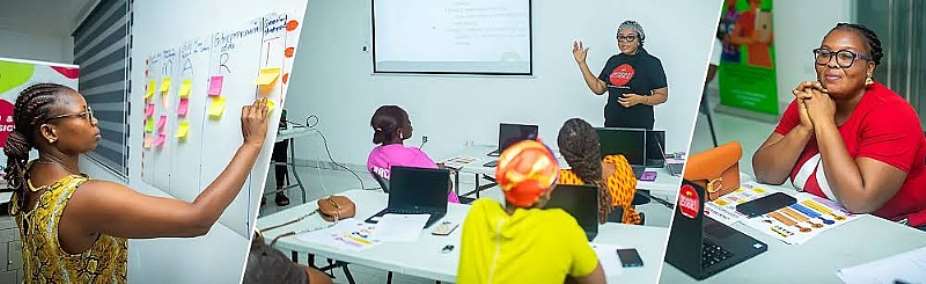
There is a fundamental shift happening in Ghana's classrooms—one that is moving beyond the traditional boundaries of textbooks and chalkboards. The Ghanaian student of today is increasingly likely to be found not just studying history or geography, but building circuits, writing basic code, and understanding the principles of robotics . This quiet but determined revolution is reshaping secondary education, preparing a generation for a digital future that is no longer abstract but imminent.
At the heart of this transformation is a deliberate and structured policy push. The government, through the Ministry of Education and the National Council for Curriculum and Assessment (NaCCA), has introduced a revised curriculum that integrates computing as a core subject . This is not a superficial addition but a comprehensive overhaul designed to equip learners with 21st-century skills . The curriculum for Senior High School, for instance, now includes detailed strands on "Computational Thinking and Programming Logic," covering everything from Boolean algebra and logic gates to machine learning concepts . The philosophy is clear: to empower the next generation of ethical creators and developers of technology through hands-on activities and a learner-centered environment .
This formal education push is being reinforced by private sector initiatives that bridge the gap between theory and practice. The Telecel Ghana Foundation's Digitech Academy, an after-school digital skills program, stands as a powerful example. Now in its third cohort, the program reaches students across five regions, providing practical training in electronics and programming where learners build circuits, write code, and design functional robots . Crucially, the program has a deliberate focus on gender inclusion, reserving 70% of its training slots for female students to address long-standing disparities in STEM participation . This commitment to equity ensures the revolution is not just for a privileged few but is creating pathways for all young Ghanaians.
For the students themselves, the shift is not an abstract policy but a tangible opportunity. The idea of a "Smart Start" curriculum is resonating with pupils who see AI and coding as keys to unlocking their future . As one student put it, the introduction of these subjects will help them learn new technology, improve problem-solving skills, and prepare for future jobs in a digital world . This enthusiasm is a powerful driver for the curriculum's success.
However, the journey from curriculum documents to a fully realized revolution is fraught with challenges. Education experts have rightly cautioned that curriculum reform alone is insufficient . The success of this initiative hinges on significant, and sustained, investment in the necessary infrastructure and human capital. This includes reliable electricity, robust internet connectivity , access to digital devices for all students, and, most critically, comprehensive teacher training . Without these investments, a gap will inevitably widen between well-resourced urban schools and those in rural and underserved communities . This places a significant responsibility on the Ghana Education Service and other stakeholders to ensure the revolution is an inclusive one that truly leaves no learner behind.
The paradigm is shifting from rote memorization to enquiry, problem-solving, and creativity. The quiet revolution in Ghana's secondary education is about more than just learning to code; it is about cultivating a mindset of innovation, critical thinking, and adaptability that will define the country's future workforce. With continued commitment to infrastructure, training, and equitable access, this movement can transform the potential of a generation.

 Credit Godfred Dame for Ghana's US$393 million tax arbitration victory against T...
 How can EOCO be accused of wanting to kidnap Baffour Awuah in full glare of the ...
 'She is not party operative' – Kwakye Ofosu defends EOCO officer
 Baffour Awuah wanted over alleged financial loss, dissipation of public funds an...
 Brazil is the main source of cocaine in Ghana by sea concealed in sugar containe...
 'The cacophony of noises surrounding my comments were pure mischief' — Chief Jus...
 ‘Judges must not abandon their humanity because of their judicial office’ – Chie...
 GTEC flags over 100 tertiary institutions as unrecognised
 Political protection may be behind decline in visible cocaine trafficking in Gha...
 Ghana identified as source of explosives used in Sahel conflicts — Crime Index r...


