




If you are considering importing a used vehicle into Ghana, take note that, beginning October 1, 2026, the Ghana Standards Authority (GSA) will begin strict enforcement of guidelines on the importation of such vehicles, in line with the vehicle homologation and assessment programme. This does not constitute a ban on the importation of used vehicles, but an enforcement of safety, quality, and environmental standards, according to the GSA.
It has therefore advised all stakeholders to take note and familiarise themselves with the applicable requirements and take the necessary steps to ensure compliance before importing vehicles into Ghana.
Vehicles that fail to meet the requirements will not be permitted entry on arrival. What vehicles may not be permitted on arrival under new Ghanavehicle homologation and assessment programme?
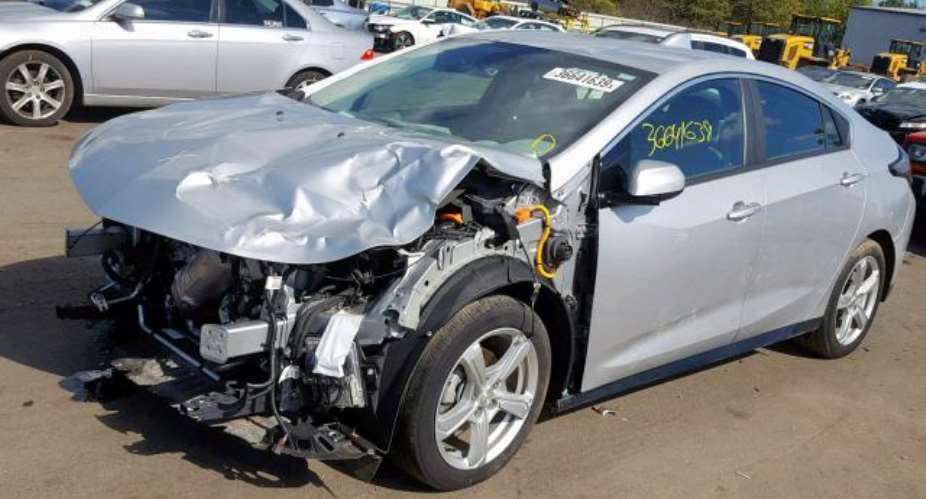
Examples of vehicles that may not meet the requirements are salvaged vehicles with major damage, including those submerged in water or flood-damaged, burnt or fire-damaged, or with chassis or safety cage damage (broken, cracked, bent, or twisted structures).
Minor cosmetic or repairable damage may be acceptable if the vehicle is otherwise roadworthy.
Vehicles originally manufactured right-hand-drive, such as Toyota Voxy manufactured and assembled in Japan is also affected, those assembled from spare parts (rather than complete units), and vehicles without speedometers calibrated or reading in kilometres per hour are also affected by the new requirement.
Left-hand-drive steering is required
Again, over-aged vehicles, that is those that are more than 10 years from the date of manufacture, for example models older than roughly 2016 as of late 2026.
In a public notice issued two months ahead of the enforcement and dated August 5, 2026, the Ghana Standards Authority (GSA) informed the public, vehicle manufacturers, assemblers, importers, distributors, dealers and all stakeholders to note that although the National Vehicle Homologation and Conformity Assessment Programme has been in operation since 2020, the strict enforcement of the applicable national vehicle standards, including the Ghana Standard 4510 (GS 4510 - Requirements for the importation of used vehicles) will commence on October 1, 2026.
The GSA explained that the Programme is intended to ensure that all vehicles imported into, assembled or manufactured in Ghana comply with the applicable national safety, quality and environmental standards.
It also seeks to protect consumers from unsafe, substandard and environmentally harmful vehicles while promoting a safer, cleaner and more regulated automotive industry.
The GSA explained that this does not constitute a ban on the importation of used vehicles but all stakeholders are to take note and familiarise themselves with the applicable requirements and take the necessary steps to ensure compliance before importing vehicles into Ghana. What is the Ghana National Vehicle Homologation and Conformity Assessment Programme?
Prohibited Vehicles (Not Allowed for Import)
Under GS 4510:2022, the following used vehicles are barred:
-
Over-aged vehicles — more than 10 years from the date of manufacture (e.g., models older than roughly 2016 as of late 2026 enforcement).
-
Salvaged vehicles with major damage, including those submerged in water/flood-damaged, burnt/fire-damaged, or with chassis or safety cage damage (broken, cracked, bent, or twisted structures). Minor cosmetic or repairable damage may be acceptable if the vehicle is otherwise roadworthy.
-
Originally manufactured right-hand-drive vehicles.
-
Vehicles assembled from spare parts (rather than complete units).
-
Vehicles without speedometers calibrated/reading in kilometres per hour. Left-hand-drive steering is required.
Key conformity requirements
Vehicles (categories M1/M2/M3 passenger vehicles, N1/N2/N3 goods vehicles, and O trailers; category L generally excluded) must meet safety, identification, and other criteria, typically verified via inspection. Reported checks include:
• Vehicle Identification Number (VIN) verification and documentation.
• Functional safety systems (e.g., steering, brakes, airbags where applicable, seatbelts, lighting/reflectors, etc.).
• Emissions compliance (minimum Euro 2 standard referenced in recent reports).
• No major accident/flood history and overall structural integrity.
• Other items covered in the standard: seats, vehicle entrance, audible warning devices, tyres, glazing, mirrors, wipers, engine, HVAC, and markings (especially for electric/hybrid vehicles).
A Certificate of Conformance (CoC) from a GSA-approved body is mandatory. It must demonstrate compliance with GS 4510:2022. Without a valid CoC, clearance is not permitted (“No CoC, No Entry”).
Process and Importer Obligations
1. Registration — Importers, distributors, and dealers of used vehicles must register with the GSA. Designated personnel typically need training on GS 4510 (covering due diligence, conformity assessment, reporting, and procedures). Private individuals may face restrictions or need specific permits.
2. Pre-shipment (PVoC from Oct 2026) — Inspection by GSA-approved third-party inspection bodies (or via trained/licensed used vehicle dealerships) occurs in the exporting country before shipment. This verifies compliance and issues the CoC.
3. Due diligence by importer — Before importation, submit a due diligence report confirming conformity, accompanied by a VIN report and an application for conformity assessment (including at least ¾ front and opposite rear photographs of the vehicle).
4. On arrival — Present the vehicle (with CoC and supporting documents) for inspection/verification by the regulator (GSA or authorised agent) and revenue authority before clearance. Documents typically include the Vehicle Import Application/Importer Due Diligence Report, VIN Report, Vehicle Inspection Report, and Vehicle Clearance Certificate.
5. Additional context — Linked to the Customs (Amendment) Act 2020 (Section 61 of Act 891). New vehicles have separate homologation requirements (model certification by GSA).
Practical Notes
• CoCs are obtained from approved third-party inspection bodies or licensed dealerships. An updated list is supposed to be available on the GSA website (www.gsa.gov.gh); contact the GSA Auto Team ( This email address is being protected from spambots. You need JavaScript enabled to view it. or +233-302-506991-5 / 500065/6) for the current list and procedures.
• Prospective buyers are advised to demand a valid CoC, avoid vehicles older than the 10-year limit, and report suspected fake certificates.
• The programme aims to improve road safety, reduce substandard/unsafe/polluting vehicles, enhance traceability, protect consumers, and support the formal used-vehicle industry.
For the most current official details, lists of approved bodies, or application procedures, consult the Ghana Standards Authority directly (gsa.gov.gh) or the relevant customs/revenue authorities, as implementation details and approved inspectors can be updated. The draft/standard text of GS 4510 provides the technical foundation for inspections.
Attached below is a copy of the full public notice
The Ghana Standards Authority (GSA) wishes to inform the general public, vehicle manufacturers, assemblers, importers, distributors, dealers and all stakeholders that, although the National Vehicle Homologation and Conformity Assessment Programme has been in operation since 2020, the strict enforcement of the applicable national vehicle standards, including the Ghana Standard 4510 (GS 4510
- Requirements for the Importation of Used Vehicles), will commence on 1 October 2026.
The Programme is intended to ensure that all vehicles imported into, assembled or manufactured in Ghana comply with the applicable national safety, quality and environmental standards. It also seeks to protect consumers from unsafe, substandard and environmentally harmful vehicles while promoting a safer, cleaner and more regulated automotive industry.
Effective 1 October 2026, all new vehicle manufacturers and assemblers, as well as used vehicle importers, distributors and dealers are required to register with the Ghana Standards Authority and ensure that all new vehicle models are homologated, whiles all used vehicle units conform to the applicable Ghana Standards before shipment to Ghana. Vehicles that do not meet the prescribe requirements will not be permitted for importation into the country on arrival.
It is worth noting that this does not constitute a ban on the importation of used vehicles. The Ghana Standards Authority encourages all stakeholders to familiarise themselves with the applicable requirements and take the necessary steps to ensure compliance before importing vehicles into Ghana.
For further information or assistance, please contact the GSA Vehicle Homologation Unit by email at This email address is being protected from spambots. You need JavaScript enabled to view it. or telephone 030 398 0177.
-graphiconline

 Contractor hands over Weija Children’s Specialist Hospital to govt
 Car dealer shot dead outside residence at Beach Drive Estate near Tuba
 Former TOR boss Asante Berko convicted in US over Ghana power plant bribery sche...
 NDC slams Afenyo-Markin's 'nobody' remark against Nana Yaa Jantuah
 Heavy security deployed to Laboma Beach ahead of demolition exercise
 James Agalga named majority leader following Mahama Ayariga's ministerial appoin...
 Omane was a true friend, a younger brother and a loyalist — Mahama eulogises lat...
 'My focus is on delivering the mandate' — Prof. Opoku-Agyemang responds to rumou...
 US appeals court halts construction of Trump’s $400 million White House ballroom...

